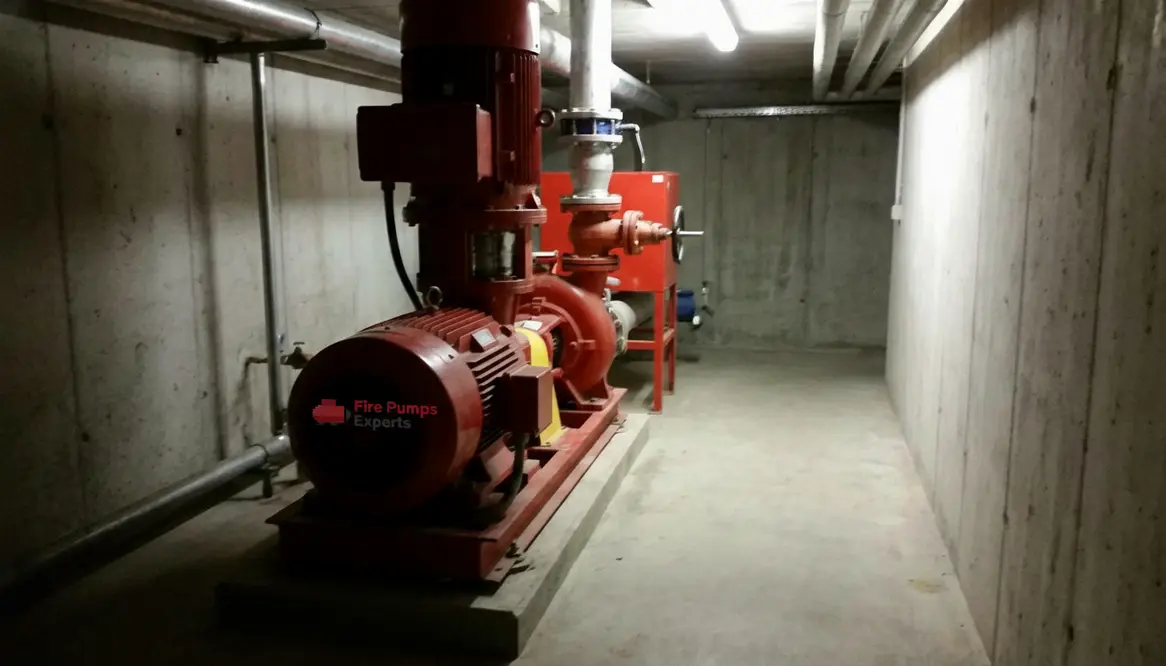
Underground Fire Pump Europe for Infrastructure
I have spent years walking through the hidden arteries of Europe’s largest structures, and if there is one system that quietly keeps everything alive, it is the underground fire pump Europe depends on. Tunnels, metro systems, data centers, and industrial complexes all rely on these unseen guardians. They do not ask for attention. They simply wait, like a seasoned bodyguard in a movie who only steps in when things go sideways. And when fire strikes below ground, they become the difference between disruption and disaster.
What makes fire pump systems critical in underground infrastructure?
Underground environments are unforgiving. Smoke has nowhere to go, heat builds quickly, and evacuation becomes a logistical puzzle. Therefore, fire pump systems are not just helpful, they are essential.
I have seen how quickly a small spark can escalate in enclosed infrastructure. However, a properly designed system delivers immediate water pressure where municipal supply often falls short. In Europe, where historic cities meet modern underground expansion, these systems must adapt to tight spaces and complex layouts.
Moreover, regulations across the EU demand reliability under pressure. Not the emotional kind, though managing a facility sometimes feels like that too. These systems must activate instantly, maintain flow, and operate independently when external supply fails.
Designing underground fire pump Europe systems for complex environments
Designing these systems is a bit like directing a heist movie. Every detail matters, timing is everything, and one weak link ruins the plan. I always start with the layout of the facility. Tunnels, shafts, and service corridors each influence pump placement and capacity.
In addition, engineers must account for depth and distance. Water pressure behaves differently underground, and friction loss becomes a serious factor. So, we calculate carefully, ensuring the system delivers consistent performance across every zone.
Another layer involves redundancy. European standards often require backup pumps and power sources. Because when the primary system fails, there is no room for a dramatic pause. This is not a Netflix cliffhanger.
Key components that keep systems running smoothly
Every underground fire pump system relies on a few core elements working in harmony. I like to think of them as a band. If the drummer goes off beat, the whole performance collapses.
Here is how the system comes together:
Pumps
They generate the pressure needed to move water through complex underground networks.
Controllers
They act as the brain, activating pumps automatically when pressure drops.
Water storage
Dedicated tanks ensure a reliable supply even if city water fails.
Piping networks
These distribute water efficiently across large commercial or industrial sites.
Backup power
Generators or diesel engines keep systems running during outages.
Monitoring systems
They provide real time data, allowing quick response and maintenance.
Each component must meet strict European standards. However, the real challenge lies in integration. A system is only as strong as its coordination.
How do regulations shape underground fire pump Europe installations?
Regulations in Europe are not just guidelines. They are firm expectations backed by rigorous enforcement. I have worked on projects where compliance checks felt more intense than a season finale of a crime drama.
European codes require systems to handle worst case scenarios. This includes multiple simultaneous fire zones and extended operation times. Consequently, engineers must design for endurance, not just immediate response.
Additionally, environmental considerations play a role. Systems must minimize water waste and energy use while maintaining full readiness. It is a balancing act that requires both technical precision and practical experience.
Maintenance and long term performance in commercial settings
Installing a system is only half the story. Keeping it ready is where the real work begins. I always tell clients that a fire pump system is like a classic car. It looks impressive, but if you do not maintain it, it will let you down at the worst moment.
Routine inspections, pressure tests, and component checks are essential. Moreover, digital monitoring has changed the game. Facility managers can now track performance in real time and address issues before they escalate.
In large commercial and industrial properties, downtime is not an option. Therefore, maintenance schedules must be proactive and precise. This ensures the system performs flawlessly when called upon.
Adapting fire pump systems to modern underground expansion
Europe continues to expand below ground. New transit systems, data hubs, and logistics centers are emerging rapidly. As a result, fire pump systems must evolve alongside these developments, especially wherever an underground fire pump Europe solution is expected to protect both people and assets.
I have noticed a shift toward smarter systems. Automation, remote monitoring, and predictive maintenance are becoming standard. These features not only improve safety but also reduce operational costs, making modern underground fire pump Europe installations far more efficient than older designs.
At the same time, space constraints remain a constant challenge. Engineers must design compact yet powerful systems that fit within limited footprints. It is a bit like packing for a long trip with only a carry on. You need everything, but you have no room for excess. That is why choosing the right underground fire pump Europe package is as strategic as any other major infrastructure decision.
FAQ
Conclusion
If you manage a commercial or industrial property, investing in a reliable underground fire pump system is not optional. It is essential. I have seen the difference a well designed system makes, and it is profound. Partner with experts who understand Europe’s unique infrastructure challenges and regulatory demands. Take action now to protect your assets, your people, and your operations with a system built to perform when it matters most.