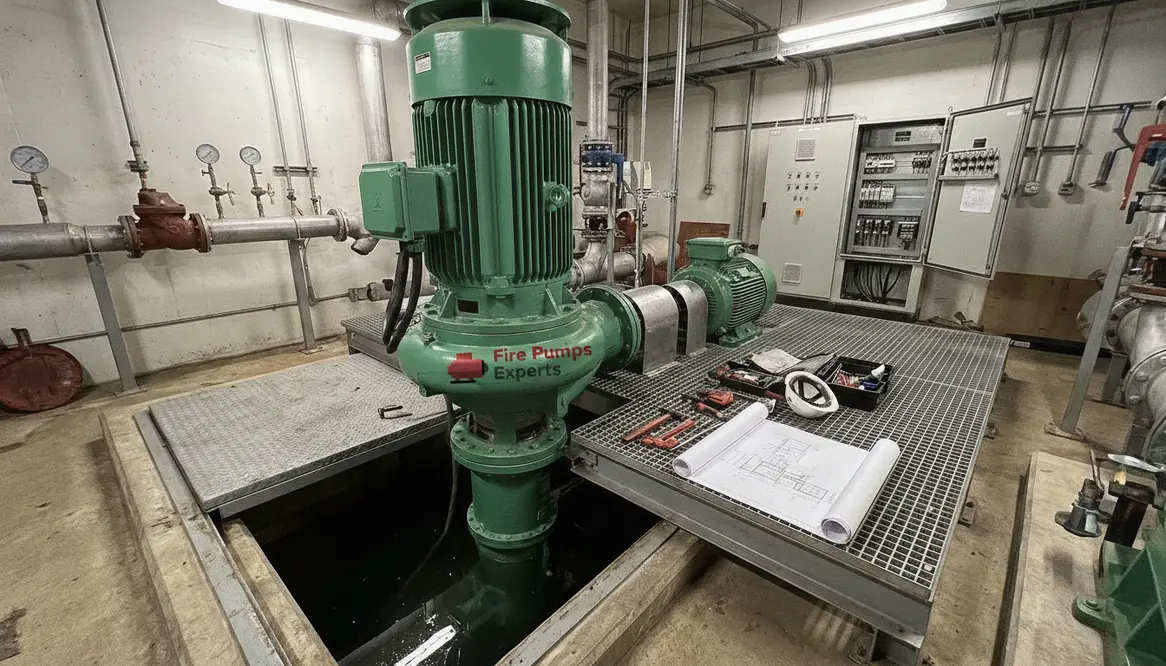
Vertical Turbine Fire Pump Sizing Flow and Head
Vertical Turbine Fire Pump Sizing: when I look at a commercial tower, a refinery, or a large warehouse, I do not see steel and concrete first. I see risk, water demand, and the quiet pressure to get fire protection right. That is where vertical turbine fire pump sizing steps in. It decides whether the system delivers the needed flow, reaches the right head, and uses the right bowl assembly to pull water with confidence. If the pump is too small, the system falls short. If it is too large, it wastes money and can create trouble. In fire protection, that is not a fun little design quiz. That is the whole game.
Start with the demand the building really needs
I always begin with the fire protection demand, because the pump must serve the hazard, not guess at it. The building type, sprinkler density, standpipe load, and water source all shape the target flow. For commercial and industrial properties, this step matters even more since the loads can swing hard. One facility may need moderate sprinkler support, while another may need a much larger fire water supply for critical operations.
Next, I check the total system demand in gallons per minute and then compare it with the water source and code needs. This is where vertical turbine fire pump sizing becomes practical, not theoretical. I want the pump to meet the required flow with room for real world pressure loss. If the demand calls for 1,000 gpm, I do not size like I am ordering a coffee and hoping for the best. I size for the actual fire load.
How flow and head work together
Flow and head always travel together. Flow tells me how much water the system needs. Head tells me how much pressure the pump must create to push that water through the system and still satisfy the most demanding point.
In simple terms, I look at suction conditions, elevation, pipe friction, valves, and the pressure needed at the fire protection device. Then I add those losses together. That gives me the total dynamic head. Because of that, a pump that can move the right flow still may fail if it cannot make enough head. It is a little like having a strong engine with no fuel. Very dramatic, not very useful.
For commercial and industrial sites, I also watch the water level at the source. A deeper setting may increase the pump lift and affect the final head. So, I do not treat the numbers as separate silos. I treat them as one story. The system needs the right flow at the right head, at the same time, under fire conditions.
Use this simple sizing view
Here is the practical way I break it down for a project team:
- Flow: the gallons per minute the fire protection system needs
- Head: the pressure the pump must deliver to overcome loss and still protect the farthest point
- Water source: the well, tank, reservoir, or canal level that feeds the pump
- Duty point: the spot where the pump must perform best under the expected fire demand
This view keeps the design grounded. Also, it helps teams avoid the classic “we sized it by hope” method, which has never won any awards.
Choose bowl assemblies with care
The bowl assembly does the real lifting in a vertical turbine fire pump. It sits in the water source and helps convert motor power into the pressure and flow the system needs. Bowl selection affects efficiency, head, and reliability, so I never treat it like an afterthought.
When I choose bowls, I look at the pump curve and match the bowl set to the desired duty point. A bowl that is too small may not make enough head. A bowl that is too large can push the pump away from its best operating range. That can hurt performance and may also create extra wear over time. In fire systems, I want a bowl set that works smoothly near the target point, not one that acts like a movie extra trying too hard.
Water quality also matters. If the source carries sand or debris, I pay close attention to materials and wear parts. A beautiful pump curve means little if the bowls get chewed up by bad water. So, I match the bowl design to the site conditions, not just the paper specs.
Vertical Turbine Fire Pump Sizing for major properties
For large commercial and industrial facilities, I look beyond the pump itself. I study the entire fire water path, from the source to the riser. This is where the system earns its keep. A pump that fits a small office building may miss the mark on a distribution center, a chemical plant, or a high rise complex.
That is why I review operating range, suction lift, available water volume, and future expansion plans. I also check whether the project may need a margin for aging pipes or seasonal water changes. Then I verify that the selected pump can hold up during peak demand. If the facility grows later, the fire pump should not age like a forgotten side character from a reboot nobody asked for.
For readers who want to go deeper into related design work, I recommend this fire pump design resource as a useful internal SEO reference. For local service needs, I also suggest los angeles fire pump solutions for commercial and industrial facilities and major properties.
FAQ
What is vertical turbine fire pump sizing?
It is the process of matching pump flow, head, and bowl selection to the fire demand of a site.
Why does head matter in fire pump selection?
Head shows how much pressure the pump must create to deliver water to the system.
What does the bowl assembly do?
The bowl assembly lifts water and helps the pump reach the needed flow and pressure.
Can I size a fire pump by flow only?
No. I must size for both flow and head to get the right result.
What facilities need this type of pump?
Commercial and industrial properties, major buildings, and other large fire protection sites.
How do I know if the bowl selection is right?
The bowl set should match the duty point and work within the pump’s best range.
Conclusion
If I want a fire pump system to perform when it counts, I size it with care, not guesswork. I match the flow to the real demand, confirm the head, and choose bowl assemblies that fit the site and the water source. That approach protects commercial and industrial properties with more confidence. If you need help reviewing specs or planning a new system, I suggest taking the next step now and speaking with a fire pump expert for your facility.