Vietnam Fire Pump Requirements and Design Guide
Vietnam Fire Pump Requirements Explained
When I look at Vietnam requirements for fire pumps, I see one simple truth: these systems do not exist for decoration. They protect commercial and industrial buildings, plus major property sites where a fire can move fast and cause real damage. In Vietnam, the rules focus on water supply, pump performance, backup power, pressure control, and reliable operation during an emergency. That sounds technical, and yes, it is, but the goal stays clear. I want the pump to work when the rest of the building is having a very bad day. And unlike a superhero movie, nobody gets a second chance to “try again.”
Vietnam fire pump basics for major facilities
I always start with the job of the pump. In large commercial and industrial properties, the fire pump must feed the sprinkler system, hydrants, or both, with enough pressure and flow to support firefighting. The Vietnam requirements place strong focus on system size, building use, and fire risk level. A warehouse does not play by the same rules as a shopping center, and a plant with high heat loads needs a different setup from a high rise office. That makes sense, because fire is rude enough to change its behavior based on the space it enters.
Here is the basic flow I follow:
- The building gets a fire risk review.
- The required water demand gets set.
- The pump size and pressure get selected.
- Backup power and controls get checked.
- The full system gets tested before handover.
So, the pump is never an isolated piece of equipment. It sits inside a full fire protection plan, and each part must support the others.
How Vietnam requirements set pump capacity and pressure
In practice, the core of the Vietnam requirements comes down to two things: flow and pressure. Flow tells me how much water the pump can move. Pressure tells me how strongly it can push that water through the system. If either one falls short, the fire system can become a very expensive water feature, which is not the mood anyone wants in an industrial facility.
The right capacity depends on the highest demand in the building. For example, a site may need water for sprinkler heads, hose reels, and fire hydrants at the same time. Therefore, I do not size a pump by guesswork or hope. I size it by load, layout, and hazard level. Also, the pump must maintain pressure across the full network, even at the farthest point. Long pipe runs, elevation changes, and friction loss all chip away at performance, so I account for all of it.
Quick view of what matters
| Factor | Why it matters |
| Water demand | Sets the minimum flow |
| Pipe length | Raises pressure loss |
| Building height | Increases pressure needs |
| Fire risk level | Changes system size and design |
As a result, the pump choice must match the building, not the other way around.
What I check in Vietnam fire pump room design
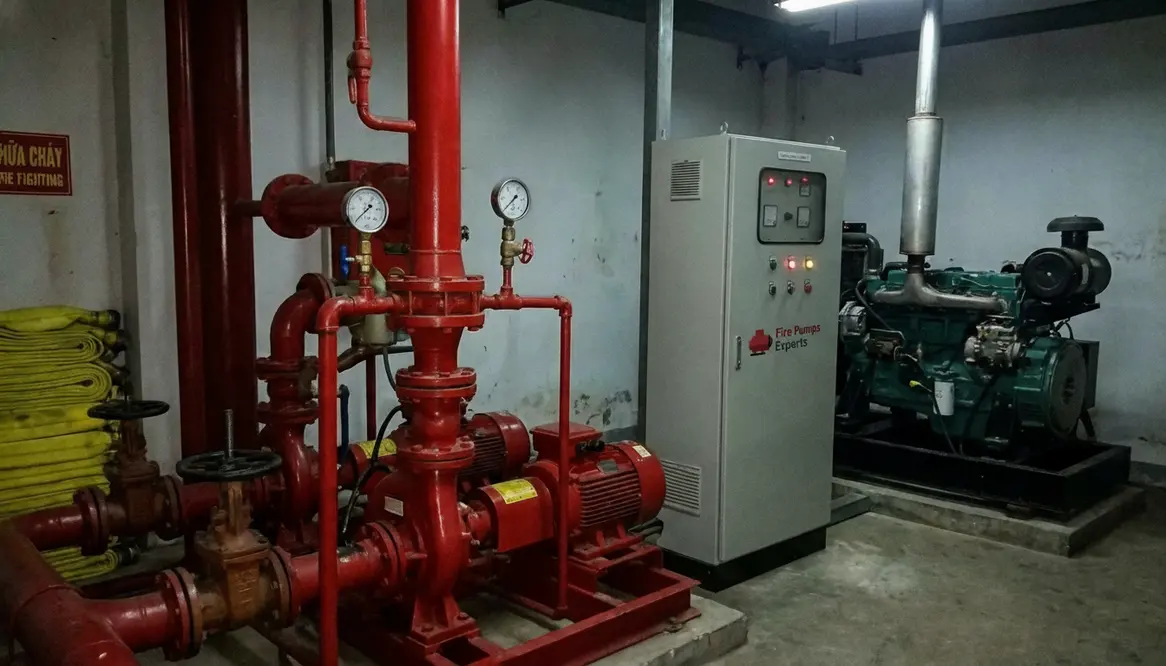
A good pump can still fail in a bad room. That is why I give pump room design serious attention. The Vietnam requirements expect the pump room to stay dry, easy to reach, well ventilated, and safe for maintenance staff. I also look at access routes, drainage, lighting, and clear working space. If the room feels like a cramped basement from a spy thriller, it probably needs work.
I also check the following:
- The pump room stays separate from high fire risk areas when possible.
- The floor supports the pump weight and vibration.
- The room allows fast service and inspection.
- The controls stay visible and easy to use.
- The water supply remains dependable under emergency conditions.
For commercial and industrial facilities, room layout matters because maintenance delays can become safety delays. In other words, if a technician needs a treasure map to reach the pump, the design needs a rethink.
Backup power, testing, and compliance checks
Fire pumps cannot depend on luck, and they certainly cannot depend on “maybe the power will stay on.” That is why backup power matters so much in Vietnam requirements. I make sure the system has a reliable diesel driver or an approved emergency power source, depending on the design. The pump must still operate when the main supply fails. Fire does not pause for a blackout, so neither should the protection system.
Testing comes next. I verify that the pump starts correctly, builds pressure, and delivers the expected flow. I also confirm alarms, controllers, valves, and water supply readiness. Then I review documentation, because a proper record helps owners, engineers, and inspectors stay aligned. Compliance is not just about passing inspection. It helps keep the whole system honest.
In my experience, the best projects do not treat testing like a formality. They treat it like the final rehearsal before opening night. And nobody wants the first performance to happen during an actual fire.
Key questions on Vietnam fire pump requirements
Vietnam requirements for fire pumps shape how buildings handle real emergencies. These questions come up constantly when owners and engineers plan or upgrade systems.
Final thoughts and next step
If I want a fire pump system to pass inspection and perform in real life, I need to treat the Vietnam requirements as a design map, not a last minute checklist. The right flow, pressure, room layout, backup power, and testing plan all work together. So, if your commercial or industrial facility needs a proper fire pump setup, I suggest you review the design early, confirm the specs carefully, and move with confidence. That is how I help a building stay ready when it matters most.