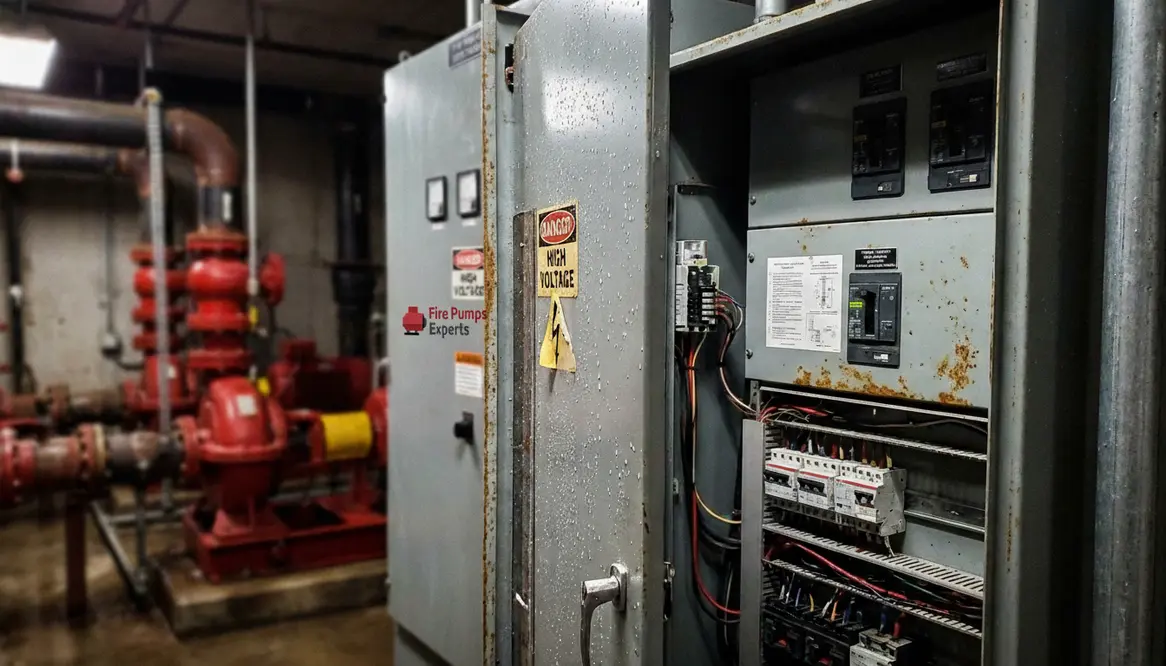
Why Condensation Forms Inside Fire Pump Controllers
I have seen a lot of people blame moisture on “bad luck,” but the truth is usually more ordinary than that. In a fire pump room, temperature swings, trapped humidity, and weak airflow can quietly create electrical condensation inside a fire pump controller. That is not a tiny issue with a fancy label. It can lead to corrosion, nuisance alarms, and real trouble when a commercial or industrial fire system needs to work without drama. And let me tell you, fire protection should not act like a moody side character in a soap opera.
For major buildings, warehouses, plants, and other large properties, I always treat moisture as a warning sign, not a random inconvenience. It usually means the room, the controller, or both are set up in a way that invites trouble. So let’s walk through why it happens, what it does, and how I deal with it before it turns into a costly surprise.
Why moisture collects in the controller enclosure
Condensation forms when warm, moist air touches a cooler surface and turns back into water. Inside a fire pump controller, that surface is often the metal enclosure or internal parts. If the controller sits in a cooler fire pump room while warm humid air moves in, the controller becomes the cold glass of sweet tea in summer. The air says hello, then drops its moisture like it just got bad news.
Several things make this worse. First, outside air can enter through doors, vents, or gaps. Second, the room may not stay at a steady temperature. Third, equipment that runs for short bursts can warm one area, then cool fast once it stops. That quick change pulls moisture out of the air. As a result, water beads form on terminals, wiring, and control parts.
What changes in the fire pump room create the problem
I often see the same root causes in commercial and industrial properties.
Common causes
- Poor insulation around the room or building shell
- Wide temperature swings between day and night
- Humid outside air entering the space
- Gaps around conduits, doors, or wall openings
- Heat from nearby systems followed by rapid cooling
These issues do not need to be dramatic to cause damage. In fact, the most annoying moisture problems are often the quiet ones. They build slowly. Then one day, a technician opens the panel and finds rust, spots on terminals, or water inside a place that should stay dry. That is the kind of plot twist nobody asked for.
How electrical condensation affects fire safety equipment
Moisture inside electrical gear does more than look ugly. It can raise resistance, weaken connections, and create corrosion on contacts and wiring. Over time, that can cause false signals, poor performance, or failure during startup. And since a fire pump controller must react fast in an emergency, even small damage matters.
What I look for
When I inspect a controller, I check for rust, mineral marks, fogging on the enclosure, and signs of water tracking along wiring paths. I also watch for loose seals and signs that the room breathes too much outside air. If I see repeated moisture, I know the problem is not luck. It is physics wearing work boots.
What usually follows
Once condensation starts, corrosion tends to follow. Then wire lugs loosen, contacts age faster, and sensors may act up. In severe cases, moisture can cause shorts or trip alarms. For large facilities, that can mean downtime, repair costs, and added risk where dependable fire protection matters most.
How I reduce moisture before it causes damage
I start with the room, because the room sets the stage. If the fire pump room stays stable, the controller has a much better chance of staying dry. Good ventilation helps, but I want controlled airflow, not random breezes like the building is trying to audition for a weather report.
I also look at heating and insulation. In colder areas, I want enough heat to keep the enclosure above the dew point. In humid areas, I want better sealing and moisture control. A properly sized space heater, when used correctly, can help prevent surface cooling. Likewise, sealing wall openings and keeping doors closed reduces warm humid air from sneaking in.
For larger commercial and industrial sites, I also recommend regular service checks. Teams that handle fire protection systems can catch early signs before they become expensive repairs. If you want to review related fire pump support, I suggest looking at Los Angeles fire pump services for commercial and industrial facilities. For broader electrical support, you can also review commercial electrical services. And if your site needs broader system planning, fire sprinkler services for major properties can also be useful.
Questions I hear most often
Does condensation mean the controller is failing?
Not always. However, it does mean the environment needs attention fast.
Can I ignore light moisture if the system still works?
No. Small moisture today can become corrosion tomorrow.
Is the fire pump room the main cause every time?
Often, yes. Room conditions usually drive the problem.
Will better airflow solve everything?
Not by itself. I also check sealing, heat, and humidity control.
Should I inspect the controller after weather changes?
Absolutely. Sudden swings often trigger condensation.
How often should large facilities check for moisture?
Regularly, especially during seasonal changes and after any room repairs.
Extra clarity on the fire pump controller side of the equation
When you see moisture in or around a fire pump controller, it is rarely a one-off mystery. It is usually the result of air conditions meeting cooler surfaces inside the enclosure. That is why moisture control is not just about what the controller is doing, it is also about how the fire pump room behaves day to day.
Address the temperature, control humidity, and seal openings, and you reduce the chances of electrical condensation turning into corrosion that steals reliability. Treat each season like a schedule for prevention, not a calendar for surprises.