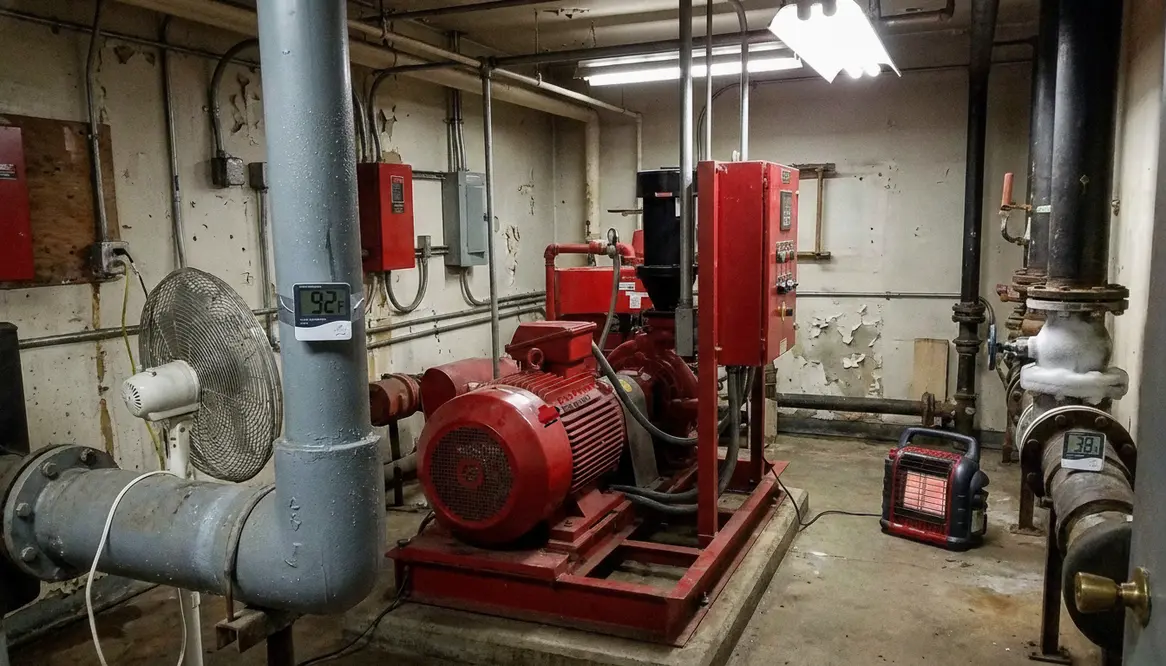
Fire Pump Room Temperature and Reliability Heat and Cold
I have seen a fire pump room go from dependable to troublesome simply because the room got too hot, too cold, or too damp. That matters, because fire pump room requirements are not just a box to check, and fire pump room temperature can decide whether a system starts when a commercial tower or industrial site needs it most. In my line of work, fire pump maintenance is not glamour, but it is the quiet hero of the whole setup. Think of it like the backstage crew in a Broadway show. Nobody cheers for them, yet the whole performance falls apart without them.
For major properties and commercial facilities, heat and cold do more than make the room uncomfortable. They can shorten equipment life, cause failed starts, and push weak parts over the edge. So, I keep my focus on the room first, because the room often tells the truth before the pump does.
Why the room matters before the pump runs
I always start with the space itself, because a pump cannot perform well in a bad environment. If the room stays too warm, the motor, controller, and batteries all work harder. If it drops too cold, water lines can freeze, seals can suffer, and starting problems can show up when nobody wants a surprise. That is the kind of drama I prefer to leave to streaming shows.
Proper ventilation, insulation, and drainage support steady operation. Also, the room should stay clear of outside air leaks, wet floors, and stored items that block service access. When I review fire pump room requirements for large buildings, I look for stable conditions first, because reliability begins long before the fire alarm sounds.
Heat attacks reliability
Heat wears on a fire pump room in slow, ugly ways. First, it raises the chance of motor strain. Then it can dry out seals and reduce the life of bearings. After that, control panels and batteries can lose performance. In other words, heat does not kick the door in. It sneaks in like a villain with great hair and a bad plan.
I also watch for poor airflow. If fans or vents do not move air well, hot spots form around equipment. That can make one side of a panel hotter than the other, which is never a nice party for electrical parts. In commercial and industrial sites, this matters even more because higher duty cycles and larger systems already put stress on the equipment. Good fire pump maintenance includes checking room heat, not just the pump itself.
How cold causes failure risk
Cold brings a different set of problems, and I treat it with equal respect. A room that gets too cold can let water lines freeze, especially near exterior walls or weak insulation points. Frozen water can crack pipes, damage fittings, and delay pump operation. That is not a minor inconvenience. That is a full stop.
Cold also affects lubrication and battery power. Mechanical parts may move less smoothly, and batteries can lose output when temperatures fall. So, I make sure the room keeps a stable range all year. This is especially important for major properties where a system must stay ready at all times, not just during friendly weather.
What I check during seasonal inspections
Each season brings its own problems, so I inspect the room with the weather in mind. I check the heater in winter, the ventilation in summer, and the seals in both. I also look for condensation, since moisture can create corrosion and electrical trouble. A room can be warm and still fail if damp air sits around the equipment like an unwanted houseguest.
Here is the simple version of what I review
Heat season checks
Ventilation, fan operation, control room airflow, battery heat exposure, and signs of overheated panels.
Cold season checks
Room heating, pipe insulation, draft control, freezing risk near doors and walls, and battery performance.
That two sided view helps me spot small issues before they grow into costly repairs. It also keeps the system aligned with the real needs of commercial buildings and industrial sites.
How I keep the room stable all year
Stability comes from a few simple habits. I keep the room sealed against outside weather, but I still allow proper ventilation. I verify that heaters and fans work as designed. I also make sure the drain system clears water fast, because standing water can damage more than one part of the setup.
For teams that manage multiple facilities, I recommend a service partner that understands pump systems and building power together. For example, Los Angeles fire pump service can support systems built for large commercial and industrial properties, while fire sprinkler service support can help keep the full protection system aligned. And because power issues often travel hand in hand with pump trouble, I also pay attention to electrical support from commercial electrical service expertise.
That is where fire pump room requirements stop being paperwork and start behaving like a performance plan. Keep the space within the intended range, manage moisture, and you reduce the odds that fire pump maintenance turns into emergency troubleshooting after a “too late” discovery. It is the difference between “tested and ready” and “why did it struggle on the worst day?”
FAQ
Conclusion
I take fire pump room temperature seriously because it shapes every part of system reliability. Heat, cold, and moisture can turn a strong pump room into a weak link fast. So, if you manage a commercial facility, industrial plant, or major property, review your room conditions now, not after a failure. A stable environment supports fire pump room requirements, strengthens code-aligned performance, and helps ensure your fire protection stays ready when it matters most. Start with the room, and the pump has a far better chance to do its job.