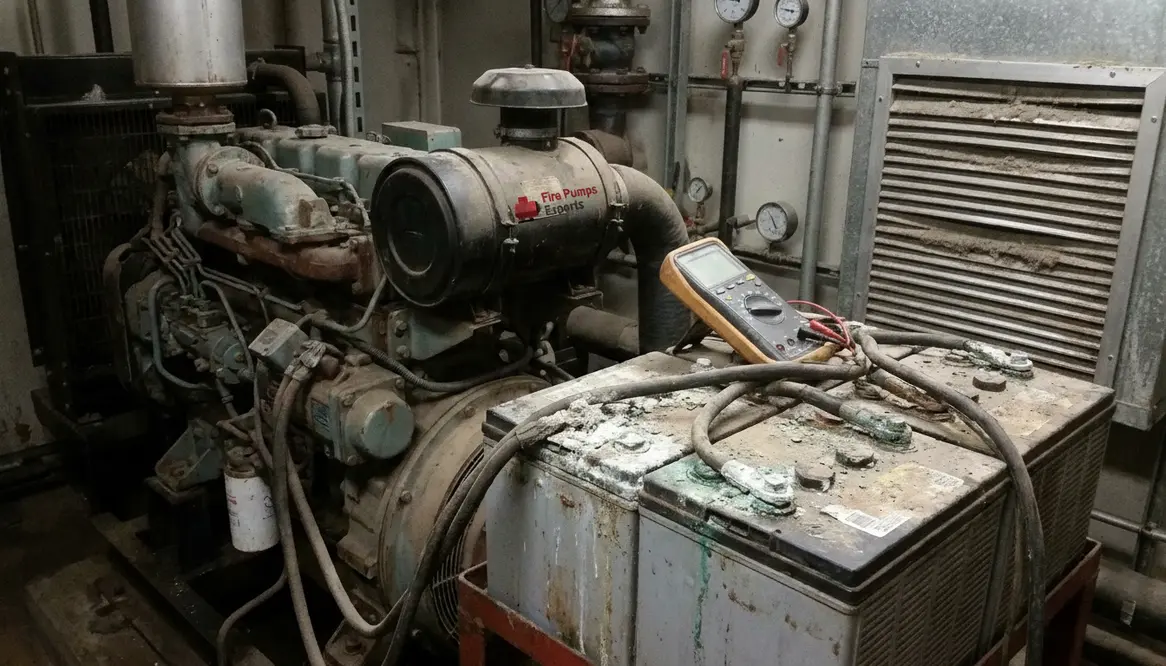
Why Diesel Fire Pump Batteries Fail Prematurely
I have seen a lot of diesel fire pump systems in commercial and industrial buildings, and one thing keeps sneaking up on owners like a bad sequel no one asked for: the battery. In a diesel fire pump, the battery is not a side character. It starts the whole show. When it fails early, the entire fire protection system can stumble at the worst possible time. That is why fire pump maintenance matters so much, especially in major properties where uptime is not a nice to have, it is the job. In this article, I will break down why diesel fire pump battery problems happen, what signs I watch for, and how I keep them from turning into expensive drama.
What makes a battery fail early in real life
The short answer is simple. Heat, poor charging, weak upkeep, and age wear batteries down faster than most people expect. However, the deeper issue is that a fire pump room is not a calm place. It often runs hot, dusty, and busy. That kind of setting puts stress on the battery every single day.
I also see a lot of batteries fail because they sit in a system that nobody checks until there is a problem. That is like waiting until the Batmobile will not start before looking under the hood. Not ideal. A battery ages best when the charging system, terminals, and room conditions stay under control.
How heat and poor placement shorten battery life
Heat is the silent killer here. When battery temperature rises, the internal chemical reaction speeds up, and that may sound productive, but it actually causes faster wear. As a result, battery life drops hard. If the room sits near boilers, direct sun, or poor ventilation, the battery cooks a little every day. Not glamorous. Very effective at causing failure.
Placement matters too. I always look at whether the battery sits close to vibration, steam, dust, or moisture. Those conditions attack the connections and the case. Over time, corrosion builds up, and the battery loses its edge. In fire pump maintenance, I treat room conditions as part of the battery system, not just background noise.
Which charging problems cause the most damage
Charging issues do a lot of the damage. If the charger undercharges, the battery never reaches full strength. If it overcharges, it heats up and wears out fast. Either way, the battery gets dragged into a long, slow argument with physics, and physics always wins.
Here is a simple two column view of the most common charging trouble spots:
| Problem | What it does |
|---|---|
| Undercharging | Leaves the battery weak and unable to hold a full reserve |
| Overcharging | Raises heat, dries the battery out, and shortens life |
| Loose wiring | Creates unstable charging and poor performance |
| Bad charger settings | Pushes the battery outside safe limits |
I often find that owners blame the battery when the charger is the real troublemaker. So, I test both. That saves time, money, and a fair amount of head scratching.
What fire pump maintenance should catch early
Good fire pump maintenance should catch battery trouble long before failure. I check terminal tightness, corrosion, voltage, charger output, room temperature, and physical condition. I also review battery age, because no battery gets better with age. That is life, and batteries do not get the luxury of pretending otherwise.
Testing the battery under load matters too. A battery can look fine on the outside and still fall apart when called into action. That is why I do not trust a quick glance. I want proof it can deliver power when the pump needs it. In commercial and industrial facilities, that step protects the whole building, not just the equipment room.
Why daily use still wears batteries out
Even when nobody starts the pump for an emergency, the battery still works every day. It supports the control system, stays ready for starting, and absorbs constant small demands. Over time, that steady load adds up. If the system starts often for testing, the wear climbs even faster.
Also, vibration from the engine can shake connections loose. A loose terminal may seem minor, but it can create resistance, heat, and weak starts. That is how small issues turn into big problems. In a building with critical fire protection, small problems rarely stay small.
How I reduce premature failure in commercial facilities
I start with a clear inspection routine. Then I keep the battery area clean, dry, and cool. Next, I verify the charger settings and replace weak parts before they drag the whole system down. I also track battery age so replacement happens on schedule, not during a crisis.
For larger properties, I recommend working with a team that understands both the fire pump and the electrical side of the system. That matters because the battery does not care which trade owns the issue. It only cares whether it works. If you want a broader look at system support, you can review los angeles fire pump service and see how integrated care supports reliable operation. You can also look at commercial electrical services for related power system needs, or fire sprinkler service support for a wider building safety plan.
FAQ
Conclusion
In my experience, early battery failure usually comes from a mix of heat, charging trouble, poor placement, and skipped upkeep. The good news is that most of it is preventable with steady attention and a smart inspection plan. If your facility depends on a reliable diesel fire pump battery, do not wait for a dead start to get serious. Review your system, tighten your maintenance routine, and make battery health a priority today. Your building, your people, and your peace of mind will all thank you.