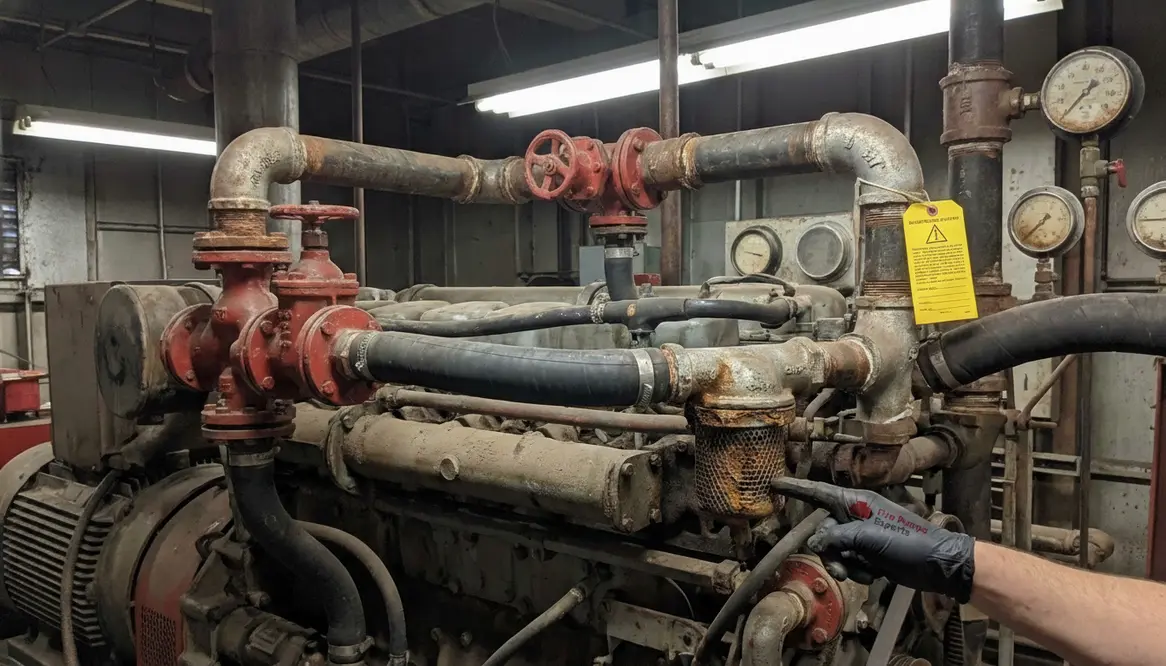
Diesel fire pump maintenance that prevents cooling failures
Good maintenance makes the cooling loop much easier to trust. I focus on a few tasks that give the best return, because the diesel fire pump cooling system does not forgive neglect. It just punishes it quietly at first.
My maintenance checklist
I clean strainers on a set schedule
I confirm every valve stays in the correct position
I inspect hoses and fittings for wear
I flush buildup from the loop when needed
I test temperature rise during pump operation
I verify the system matches the site design
Next, I compare what I see on site with the original design intent. This matters because a cooling loop that worked five years ago may not work the same way today if someone changed parts without checking the full system. That kind of shortcut can haunt a site later, and not in a fun sequel way.
When I call for deeper system support
Sometimes I find a problem that sits beyond routine service. For example, a building may have a pump room layout that creates poor water flow, or the electrical side may affect starting behavior and testing. In those cases, I bring in specialists who know commercial and industrial fire protection systems well.
I also review related systems when a site has sprinkler and pump coordination issues. If the diesel fire pump cooling system keeps failing, the full fire protection setup may need a closer look. That is why I value resources like Kord Fire for pump support and Kord Electric for the electrical side. A strong system does not rely on luck. It relies on good design, clean maintenance, and real follow through.
FAQ
What causes diesel fire pump cooling loop failure?
Blocked flow, air in the line, leaks, scale, or stuck valves usually cause it.
How do I know the cooling loop is failing?
Watch for fast temperature rise, weak circulation, leaks, or warning sounds during testing.
How often should I inspect the cooling loop?
I inspect it during regular fire pump checks and after any system change or repair as part of diesel fire pump maintenance.
Can a cooling loop issue stop the pump?
Yes. Overheating can reduce performance and lead to shutdown or damage during a fire event.
Who should service a diesel fire pump cooling system?
A qualified fire pump professional should handle it for commercial and industrial sites, especially when the diesel fire pump cooling system needs troubleshooting beyond routine service.
Conclusion
When I manage a diesel fire pump cooling loop, I look past the obvious and focus on the small signs that lead to bigger failure. If your site depends on reliable fire protection, do not wait for heat to tell the story. Review the loop, inspect the parts, and tighten up your diesel fire pump maintenance plan now. If you want support for a commercial or industrial property, reach out for a system review and keep your fire pump ready when it matters most.
How I spot trouble during a test run
During a test, I watch the cooling loop like a hawk in a suit. If the engine warms faster than normal, that tells me something is off. Also, if I hear unusual sounds in the line, I think about trapped air or restricted flow. A steady leak, even a small one, can point to a bigger pressure issue downstream.
Here is the simple truth. I do not wait for a full failure. I use the test run to catch warning signs early, because early action saves time, money, and stress. That is the kind of power move even Batman would respect.
Diesel fire pump maintenance that prevents cooling failures
Good maintenance makes the cooling loop much easier to trust. I focus on a few tasks that give the best return, because the diesel fire pump cooling system does not forgive neglect. It just punishes it quietly at first.
My maintenance checklist
I clean strainers on a set schedule
I confirm every valve stays in the correct position
I inspect hoses and fittings for wear
I flush buildup from the loop when needed
I test temperature rise during pump operation
I verify the system matches the site design
Next, I compare what I see on site with the original design intent. This matters because a cooling loop that worked five years ago may not work the same way today if someone changed parts without checking the full system. That kind of shortcut can haunt a site later, and not in a fun sequel way.
When I call for deeper system support
Sometimes I find a problem that sits beyond routine service. For example, a building may have a pump room layout that creates poor water flow, or the electrical side may affect starting behavior and testing. In those cases, I bring in specialists who know commercial and industrial fire protection systems well.
I also review related systems when a site has sprinkler and pump coordination issues. If the diesel fire pump cooling system keeps failing, the full fire protection setup may need a closer look. That is why I value resources like Kord Fire for pump support and Kord Electric for the electrical side. A strong system does not rely on luck. It relies on good design, clean maintenance, and real follow through.
FAQ
Conclusion
When I manage a diesel fire pump cooling loop, I look past the obvious and focus on the small signs that lead to bigger failure. If your site depends on reliable fire protection, do not wait for heat to tell the story. Review the loop, inspect the parts, and tighten up your diesel fire pump maintenance plan now. If you want support for a commercial or industrial property, reach out for a system review and keep your fire pump ready when it matters most.
Diesel fire pump cooling loop problems I see most often
I keep seeing the same failures show up in large buildings and industrial sites. Some are simple. Others are sneakier than a villain in a heist movie.
Common cooling loop problems
Blocked strainers that cut water flow
Closed or stuck valves that choke the loop
Air trapped in the line that breaks circulation
Scale or rust inside pipes that narrows the path
Failed thermostatic parts that do not regulate temperature
Loose fittings that cause leaks and pressure loss
Wrong pipe size that limits cooling performance
First, I look for flow problems because they often start small and grow quietly. Then I check for leaks around joints, seals, and fittings. After that, I inspect the engine temperature trend during testing. If the temperature climbs too fast, I know the loop is not moving heat away the way it should.
In other words, the pump may still run, but it is running hot, and hot is not the vibe we want in fire protection.
How I spot trouble during a test run
During a test, I watch the cooling loop like a hawk in a suit. If the engine warms faster than normal, that tells me something is off. Also, if I hear unusual sounds in the line, I think about trapped air or restricted flow. A steady leak, even a small one, can point to a bigger pressure issue downstream.
Here is the simple truth. I do not wait for a full failure. I use the test run to catch warning signs early, because early action saves time, money, and stress. That is the kind of power move even Batman would respect.
Diesel fire pump maintenance that prevents cooling failures
Good maintenance makes the cooling loop much easier to trust. I focus on a few tasks that give the best return, because the diesel fire pump cooling system does not forgive neglect. It just punishes it quietly at first.
My maintenance checklist
I clean strainers on a set schedule
I confirm every valve stays in the correct position
I inspect hoses and fittings for wear
I flush buildup from the loop when needed
I test temperature rise during pump operation
I verify the system matches the site design
Next, I compare what I see on site with the original design intent. This matters because a cooling loop that worked five years ago may not work the same way today if someone changed parts without checking the full system. That kind of shortcut can haunt a site later, and not in a fun sequel way.
When I call for deeper system support
Sometimes I find a problem that sits beyond routine service. For example, a building may have a pump room layout that creates poor water flow, or the electrical side may affect starting behavior and testing. In those cases, I bring in specialists who know commercial and industrial fire protection systems well.
I also review related systems when a site has sprinkler and pump coordination issues. If the diesel fire pump cooling system keeps failing, the full fire protection setup may need a closer look. That is why I value resources like Kord Fire for pump support and Kord Electric for the electrical side. A strong system does not rely on luck. It relies on good design, clean maintenance, and real follow through.
FAQ
Conclusion
When I manage a diesel fire pump cooling loop, I look past the obvious and focus on the small signs that lead to bigger failure. If your site depends on reliable fire protection, do not wait for heat to tell the story. Review the loop, inspect the parts, and tighten up your diesel fire pump maintenance plan now. If you want support for a commercial or industrial property, reach out for a system review and keep your fire pump ready when it matters most.
What a cooling loop does in a diesel fire pump
I see the cooling loop as the pump’s quiet bodyguard. It moves heat away from the engine so the pump can keep running under load. When the loop works, the diesel engine stays in its safe range. However, when the loop fails, the engine can overheat fast, and that can reduce pump life or stop the unit during a fire event.
In a facility that depends on water supply protection, that is a risk nobody wants to explain to a board room full of serious faces.
The loop often uses water from the fire pump discharge or another source to cool the engine. Therefore, I always check flow, routing, valves, and the condition of each part. A small restriction can act like a traffic jam in rush hour. Nobody loves that, and the engine loves it even less.
Diesel fire pump cooling loop problems I see most often
I keep seeing the same failures show up in large buildings and industrial sites. Some are simple. Others are sneakier than a villain in a heist movie.
Common cooling loop problems
Blocked strainers that cut water flow
Closed or stuck valves that choke the loop
Air trapped in the line that breaks circulation
Scale or rust inside pipes that narrows the path
Failed thermostatic parts that do not regulate temperature
Loose fittings that cause leaks and pressure loss
Wrong pipe size that limits cooling performance
First, I look for flow problems because they often start small and grow quietly. Then I check for leaks around joints, seals, and fittings. After that, I inspect the engine temperature trend during testing. If the temperature climbs too fast, I know the loop is not moving heat away the way it should.
In other words, the pump may still run, but it is running hot, and hot is not the vibe we want in fire protection.
How I spot trouble during a test run
During a test, I watch the cooling loop like a hawk in a suit. If the engine warms faster than normal, that tells me something is off. Also, if I hear unusual sounds in the line, I think about trapped air or restricted flow. A steady leak, even a small one, can point to a bigger pressure issue downstream.
Here is the simple truth. I do not wait for a full failure. I use the test run to catch warning signs early, because early action saves time, money, and stress. That is the kind of power move even Batman would respect.
Diesel fire pump maintenance that prevents cooling failures
Good maintenance makes the cooling loop much easier to trust. I focus on a few tasks that give the best return, because the diesel fire pump cooling system does not forgive neglect. It just punishes it quietly at first.
My maintenance checklist
I clean strainers on a set schedule
I confirm every valve stays in the correct position
I inspect hoses and fittings for wear
I flush buildup from the loop when needed
I test temperature rise during pump operation
I verify the system matches the site design
Next, I compare what I see on site with the original design intent. This matters because a cooling loop that worked five years ago may not work the same way today if someone changed parts without checking the full system. That kind of shortcut can haunt a site later, and not in a fun sequel way.
When I call for deeper system support
Sometimes I find a problem that sits beyond routine service. For example, a building may have a pump room layout that creates poor water flow, or the electrical side may affect starting behavior and testing. In those cases, I bring in specialists who know commercial and industrial fire protection systems well.
I also review related systems when a site has sprinkler and pump coordination issues. If the diesel fire pump cooling system keeps failing, the full fire protection setup may need a closer look. That is why I value resources like Kord Fire for pump support and Kord Electric for the electrical side. A strong system does not rely on luck. It relies on good design, clean maintenance, and real follow through.
FAQ
Conclusion
When I manage a diesel fire pump cooling loop, I look past the obvious and focus on the small signs that lead to bigger failure. If your site depends on reliable fire protection, do not wait for heat to tell the story. Review the loop, inspect the parts, and tighten up your diesel fire pump maintenance plan now. If you want support for a commercial or industrial property, reach out for a system review and keep your fire pump ready when it matters most.
What a cooling loop does in a diesel fire pump
I see the cooling loop as the pump’s quiet bodyguard. It moves heat away from the engine so the pump can keep running under load. When the loop works, the diesel engine stays in its safe range. However, when the loop fails, the engine can overheat fast, and that can reduce pump life or stop the unit during a fire event.
In a facility that depends on water supply protection, that is a risk nobody wants to explain to a board room full of serious faces.
The loop often uses water from the fire pump discharge or another source to cool the engine. Therefore, I always check flow, routing, valves, and the condition of each part. A small restriction can act like a traffic jam in rush hour. Nobody loves that, and the engine loves it even less.
Diesel fire pump cooling loop problems I see most often
I keep seeing the same failures show up in large buildings and industrial sites. Some are simple. Others are sneakier than a villain in a heist movie.
Common cooling loop problems
Blocked strainers that cut water flow
Closed or stuck valves that choke the loop
Air trapped in the line that breaks circulation
Scale or rust inside pipes that narrows the path
Failed thermostatic parts that do not regulate temperature
Loose fittings that cause leaks and pressure loss
Wrong pipe size that limits cooling performance
First, I look for flow problems because they often start small and grow quietly. Then I check for leaks around joints, seals, and fittings. After that, I inspect the engine temperature trend during testing. If the temperature climbs too fast, I know the loop is not moving heat away the way it should.
In other words, the pump may still run, but it is running hot, and hot is not the vibe we want in fire protection.
How I spot trouble during a test run
During a test, I watch the cooling loop like a hawk in a suit. If the engine warms faster than normal, that tells me something is off. Also, if I hear unusual sounds in the line, I think about trapped air or restricted flow. A steady leak, even a small one, can point to a bigger pressure issue downstream.
Here is the simple truth. I do not wait for a full failure. I use the test run to catch warning signs early, because early action saves time, money, and stress. That is the kind of power move even Batman would respect.
Diesel fire pump maintenance that prevents cooling failures
Good maintenance makes the cooling loop much easier to trust. I focus on a few tasks that give the best return, because the diesel fire pump cooling system does not forgive neglect. It just punishes it quietly at first.
My maintenance checklist
I clean strainers on a set schedule
I confirm every valve stays in the correct position
I inspect hoses and fittings for wear
I flush buildup from the loop when needed
I test temperature rise during pump operation
I verify the system matches the site design
Next, I compare what I see on site with the original design intent. This matters because a cooling loop that worked five years ago may not work the same way today if someone changed parts without checking the full system. That kind of shortcut can haunt a site later, and not in a fun sequel way.
When I call for deeper system support
Sometimes I find a problem that sits beyond routine service. For example, a building may have a pump room layout that creates poor water flow, or the electrical side may affect starting behavior and testing. In those cases, I bring in specialists who know commercial and industrial fire protection systems well.
I also review related systems when a site has sprinkler and pump coordination issues. If the diesel fire pump cooling system keeps failing, the full fire protection setup may need a closer look. That is why I value resources like Kord Fire for pump support and Kord Electric for the electrical side. A strong system does not rely on luck. It relies on good design, clean maintenance, and real follow through.
FAQ
Conclusion
When I manage a diesel fire pump cooling loop, I look past the obvious and focus on the small signs that lead to bigger failure. If your site depends on reliable fire protection, do not wait for heat to tell the story. Review the loop, inspect the parts, and tighten up your diesel fire pump maintenance plan now. If you want support for a commercial or industrial property, reach out for a system review and keep your fire pump ready when it matters most.
Diesel fire pump cooling system: problems that show up under pressure
When I inspect a fire protection setup, I pay close attention to the diesel fire pump cooling system because it can make or break performance when the pressure rises and the stakes get real. Good diesel fire pump maintenance is not just a box to check; it is the difference between a pump that starts strong and one that acts like it just got called into work on a Monday morning.
In commercial and industrial facilities, and in major property buildings, cooling loop trouble can cause heat buildup, weak flow, and costly downtime. So I treat these issues early, before they turn into a full scale problem with a very expensive plot twist.
What you will get from this checklist
In this article, I walk through the main cooling loop problems I see, how they show up, and what I check first. I also point to trusted resources like los angeles fire pump services when I need to compare system needs across large sites.
I see the cooling loop as the pump’s quiet bodyguard. It moves heat away from the engine so the pump can keep running under load. When the loop works, the diesel engine stays in its safe range. However, when the loop fails, the engine can overheat fast, and that can reduce pump life or stop the unit during a fire event.
In a facility that depends on water supply protection, that is a risk nobody wants to explain to a board room full of serious faces.
The loop often uses water from the fire pump discharge or another source to cool the engine. Therefore, I always check flow, routing, valves, and the condition of each part. A small restriction can act like a traffic jam in rush hour. Nobody loves that, and the engine loves it even less.
Diesel fire pump cooling loop problems I see most often
I keep seeing the same failures show up in large buildings and industrial sites. Some are simple. Others are sneakier than a villain in a heist movie.
Common cooling loop problems
Blocked strainers that cut water flow
Closed or stuck valves that choke the loop
Air trapped in the line that breaks circulation
Scale or rust inside pipes that narrows the path
Failed thermostatic parts that do not regulate temperature
Loose fittings that cause leaks and pressure loss
Wrong pipe size that limits cooling performance
First, I look for flow problems because they often start small and grow quietly. Then I check for leaks around joints, seals, and fittings. After that, I inspect the engine temperature trend during testing. If the temperature climbs too fast, I know the loop is not moving heat away the way it should.
In other words, the pump may still run, but it is running hot, and hot is not the vibe we want in fire protection.
How I spot trouble during a test run
During a test, I watch the cooling loop like a hawk in a suit. If the engine warms faster than normal, that tells me something is off. Also, if I hear unusual sounds in the line, I think about trapped air or restricted flow. A steady leak, even a small one, can point to a bigger pressure issue downstream.
Here is the simple truth. I do not wait for a full failure. I use the test run to catch warning signs early, because early action saves time, money, and stress. That is the kind of power move even Batman would respect.
Diesel fire pump maintenance that prevents cooling failures
Good maintenance makes the cooling loop much easier to trust. I focus on a few tasks that give the best return, because the diesel fire pump cooling system does not forgive neglect. It just punishes it quietly at first.
My maintenance checklist
I clean strainers on a set schedule
I confirm every valve stays in the correct position
I inspect hoses and fittings for wear
I flush buildup from the loop when needed
I test temperature rise during pump operation
I verify the system matches the site design
Next, I compare what I see on site with the original design intent. This matters because a cooling loop that worked five years ago may not work the same way today if someone changed parts without checking the full system. That kind of shortcut can haunt a site later, and not in a fun sequel way.
When I call for deeper system support
Sometimes I find a problem that sits beyond routine service. For example, a building may have a pump room layout that creates poor water flow, or the electrical side may affect starting behavior and testing. In those cases, I bring in specialists who know commercial and industrial fire protection systems well.
I also review related systems when a site has sprinkler and pump coordination issues. If the diesel fire pump cooling system keeps failing, the full fire protection setup may need a closer look. That is why I value resources like Kord Fire for pump support and Kord Electric for the electrical side. A strong system does not rely on luck. It relies on good design, clean maintenance, and real follow through.
FAQ
Conclusion
When I manage a diesel fire pump cooling loop, I look past the obvious and focus on the small signs that lead to bigger failure. If your site depends on reliable fire protection, do not wait for heat to tell the story. Review the loop, inspect the parts, and tighten up your diesel fire pump maintenance plan now. If you want support for a commercial or industrial property, reach out for a system review and keep your fire pump ready when it matters most.
Diesel Fire Pump Cooling Loop Maintenance Tips
Diesel fire pump cooling system: problems that show up under pressure
When I inspect a fire protection setup, I pay close attention to the diesel fire pump cooling system because it can make or break performance when the pressure rises and the stakes get real. Good diesel fire pump maintenance is not just a box to check; it is the difference between a pump that starts strong and one that acts like it just got called into work on a Monday morning.
In commercial and industrial facilities, and in major property buildings, cooling loop trouble can cause heat buildup, weak flow, and costly downtime. So I treat these issues early, before they turn into a full scale problem with a very expensive plot twist.
What you will get from this checklist
In this article, I walk through the main cooling loop problems I see, how they show up, and what I check first. I also point to trusted resources like los angeles fire pump services when I need to compare system needs across large sites.
I see the cooling loop as the pump’s quiet bodyguard. It moves heat away from the engine so the pump can keep running under load. When the loop works, the diesel engine stays in its safe range. However, when the loop fails, the engine can overheat fast, and that can reduce pump life or stop the unit during a fire event.
In a facility that depends on water supply protection, that is a risk nobody wants to explain to a board room full of serious faces.
The loop often uses water from the fire pump discharge or another source to cool the engine. Therefore, I always check flow, routing, valves, and the condition of each part. A small restriction can act like a traffic jam in rush hour. Nobody loves that, and the engine loves it even less.
Diesel fire pump cooling loop problems I see most often
I keep seeing the same failures show up in large buildings and industrial sites. Some are simple. Others are sneakier than a villain in a heist movie.
Common cooling loop problems
Blocked strainers that cut water flow
Closed or stuck valves that choke the loop
Air trapped in the line that breaks circulation
Scale or rust inside pipes that narrows the path
Failed thermostatic parts that do not regulate temperature
Loose fittings that cause leaks and pressure loss
Wrong pipe size that limits cooling performance
First, I look for flow problems because they often start small and grow quietly. Then I check for leaks around joints, seals, and fittings. After that, I inspect the engine temperature trend during testing. If the temperature climbs too fast, I know the loop is not moving heat away the way it should.
In other words, the pump may still run, but it is running hot, and hot is not the vibe we want in fire protection.
How I spot trouble during a test run
During a test, I watch the cooling loop like a hawk in a suit. If the engine warms faster than normal, that tells me something is off. Also, if I hear unusual sounds in the line, I think about trapped air or restricted flow. A steady leak, even a small one, can point to a bigger pressure issue downstream.
Here is the simple truth. I do not wait for a full failure. I use the test run to catch warning signs early, because early action saves time, money, and stress. That is the kind of power move even Batman would respect.
Diesel fire pump maintenance that prevents cooling failures
Good maintenance makes the cooling loop much easier to trust. I focus on a few tasks that give the best return, because the diesel fire pump cooling system does not forgive neglect. It just punishes it quietly at first.
My maintenance checklist
I clean strainers on a set schedule
I confirm every valve stays in the correct position
I inspect hoses and fittings for wear
I flush buildup from the loop when needed
I test temperature rise during pump operation
I verify the system matches the site design
Next, I compare what I see on site with the original design intent. This matters because a cooling loop that worked five years ago may not work the same way today if someone changed parts without checking the full system. That kind of shortcut can haunt a site later, and not in a fun sequel way.
When I call for deeper system support
Sometimes I find a problem that sits beyond routine service. For example, a building may have a pump room layout that creates poor water flow, or the electrical side may affect starting behavior and testing. In those cases, I bring in specialists who know commercial and industrial fire protection systems well.
I also review related systems when a site has sprinkler and pump coordination issues. If the diesel fire pump cooling system keeps failing, the full fire protection setup may need a closer look. That is why I value resources like Kord Fire for pump support and Kord Electric for the electrical side. A strong system does not rely on luck. It relies on good design, clean maintenance, and real follow through.
FAQ
Conclusion
When I manage a diesel fire pump cooling loop, I look past the obvious and focus on the small signs that lead to bigger failure. If your site depends on reliable fire protection, do not wait for heat to tell the story. Review the loop, inspect the parts, and tighten up your diesel fire pump maintenance plan now. If you want support for a commercial or industrial property, reach out for a system review and keep your fire pump ready when it matters most.
Diesel Fire Pump Cooling Loop Maintenance Tips
Diesel fire pump cooling system: problems that show up under pressure
When I inspect a fire protection setup, I pay close attention to the diesel fire pump cooling system because it can make or break performance when the pressure rises and the stakes get real. Good diesel fire pump maintenance is not just a box to check; it is the difference between a pump that starts strong and one that acts like it just got called into work on a Monday morning.
In commercial and industrial facilities, and in major property buildings, cooling loop trouble can cause heat buildup, weak flow, and costly downtime. So I treat these issues early, before they turn into a full scale problem with a very expensive plot twist.
What you will get from this checklist
In this article, I walk through the main cooling loop problems I see, how they show up, and what I check first. I also point to trusted resources like los angeles fire pump services when I need to compare system needs across large sites.
I see the cooling loop as the pump’s quiet bodyguard. It moves heat away from the engine so the pump can keep running under load. When the loop works, the diesel engine stays in its safe range. However, when the loop fails, the engine can overheat fast, and that can reduce pump life or stop the unit during a fire event.
In a facility that depends on water supply protection, that is a risk nobody wants to explain to a board room full of serious faces.
The loop often uses water from the fire pump discharge or another source to cool the engine. Therefore, I always check flow, routing, valves, and the condition of each part. A small restriction can act like a traffic jam in rush hour. Nobody loves that, and the engine loves it even less.
Diesel fire pump cooling loop problems I see most often
I keep seeing the same failures show up in large buildings and industrial sites. Some are simple. Others are sneakier than a villain in a heist movie.
Common cooling loop problems
Blocked strainers that cut water flow
Closed or stuck valves that choke the loop
Air trapped in the line that breaks circulation
Scale or rust inside pipes that narrows the path
Failed thermostatic parts that do not regulate temperature
Loose fittings that cause leaks and pressure loss
Wrong pipe size that limits cooling performance
First, I look for flow problems because they often start small and grow quietly. Then I check for leaks around joints, seals, and fittings. After that, I inspect the engine temperature trend during testing. If the temperature climbs too fast, I know the loop is not moving heat away the way it should.
In other words, the pump may still run, but it is running hot, and hot is not the vibe we want in fire protection.
How I spot trouble during a test run
During a test, I watch the cooling loop like a hawk in a suit. If the engine warms faster than normal, that tells me something is off. Also, if I hear unusual sounds in the line, I think about trapped air or restricted flow. A steady leak, even a small one, can point to a bigger pressure issue downstream.
Here is the simple truth. I do not wait for a full failure. I use the test run to catch warning signs early, because early action saves time, money, and stress. That is the kind of power move even Batman would respect.
Diesel fire pump maintenance that prevents cooling failures
Good maintenance makes the cooling loop much easier to trust. I focus on a few tasks that give the best return, because the diesel fire pump cooling system does not forgive neglect. It just punishes it quietly at first.
My maintenance checklist
I clean strainers on a set schedule
I confirm every valve stays in the correct position
I inspect hoses and fittings for wear
I flush buildup from the loop when needed
I test temperature rise during pump operation
I verify the system matches the site design
Next, I compare what I see on site with the original design intent. This matters because a cooling loop that worked five years ago may not work the same way today if someone changed parts without checking the full system. That kind of shortcut can haunt a site later, and not in a fun sequel way.
When I call for deeper system support
Sometimes I find a problem that sits beyond routine service. For example, a building may have a pump room layout that creates poor water flow, or the electrical side may affect starting behavior and testing. In those cases, I bring in specialists who know commercial and industrial fire protection systems well.
I also review related systems when a site has sprinkler and pump coordination issues. If the diesel fire pump cooling system keeps failing, the full fire protection setup may need a closer look. That is why I value resources like Kord Fire for pump support and Kord Electric for the electrical side. A strong system does not rely on luck. It relies on good design, clean maintenance, and real follow through.
FAQ
Conclusion
When I manage a diesel fire pump cooling loop, I look past the obvious and focus on the small signs that lead to bigger failure. If your site depends on reliable fire protection, do not wait for heat to tell the story. Review the loop, inspect the parts, and tighten up your diesel fire pump maintenance plan now. If you want support for a commercial or industrial property, reach out for a system review and keep your fire pump ready when it matters most.
Diesel Fire Pump Cooling Loop Maintenance Tips
Diesel fire pump cooling system: problems that show up under pressure
When I inspect a fire protection setup, I pay close attention to the diesel fire pump cooling system because it can make or break performance when the pressure rises and the stakes get real. Good diesel fire pump maintenance is not just a box to check; it is the difference between a pump that starts strong and one that acts like it just got called into work on a Monday morning.
In commercial and industrial facilities, and in major property buildings, cooling loop trouble can cause heat buildup, weak flow, and costly downtime. So I treat these issues early, before they turn into a full scale problem with a very expensive plot twist.
What you will get from this checklist
In this article, I walk through the main cooling loop problems I see, how they show up, and what I check first. I also point to trusted resources like los angeles fire pump services when I need to compare system needs across large sites.
I see the cooling loop as the pump’s quiet bodyguard. It moves heat away from the engine so the pump can keep running under load. When the loop works, the diesel engine stays in its safe range. However, when the loop fails, the engine can overheat fast, and that can reduce pump life or stop the unit during a fire event.
In a facility that depends on water supply protection, that is a risk nobody wants to explain to a board room full of serious faces.
The loop often uses water from the fire pump discharge or another source to cool the engine. Therefore, I always check flow, routing, valves, and the condition of each part. A small restriction can act like a traffic jam in rush hour. Nobody loves that, and the engine loves it even less.
Diesel fire pump cooling loop problems I see most often
I keep seeing the same failures show up in large buildings and industrial sites. Some are simple. Others are sneakier than a villain in a heist movie.
Common cooling loop problems
Blocked strainers that cut water flow
Closed or stuck valves that choke the loop
Air trapped in the line that breaks circulation
Scale or rust inside pipes that narrows the path
Failed thermostatic parts that do not regulate temperature
Loose fittings that cause leaks and pressure loss
Wrong pipe size that limits cooling performance
First, I look for flow problems because they often start small and grow quietly. Then I check for leaks around joints, seals, and fittings. After that, I inspect the engine temperature trend during testing. If the temperature climbs too fast, I know the loop is not moving heat away the way it should.
In other words, the pump may still run, but it is running hot, and hot is not the vibe we want in fire protection.
How I spot trouble during a test run
During a test, I watch the cooling loop like a hawk in a suit. If the engine warms faster than normal, that tells me something is off. Also, if I hear unusual sounds in the line, I think about trapped air or restricted flow. A steady leak, even a small one, can point to a bigger pressure issue downstream.
Here is the simple truth. I do not wait for a full failure. I use the test run to catch warning signs early, because early action saves time, money, and stress. That is the kind of power move even Batman would respect.
Diesel fire pump maintenance that prevents cooling failures
Good maintenance makes the cooling loop much easier to trust. I focus on a few tasks that give the best return, because the diesel fire pump cooling system does not forgive neglect. It just punishes it quietly at first.
My maintenance checklist
I clean strainers on a set schedule
I confirm every valve stays in the correct position
I inspect hoses and fittings for wear
I flush buildup from the loop when needed
I test temperature rise during pump operation
I verify the system matches the site design
Next, I compare what I see on site with the original design intent. This matters because a cooling loop that worked five years ago may not work the same way today if someone changed parts without checking the full system. That kind of shortcut can haunt a site later, and not in a fun sequel way.
When I call for deeper system support
Sometimes I find a problem that sits beyond routine service. For example, a building may have a pump room layout that creates poor water flow, or the electrical side may affect starting behavior and testing. In those cases, I bring in specialists who know commercial and industrial fire protection systems well.
I also review related systems when a site has sprinkler and pump coordination issues. If the diesel fire pump cooling system keeps failing, the full fire protection setup may need a closer look. That is why I value resources like Kord Fire for pump support and Kord Electric for the electrical side. A strong system does not rely on luck. It relies on good design, clean maintenance, and real follow through.
FAQ
Conclusion
When I manage a diesel fire pump cooling loop, I look past the obvious and focus on the small signs that lead to bigger failure. If your site depends on reliable fire protection, do not wait for heat to tell the story. Review the loop, inspect the parts, and tighten up your diesel fire pump maintenance plan now. If you want support for a commercial or industrial property, reach out for a system review and keep your fire pump ready when it matters most.