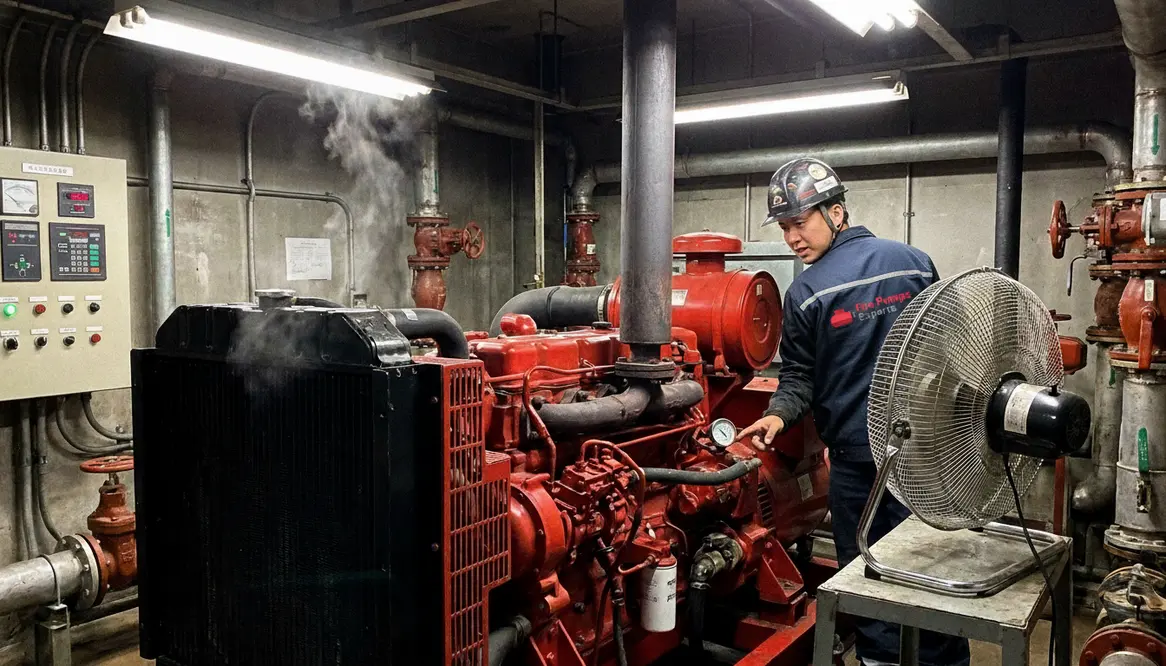
Diesel Fire Pump Overheats During Testing
Why a Diesel Fire Pump Overheats During Testing
I have seen a lot of things go sideways during fire pump testing, but a diesel fire pump overheating is one of the most common problems that can turn a routine check into a headache. In commercial and industrial buildings, this matters a lot. A diesel fire pump must start fast, run hard, and stay steady when the pressure drops. If it runs hot during testing, something in the system usually needs attention. And yes, that kind of heat can make even a tough pump act like it just ran a marathon in a winter coat.
In this article, I will walk through the main reasons for overheating, what I look at first, and how I help prevent it from coming back. If you manage a large property or facility, this will give you a clear path forward without all the fluff.
What I check first when a fire pump runs hot
When I see heat building up, I start with the basics. Most problems come from one of three places: poor cooling, too much load, or bad system setup. A diesel engine makes heat by design, so the real question is whether the cooling system can handle the job during fire pump testing. If it cannot, the pump will keep climbing in temperature until the alarm starts sounding like it wants a raise.
I first check coolant level, radiator airflow, belt condition, and fan rotation. Then I look at the pump room itself. If the room traps hot air, the engine cannot breathe well. That alone can push a diesel fire pump into overheating, even if the unit looks fine on paper.
Why cooling system issues matter so much
The cooling system does the heavy lifting during test runs. If the radiator has dust, lint, or debris on it, air cannot move through the fins. As a result, heat stays inside the system. I also check for a weak water pump, a stuck thermostat, or low coolant flow. Any of these can make a diesel fire pump overheating problem show up fast.
In large facilities, I also watch for poor ventilation in the pump room. A big building can have great gear and still fail a simple heat check if the room acts like a sealed oven. That is why I always treat airflow as part of the system, not just the room around it.
How testing conditions can trigger heat buildup
fire pump testing often pushes the unit harder than normal standby use. That is the point, of course, but it also exposes weak spots. If the pump runs at a closed or low flow condition for too long, heat builds in the engine and the pump casing. This is especially true when the test setup does not match the actual design flow.
I also see trouble when operators test for too long without giving the system time to stabilize. In some cases, the test plan itself creates the problem. So, if the pump gets hot only during testing and not during normal checks, I do not blame the machine first. I blame the test conditions, then I go hunting for the real cause.
Diesel fire pump overheating causes I see most often
Here is where I usually find the trouble:
Cooling and airflow
- Dirty radiator fins
- Low coolant
- Weak fan belt
- Poor pump room ventilation
Load and setup
- Wrong test flow rate
- Long test runs at low discharge
- Restricted exhaust flow
- Engine tuning issues
Each of these issues can turn a normal run into a heat problem. And while some are small, they can stack up fast. One weak belt may not look dramatic, but combine that with a hot room and a dirty radiator, and you have a full problem on your hands. That is how systems go from calm to chaotic, like a side character in a thriller who suddenly knows too much.
How I prevent repeat problems in major properties
I always focus on prevention because repeat heat issues waste time and put stress on the equipment. First, I keep the cooling system clean and serviced on schedule. Next, I make sure the test plan matches the pump design and the building’s needs. For commercial and industrial properties, that means checking room ventilation, exhaust path, and fuel system health before every planned run.
I also recommend reviewing the full fire protection setup with a trusted team. If your site uses both electrical and fire protection systems, it helps to work with a group that understands the full picture. For example, I often point people to los angeles fire pump service resources for more insight on pump system support. You can also review commercial electrical system support when power issues may affect controls or alarms. And if your site needs a broader look at protection systems, the fire sprinkler services overview gives useful context for larger facilities.
FAQ
Conclusion
If your diesel fire pump runs hot during fire pump testing, do not shrug it off. I would inspect cooling, airflow, and test conditions right away, then fix the small problems before they grow teeth. For commercial and industrial facilities, steady performance matters. If you want help diagnosing a diesel fire pump overheating issue or improving your test plan, reach out to a qualified fire protection team today and keep your system ready when it counts.