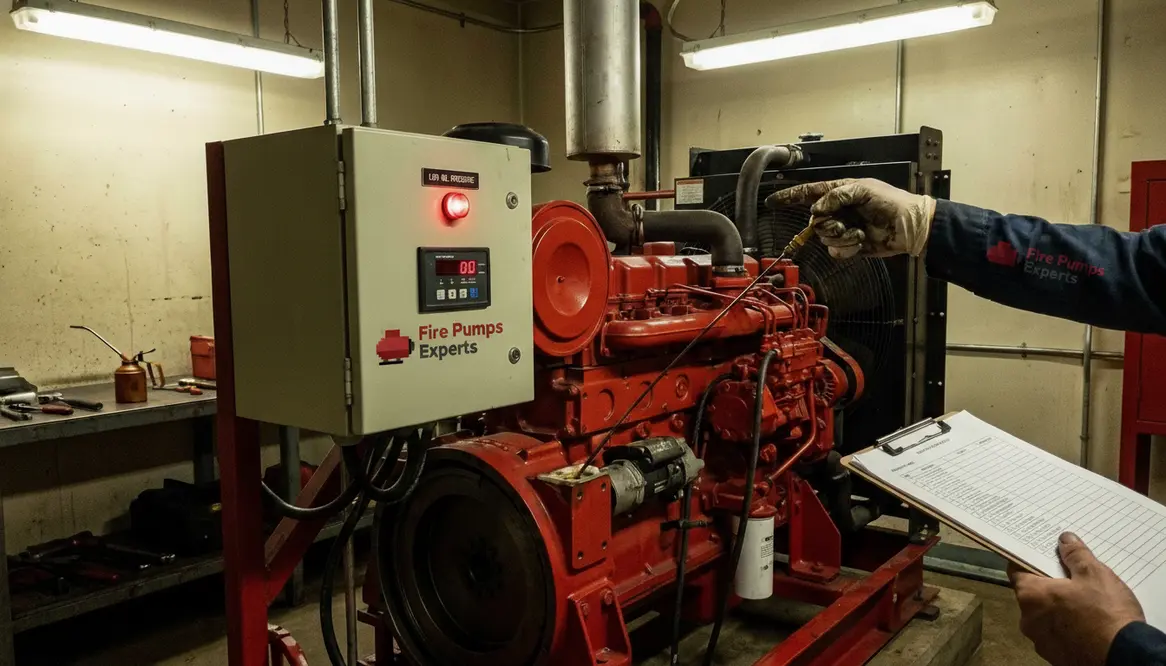
Diesel Fire Pump Low Oil Pressure Alarms: What I Watch
When I deal with a diesel fire pump low oil pressure alarm, I do not treat it like background noise. I treat it like the engine is trying to tap me on the shoulder and say, “Hey, boss, we need to talk.” In a commercial or industrial facility, that message matters. The same goes for diesel fire pump alarms, because they can point to simple issues, or they can hint at a deeper problem that needs fast action. I have learned that the safest move is to respond early, stay calm, and check the system before a small warning turns into a very expensive headache with a siren attached.
In major buildings and large properties, the fire pump is not a luxury. It is the muscle behind the sprinkler system. So, when oil pressure drops, I look at the pump, the engine, the controls, and the maintenance record as one team. That is how I keep the system ready when the real show starts.
What low oil pressure means in a diesel fire pump
Low oil pressure tells me the engine is not getting enough lubrication under the current operating condition. That can lead to heat, wear, and damage if I ignore it. The alarm may come from a real oil issue, or it may come from a bad sender, wiring fault, or gauge problem. Either way, I do not guess. I confirm.
Here is the practical truth. The engine needs stable oil pressure to protect moving parts. If pressure falls too far, the pump may still run for a short time, but the risk climbs fast. That is why I check oil level first, then look for leaks, then review the pressure reading against the engine manual. Simple steps, yes. Yet simple does not mean optional. Even Batman would check the basics before storming into the cave.
Why diesel fire pump alarms should never be ignored
Alarms exist for a reason, and usually that reason is not “to ruin your day.” I have seen a small alert turn into a shutdown because someone assumed the signal was a glitch. Sometimes the system is right. Sometimes the alarm comes from poor servicing, old oil, clogged filters, or a weak sensor. However, the cost of waiting is always higher than the cost of checking.
For commercial and industrial facilities, a false sense of safety can be dangerous. If the fire pump cannot perform, the sprinkler system may not deliver the pressure the building depends on. That is why I treat every alarm as useful information, not as a nuisance. The machine speaks in numbers. I listen.
How I troubleshoot a low oil pressure alarm
First checks
- Confirm oil level on the dipstick
- Look for leaks around seals, lines, and the pan
- Check the oil condition for dirt, fuel smell, or thick sludge
- Verify the gauge or sender with a known good test tool
Next checks
- Inspect the oil filter for clogging
- Review engine temperature and running history
- Look at battery and control panel health
- Confirm the pump room has proper airflow and normal conditions
I start with the easy wins because they solve a lot of problems. Then I move deeper if the alarm keeps coming back. If the oil level is fine but the pressure still reads low, I suspect a sensor, a wiring fault, or a worn engine part. In that case, I bring in a qualified fire pump service team instead of playing hero with a wrench and wishful thinking. That is how you keep a repair from becoming a rescue story.
What causes the alarm in commercial fire pump systems
The cause is often mechanical, but not always. I have seen low pressure alarms triggered by old oil that lost its strength, clogged filters that restricted flow, and pumps that sat unused for long periods without proper exercise. I have also seen control problems create fake alarms, which can feel a bit like a phone that rings at 3 a.m. and then says, “Wrong number.” Not fun.
For large properties, routine use matters. So does regular testing. A diesel fire pump should run through scheduled inspections, fluid checks, and performance tests. If a facility skips those steps, the odds of an alarm rise. And once that alarm appears, the clock starts ticking.
How I keep the system ready all year
I keep a simple rule in mind: inspect often, record everything, and fix small issues fast. I also make sure the maintenance plan covers the engine oil, filters, sensors, and control panel. In addition, I review the pump room environment because heat, dust, and poor ventilation can create avoidable trouble. A clean, dry, well managed space helps the whole system work better.
For facilities that need support across fire pump, electrical, and sprinkler service needs, I also like to align the maintenance plan with trusted resources such as commercial fire pump service solutions from Kord Fire and industrial electrical support from Kord Electric. When the system is part of a larger protection plan, everything tends to work with fewer surprises. That is the goal. Fewer surprises, more readiness, and less drama. Life already gives us enough drama.
FAQ
Quick answers people ask right after a diesel fire pump oil pressure alarm shows up
Conclusion
If your diesel fire pump sends a low oil pressure warning, I urge you to act now, not later. Start with the basics, confirm the reading, and fix the cause before it grows teeth. In a commercial or industrial setting, that one alarm can tell you a lot about the health of the whole system. If you want dependable protection, schedule a full inspection and keep your fire pump ready for the moment it matters most.