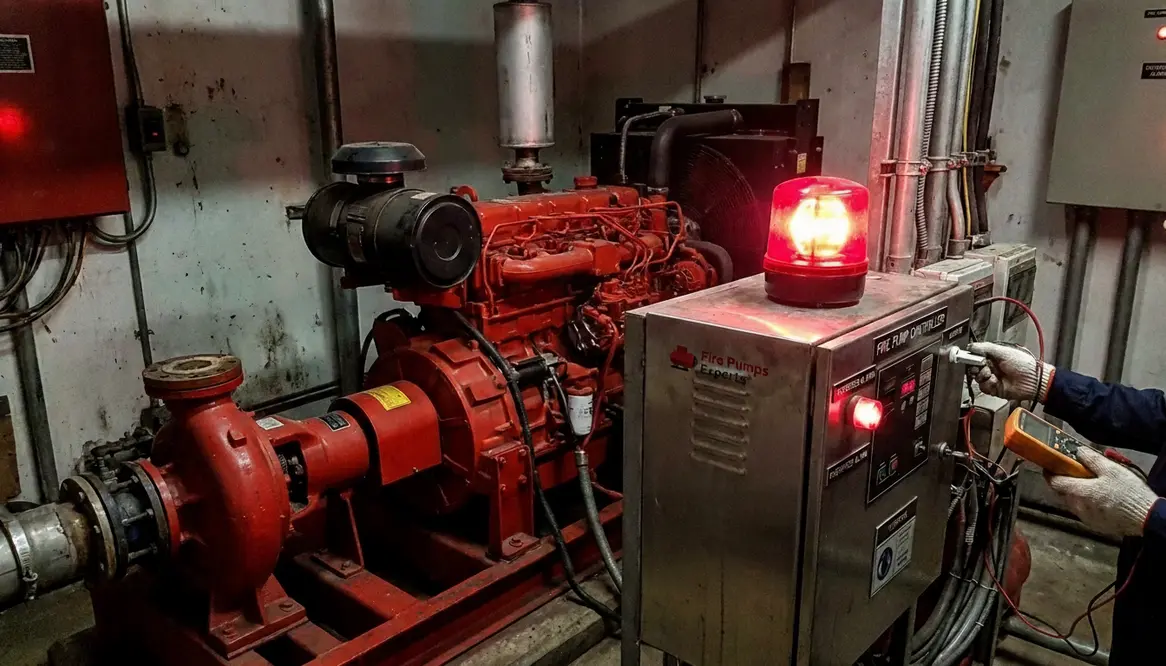
Causes of Diesel Fire Pump Overspeed Alarm
I have seen plenty of fire pump rooms in my time, and I can tell you this much: when a diesel fire pump overspeed alarm goes off, it rarely does so for fun. It is the system’s way of saying something is moving faster than it should, and that can spell trouble fast. In a commercial or industrial building, a diesel fire pump controller keeps a close watch on engine speed, so when the speed climbs too high, the alarm steps in like an overcaffeinated security guard. In this article, I will break down the real causes, the warning signs, and what I look at first when one of these alarms shows up.
Why the alarm sounds in the first place
The overspeed alarm usually means the diesel engine has gone beyond its safe RPM limit. That can happen during a start up, during a test, or while the pump is running under load. In most cases, the controller detects that the engine is spinning too fast and triggers a shutdown or alarm to protect the pump and the engine.
Here is the simple truth. The diesel fire pump overspeed alarm is not the problem itself. It is the messenger. And like most messengers, it tends to show up with bad news and zero patience. I always treat it as a signal to inspect the speed sensing system, the engine governor, and the control logic before I assume the engine itself has gone rogue like a Marvel villain.
Common causes I check first
When I troubleshoot an overspeed event, I start with the parts most likely to fool the system. In many facilities, the issue comes from a bad speed sensor, loose wiring, or a faulty magnetic pickup. If the controller cannot read engine speed correctly, it may think the engine is flying when it is not.
Common cause
Faulty speed sensor, damaged wiring, or weak signal
What I look for
Loose connections, corrosion, broken cable shielding, or poor sensor gap
If the diesel fire pump controller misreads RPM, the alarm can show up looking guilty.
Common cause
Engine governor trouble
What I look for
Unstable fuel control, worn parts, or poor calibration
If the governor hunts or misbehaves, overspeed becomes a real possibility.
Common cause
Controller malfunction
What I look for
Fault codes, damaged relays, bad settings, or software issues
A diesel fire pump controller that is out of spec can create alarms that feel personal.
Sometimes the problem is not dramatic at all. A wire vibrates loose, the sensor drifts out of range, and the controller starts acting like it needs a nap. Still, even a small fault can shut down a critical fire protection system, so I never shrug it off.
How the diesel fire pump controller reacts
The diesel fire pump controller does a lot more than start and stop the pump. It watches speed, pressure, engine status, and alarm conditions. When it sees overspeed, it reacts fast because the engine must not keep climbing. That quick action helps prevent damage to the engine, coupling, and pump assembly.
I also check whether the controller is set up for the right engine model. Wrong settings can cause false alarms or delayed shutdowns. That matters even more in large commercial and industrial facilities, where a missed fault can affect the whole fire protection plan. If you want a broader view of system support, I often point teams to los angeles fire pump service as a useful reference for fire pump related needs in major properties.
What mechanical issues can trigger overspeed
Not every overspeed alarm starts with electronics. Sometimes the engine itself creates the problem. A stuck fuel rack, a governor that hunts, or a fuel system that delivers too much fuel can push the engine speed beyond the limit. In diesel systems, that extra fuel can feel a bit like handing the engine a double espresso and telling it to calm down.
I also look at the air intake and exhaust path. Restricted airflow can make the engine behave poorly, and in some cases, an unstable engine response can confuse the speed control system. Likewise, if the governor linkage binds, the engine may race before the controller catches it. Therefore, I inspect both the control side and the mechanical side together. That approach saves time and keeps me from chasing ghosts in the machine.
Why testing and maintenance matter
Regular testing helps me catch small issues before they become expensive ones. I check sensor condition, verify controller settings, inspect wiring, and confirm that the governor responds smoothly. I also review alarm history, because patterns often tell the real story. If overspeed keeps showing up during certain starts or load tests, I know exactly where to dig.
In my experience, the best fire pump rooms run like a disciplined orchestra. Every part knows its cue. When one instrument goes off key, the whole room can sound like a bad sequel nobody asked for. That is why I encourage scheduled inspections for commercial buildings, warehouses, and industrial sites that depend on diesel fire pump systems.
How I trace the fault in the field
I follow a steady process. First, I confirm whether the alarm was real or false. Next, I compare controller data with actual engine behavior. Then I inspect the speed pickup, wiring, governor, and fuel system. After that, I test the controller response under controlled conditions. This method helps me separate a bad sensor from a true engine overspeed event.
I also review any related services or system support that may affect the pump room. For teams managing complex facilities, electrical support for fire systems can help keep control power and related equipment in good shape. For properties that need sprinkler coordination as part of the larger protection plan, sprinkler system support for major properties can also fit into the broader maintenance picture.
FAQ
Conclusion
If I see a diesel fire pump overspeed alarm, I treat it as a warning worth respecting. The cause may be a sensor, wiring, governor, fuel issue, or controller fault, but the fix starts with a careful check. For commercial and industrial properties, fast action protects equipment and keeps the fire system ready. If your facility needs help, I recommend getting a qualified fire pump technician involved now, before a small warning turns into a costly shutdown.