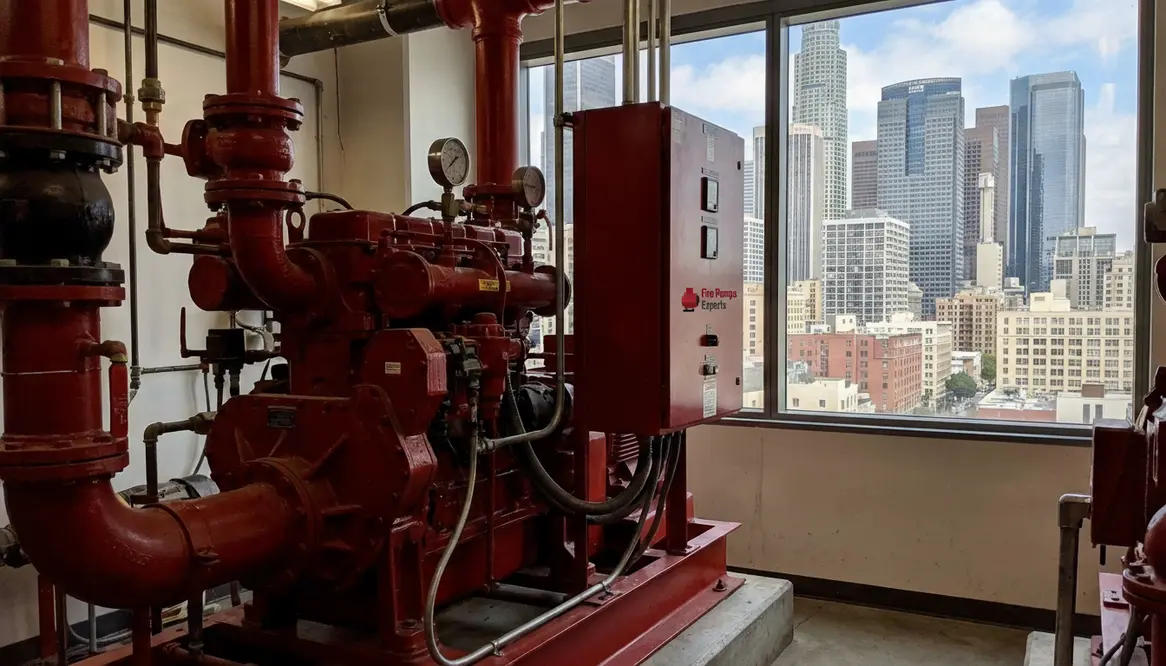
Why Downtown LA High Rise Buildings Need Fire Pumps
In a skyline packed with glass, steel, and people, water pressure is either your best friend or your biggest weakness.
In downtown Los Angeles, towers rise fast and live close together. That is exactly why why high rise buildings need fire pumps los angeles matters so much. I am talking about the kind of pressure that can push water to the top floors when gravity tries to act like a stubborn bouncer at the door. Without that boost, a fire system may not reach where it must. And in a high rise, every second counts, because smoke and heat do not wait for anyone, not even the building manager with the cleanest clipboard in the city.
Fire pumps help keep water moving through a building’s sprinkler and standpipe system. In a tall commercial tower, the city water supply alone often cannot do the job. So, I look at fire pumps as the muscle behind the system. They help protect tenants, staff, assets, and the building itself. In a place like Downtown LA, where business moves fast and buildings reach high, that muscle is not optional. It is part of smart risk control.
What a fire pump does in a high rise
A fire pump raises water pressure so sprinkler heads and hose connections can work as designed. That matters because water pressure drops as it climbs. The higher the floor, the harder the system has to work. Therefore, a pump steps in and keeps the flow strong enough for fire response.
The “backup singer” with serious volume
In practical terms, I see fire pumps as the backup singer that keeps the whole performance on key. They may stay quiet most days, but when trouble starts, they have one job: deliver water fast and with force. In commercial towers, that support can help control a fire before it spreads from one floor to another.
Why downtown towers face special fire risk
Downtown LA high rises deal with a mix of tight space, heavy occupancy, and complex systems. Because people work, shop, and live in these buildings all day, a fire can spread into a serious event before responders even get to the right floor. Also, elevators, stairwells, and mechanical rooms can create more risk if the fire system does not perform well.
Here is the simple truth: tall buildings are not like one story warehouses. A fire in a tower is harder to reach, harder to control, and harder to evacuate. That is why fire pumps matter so much in commercial buildings with height. They help the system keep pace with the structure itself.
When you think about why high rise buildings need fire pumps los angeles, start with this: a single weak link in vertical water delivery can turn an isolated incident into a multi-floor emergency.
Why high rise buildings need fire pumps los angeles for code and life safety
Los Angeles building rules and fire safety standards expect high rises to have strong water delivery for fire protection. I always tell owners to treat that as a life safety baseline, not a nice bonus. The system must support sprinklers, standpipes, and fire department use when needed.
For a quick outside reference, I recommend this guide to fire pump requirements by facility type because it helps explain how commercial and industrial properties use fire pumps for code compliance and safety planning. That kind of guidance matters, especially when a building has serious height, large floor plates, and major occupancy loads.
And yes, the rules can feel dry. But so is a fire prevented from spreading, which is the whole point. In a dense district, why high rise buildings need fire pumps los angeles is not a theory conversation; it shows up in code books, tenant safety plans, and insurance requirements.
How fire pumps support daily building operations
More than equipment in a locked room
Fire pumps do more than sit in a room and look important. They support the whole safety plan in several ways:
Key roles in a tall commercial tower
- They keep sprinkler pressure steady on upper floors.
- They help standpipes supply water for firefighters.
- They support a fast response during peak occupancy hours.
- They reduce the chance of weak water delivery in tall zones.
- They give owners a stronger layer of protection for tenants and property.
Also, a well maintained pump can help building teams sleep better at night. And in property management, better sleep is not a luxury. It is a business tool. If the system stays ready, the building stays safer, and that is the kind of calm every owner wants.
How I think about inspection, testing, and maintenance
A fire pump only helps if it works when needed. So I focus on inspection, testing, and maintenance as a regular part of ownership. Teams should check the pump, monitor controls, review alarms, and make sure the power source stays reliable. In addition, they should keep records clean and current.
For high rise buildings, I never treat this as a box to tick and forget. I treat it like a living system. If a valve sticks, a controller fails, or the pump room gets ignored, the entire fire protection plan can take a hit. That is a bad trade for any commercial property, especially one in Downtown LA where downtime already costs plenty without adding fire risk to the menu.
If you ever want a one-line reminder of why high rise buildings need fire pumps los angeles, here it is: a pump that is tested, documented, and ready beats an impressive design that fails on the first real alarm.
FAQ
Conclusion
If you manage or own a Downtown LA high rise, I encourage you to take fire pump planning seriously today, not after a problem shows up at the worst possible time. A strong system protects people, property, and business continuity. It also keeps your building ready for code demands and real world risk. If you want safer operations and better peace of mind, review your fire pump setup now and make sure your tower has the pressure it needs.