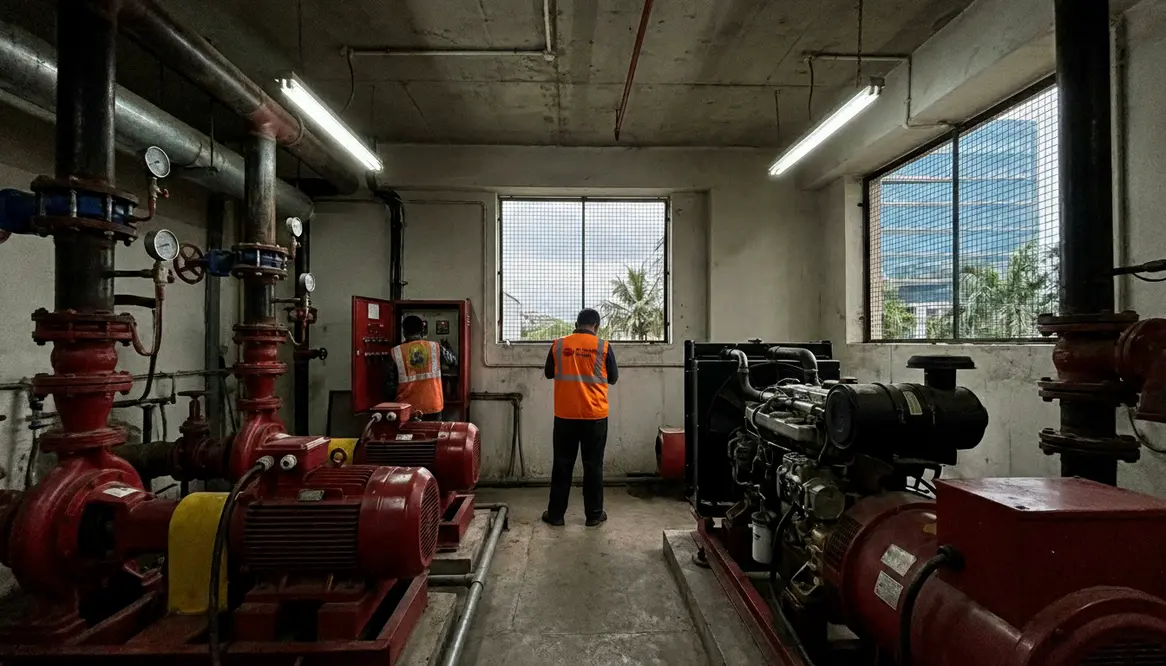
Fire Pump IT Park Pune Design Guide for Reliability
I have spent years walking through server halls that hum like a sci fi movie set, and one thing always sits quietly in the background, waiting to prove its worth. Fire protection. In a city like Pune, where glass towers house mission critical data and restless innovation, a fire pump IT park Pune strategy is not just a compliance checkbox. It is the difference between a brief interruption and a headline nobody wants to read. So let me take you through how I approach fire pump design for these high value environments, with a steady hand and maybe a small smirk along the way.
Understanding Risk in Pune’s Tech Ecosystem
Pune’s IT parks are dense, vertical, and always on. Servers do not sleep. Neither do risks. Electrical loads run high, cooling systems work overtime, and cable trays stretch like spaghetti behind the walls. Because of this, I always begin with a clear risk profile.
First, I look at fire load density. Then, I assess occupancy type, which is typically business critical infrastructure. Moreover, I consider uptime requirements, because in tech campuses, downtime is basically a four letter word.
Consequently, fire pump systems here must deliver immediate and sustained pressure. Not later. Not almost. Right now. Like a superhero who shows up before the villain finishes their speech.
How do I design a fire pump system for an IT park in Pune?
I start with water demand calculations. Always. I map sprinkler density, hydrant flow, and hose reel requirements. Then, I layer redundancy into the design, because one pump is brave, but two pumps are wise.
After that, I select pump types. Typically, I use a combination of electric main pumps, diesel backup pumps, and jockey pumps for pressure maintenance. This trio works like a well rehearsed band. If one member drops out, the show goes on.
Additionally, I ensure compliance with national standards and local fire authority requirements in Pune. However, I do not stop at compliance. I design for reliability under stress, because regulations set the floor, not the ceiling.
Core Components of Fire Pump IT Park Pune Systems
When I design a fire pump IT park Pune setup, I focus on how each component behaves under real conditions, not just on paper.
Pump Selection
I choose pumps based on flow and pressure curves that match peak demand. Oversizing wastes energy. Undersizing invites disaster. Balance matters.
Power Reliability
I always include diesel driven backup pumps. Because when power fails during a fire, irony becomes tragedy.
Controller Systems
Controllers must be intelligent yet simple. During an emergency, nobody wants to decode a puzzle.
Water Storage
I ensure dedicated fire water tanks with adequate capacity. Shared tanks are like shared passwords. Convenient, but risky.
Furthermore, I design piping layouts to minimize friction loss. Every meter of pipe matters when seconds count.
Designing for Redundancy and Reliability
In IT campuses, I never trust a single point of failure. Instead, I build layers. Redundancy is not over engineering. It is insurance.
For instance, I separate fire pump rooms from electrical hazards. I also ensure easy access for maintenance. Because even the best system fails if nobody can service it.
Moreover, I include automatic start mechanisms. The system should respond faster than a human can say, “Is that smoke?”
And yes, I test everything. Regularly. Because a fire pump that has never been tested is like a gym membership you never use. Technically there, but not doing much.
Integration with Smart Building Systems
Modern IT parks in Pune love automation. Lights think. Doors listen. Even coffee machines feel smarter than me some mornings. So, naturally, fire pump systems must integrate seamlessly.
I connect pumps with fire alarm systems, building management systems, and remote monitoring dashboards. This allows real time alerts and faster response.
Additionally, I design data logging features. After all, data centers love data, even about their own safety systems.
However, I keep manual overrides intact. Because when technology fails, simplicity saves the day.
Compliance Meets Practical Execution
Codes and standards guide every decision I make. But real world conditions shape the final design. Pune’s water supply variations, seasonal changes, and infrastructure constraints all play a role.
Therefore, I conduct site specific evaluations. I do not copy paste designs. That approach belongs in bad sitcom reruns, not critical infrastructure.
In addition, I coordinate with architects, MEP consultants, and facility managers. Fire pump design is not a solo act. It is an ensemble performance where timing matters.
When dealing with a fire pump IT park Pune configuration, these practical constraints shape how theory meets reality, from water sourcing to pump room layout and long term maintenance planning.
Conclusion: Build Systems That Respond Before You Blink
If you manage or develop an IT park in Pune, do not treat fire pump systems as an afterthought. I design these systems to act instantly, perform reliably, and adapt to complex environments. The right approach protects assets, uptime, and lives. Work with experts who understand high performance infrastructure, and let your fire protection system be the quiet guardian that never misses its cue.
A well planned fire pump IT park Pune strategy is ultimately about resilience. It is about keeping critical data, people, and operations safe when everything else is going wrong.
FAQs
For deeper technical references on fire pump sizing and performance curves, resources such as https://firepumps.org can complement local code requirements and on site engineering judgment.