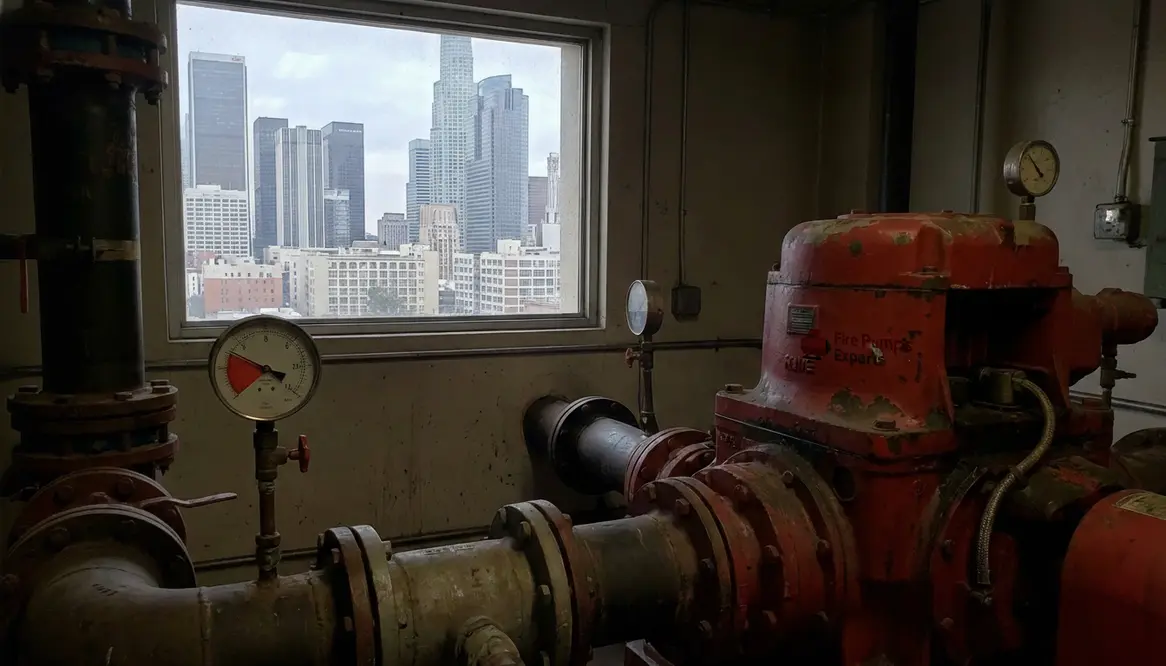
Fire Pump Pressure Problems in Downtown LA Buildings
In Downtown LA, tall commercial buildings run on pressure the way a great movie runs on tension. When that pressure drops, the whole system starts acting like a diva on opening night. I have seen fire pump pressure problems turn a normal safety system into a weak link fast. In a place where office towers, mixed use properties, and industrial spaces depend on steady water flow, even a small pressure dip can create big trouble. So, if you manage a major property in Downtown LA, this issue deserves your full attention.
Downtown LA brings unique demands for fire protection. High rises need water to climb far above street level, and that climb takes power, balance, and the right setup. Aging piping, uneven water supply, and rushed retrofits all combine to test every fire pump in the neighborhood. When fire pump low pressure problems show up in this kind of environment, they do not just stay in the pump room; they affect tenants, operations, and compliance.
Why Downtown LA Buildings Struggle With Fire Pump Pressure
Downtown LA brings unique pressure demands. High rises need water to climb far above street level, and that climb takes power, balance, and the right setup. However, aging piping, uneven water supply, and rushed retrofits can all throw the system off. I often see pressure loss start with simple wear, then grow into a full system headache.
Also, many commercial buildings in this area were built in different eras. As a result, one property may have old pipes feeding modern tenants, while another may rely on newer controls that nobody has tested in months. That mix can make pressure issues harder to predict. And yes, the building may look polished on the outside, but inside the system may be whispering, “Houston, we have a problem.”
How Downtown Conditions Make Pressure Drop Faster
Traffic vibrations, construction nearby, and constant tenant turnover all add stress to piping and support equipment. Over time, that stress turns into the kind of fire pump low pressure problems that only show up when the system is needed most. The combination of elevation, demand swings, and patchwork upgrades means even a solid pump can lose performance if nobody keeps a close eye on it.
Common Signs of Fire Pump Low Pressure Problems
If I want to catch trouble early, I watch the warning signs closely. Pressure issues rarely show up out of nowhere. They usually build slowly, and then they arrive with bad timing, which is a classic move from any mechanical system with attitude.
- Water pressure drops during testing or alarm checks
- The pump cycles too often or fails to hold pressure
- Gauges swing up and down without a clear pattern
- Valves, fittings, or seals show leaks
- The pump room gets hot, noisy, or vibrates more than usual
Because pressure loss often ties to heat, I also pay close attention to pump temperature. If you want a deeper look at that side of the issue, I recommend this helpful resource on fire pump overheating causes, signs, and prevention. Heat and pressure problems often travel together like a bad buddy comedy, except no one laughs when the alarm system fails.
When Low Pressure Crosses From Annoying to Dangerous
A short pressure dip during a weekly churn test might look harmless, but repeated dips, surging gauges, and noisy starts are quiet warnings. In Downtown LA towers, those warnings can mean that standpipes on upper levels will not see the pressure they need if a fire breaks out. That is why I treat recurring fire pump low pressure problems as serious performance defects, not just quirks of an old system.
What Causes Pressure Loss in Commercial Fire Pumps
Mechanical and Piping Causes
I usually trace pressure loss back to a handful of root causes. First, clogged strainers or partially blocked pipes can choke the flow. Next, worn impellers and weak pump parts reduce the pump’s ability to build real pressure. In addition, air leaks can ruin suction and make the system act unstable.
Electrical and Control Issues
Electrical issues matter too. A motor that does not get enough power cannot perform at full strength. Meanwhile, faulty pressure switches or poor control settings can make the pump start too late, stop too early, or cycle too often. That is why I never treat pressure loss as a single problem. I treat it as a system signal.
Downtown LA Risk Factors for Low Pressure
Tall shafts, long pipe runs, and complex valve arrangements make every pound of pressure count. When you mix that with occasional water supply changes and piecemeal retrofits, you get perfect conditions for fire pump low pressure problems. Even a small misstep in sizing, valve position, or controller setup can shave pressure off the top floors where fire crews need it most.
How I Troubleshoot Fire Pump Pressure Problems
When I troubleshoot, I move step by step. First, I check the gauges and compare them with the system log. Then I inspect the suction line, discharge line, valves, and controller settings. After that, I look for leaks, debris, and signs of wear.
Quick Checks
Review gauge readings, alarm history, and pump start behavior. Also, confirm that valves stay fully open and that the controller shows no fault codes.
Deeper Checks
Inspect suction supply, test pressure switch accuracy, and examine pump wear. In some cases, I also verify whether the building demand exceeds what the system can safely handle.
Because Downtown LA properties often face heavy tenant demand, I also test the system under real load whenever possible. That gives a far clearer picture than a quick glance at a gauge. Frankly, fire protection systems are not the place for wishful thinking. They prefer facts.
How to Prevent Fire Pump Pressure Problems in Major Properties
Prevention always costs less than repair. So, I advise regular inspections, scheduled flow testing, and clean pump room conditions. I also recommend keeping records for every test, repair, and pressure change. Those logs help spot a slow drift before it turns into a major failure.
In addition, commercial and industrial buildings should train staff to notice warning signs early. If a manager hears strange noise, sees pressure swings, or notices repeated pump starts, that deserves attention right away. Likewise, routine service from a team that understands large property systems can keep minor issues from growing teeth.
Fire pump pressure problems in Downtown LA rarely stay small. However, with testing, fast action, and the right maintenance plan, I can keep the system steady and ready. If your building needs expert support, I urge you to schedule a commercial fire pump inspection now. Protect the property, protect the people, and let the system do its job without drama.
Answering Common Questions About Pressure Drops
Owners and managers often ask the same questions when they first run into fire pump low pressure problems. The patterns are familiar: unexplained alarms at night, irritated tenants, and test reports that suddenly do not match last year’s numbers. Clear answers make it easier to plan repairs and defend budgets when upgrades are overdue.
Conclusion: Keep Downtown LA Pumps Ready For Real Emergencies
Downtown LA lives on high energy, tall skylines, and constant activity, but fire safety relies on something quieter: stable pressure and dependable equipment. When fire pump low pressure problems start to show, they are early warnings that the building’s last line of defense is getting tired. With focused testing, smart troubleshooting, and consistent maintenance, those problems can be corrected long before they turn into a headline. Keep the pump room honest, keep the logs accurate, and let the system stay ready for the one day it absolutely has to perform.