AS 2118 Warehouse Fire Pump Requirements Guide
AS 2118 Fire Pump Requirements for Warehouses sound dry at first, I know. But in the real world, this standard sits right in the middle of life safety, asset protection, and business continuity. And if you run or manage AS 2118 warehouses, you already know that a fire system is not just a box on a wall with a flashing light. It is the part of the building that shows up when things go very wrong, and it needs to work without drama. In this article, I walk through the main fire pump requirements, what they mean for warehouse operations, and how I approach compliance in a way that keeps people safe and the paperwork from turning into a full season of a legal thriller.
What AS 2118 fire pump rules mean for warehouse sites
When I look at a warehouse, I see more than floor space and racking. I see fuel loads, high storage, large open bays, and long travel paths for fire crews. That is why fire pump design matters so much. AS 2118 focuses on making sure sprinkler and fire water systems get the pressure and flow they need, even when the building layout is large or demanding.
In practical terms, a fire pump steps in when normal water supply cannot do the job on its own. For warehouses, that often means the system must support higher demand because the protected area is wide, the ceiling may be high, and the risk can change from one zone to another. So, I treat the pump as a core building asset, not a side note. If the pump fails, the whole protection plan can wobble like a shopping trolley with one bad wheel.
How I check pump capacity, pressure, and water supply
The first thing I check is whether the pump can deliver the pressure and flow the sprinkler system needs. That sounds simple, but the details matter. A warehouse may need a pump that supports several discharge points at once, especially where the storage arrangement increases the fire load. Therefore, the water source, pipe losses, and elevation changes all have to be part of the design check.
Here is how I break it down:
- Water source: I confirm the supply can meet demand for the required duration.
- Pressure needs: I check that the pump can push water through the full system under fire conditions.
- Flow demand: I verify the pump supports the sprinkler layout and any extra system load.
- Allowance for losses: I include friction loss, height gain, and fitting resistance.
Also, I never assume a pump that “looks big enough” is actually fit for the job. Fire systems do not care about confidence. They care about math.
AS 2118 warehouses and the equipment setup I look for
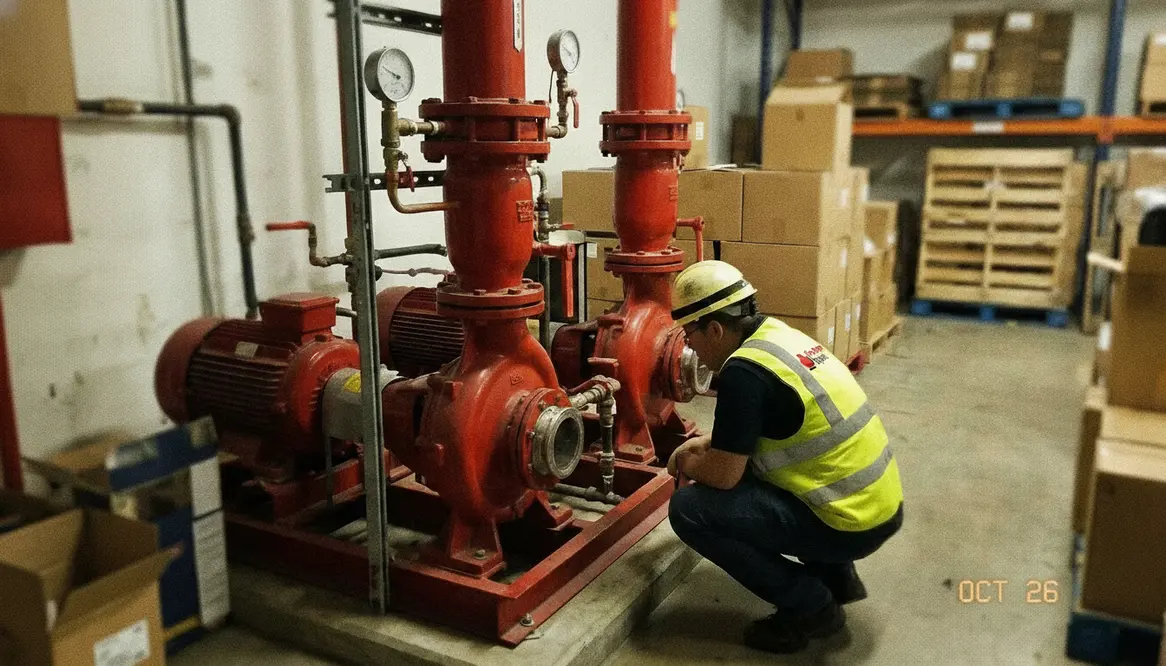
For AS 2118 warehouses, the pump room and its support gear need real attention. I look for a proper pump set, dependable controls, a stable power source, and clear access for testing and service. If the pump room sits behind stacked cartons, broken pallets, or a mystery pile of old cable reels, then someone has already missed the point.
Mechanical side
Pump, valves, pipework, gauges, and suction conditions all need to play nicely together. Poor suction, dodgy valves, or undersized pipe can drag the whole system down when it is supposed to be doing its best work.
Electrical side
Controllers, alarms, backup power, and fail safe function have to be reliable. If the power supply or control logic trips over at the wrong moment, the best mechanical setup in the world will not save the day.
Because warehouses often run long shifts, I also think about reliability over time. The pump must start when needed and stay steady under load. In many cases, that means routine checks, clear labels, and a layout that lets technicians work without wrestling the equipment like it is a scene from a sci fi reboot.
In addition, I look for signs that the installation supports quick inspection. Good access saves time, and time matters when a facility is protecting stock, forklifts, staff areas, and loading docks all at once.
Which testing and maintenance steps keep the system ready?
I always say a fire pump is only as good as its last test. Regular testing proves the system can do the job before a real fire turns up uninvited. For AS 2118 warehouses, I focus on start up checks, run tests, pressure readings, and alarm verification. I also want a maintenance plan that matches the size and use of the site.
Testing should confirm that the pump starts properly, reaches expected output, and works with the rest of the fire water system. Furthermore, staff should know who handles faults, who records results, and who follows up on issues. A missing test log may not sound exciting, but it can become very exciting during an audit, which is not the kind of surprise anybody wants.
I also recommend checking for wear, leaks, vibration, power issues, and blocked access. Small faults often grow up fast in warehouse environments because of dust, heat, and heavy daily use.
When I bring in a fire safety specialist for compliance help
There comes a point where guessing stops being cost effective. If a warehouse has a complex layout, mixed storage, or older infrastructure, I bring in a fire safety specialist who works with commercial and industrial buildings. That step helps me confirm the system meets the right interpretation of AS 2118 and fits the actual site conditions.
I also use trusted industry references when I want to stay current. For deeper guidance, I would review the official AS 2118 fire pump guidance for commercial warehouses alongside site specific engineering advice. That helps turn the standard into a workable plan instead of a pile of hopeful assumptions.
In short, professional support saves time, reduces risk, and helps protect the building, the people in it, and the stock that keeps the business alive. No one wants a warehouse fire plan that sounds good in a meeting and fails in the field. That is not strategy. That is a headache with a logo.
FAQ
Conclusion
If you want your warehouse fire protection to hold up when it counts, I recommend treating the pump system as a critical part of the building, not an afterthought. Review the design, test it properly, and keep the access clear. If your site needs a closer look, I suggest speaking with a fire safety expert who understands commercial and industrial facilities. The right support now can prevent a much bigger problem later, and that is always money well spent.