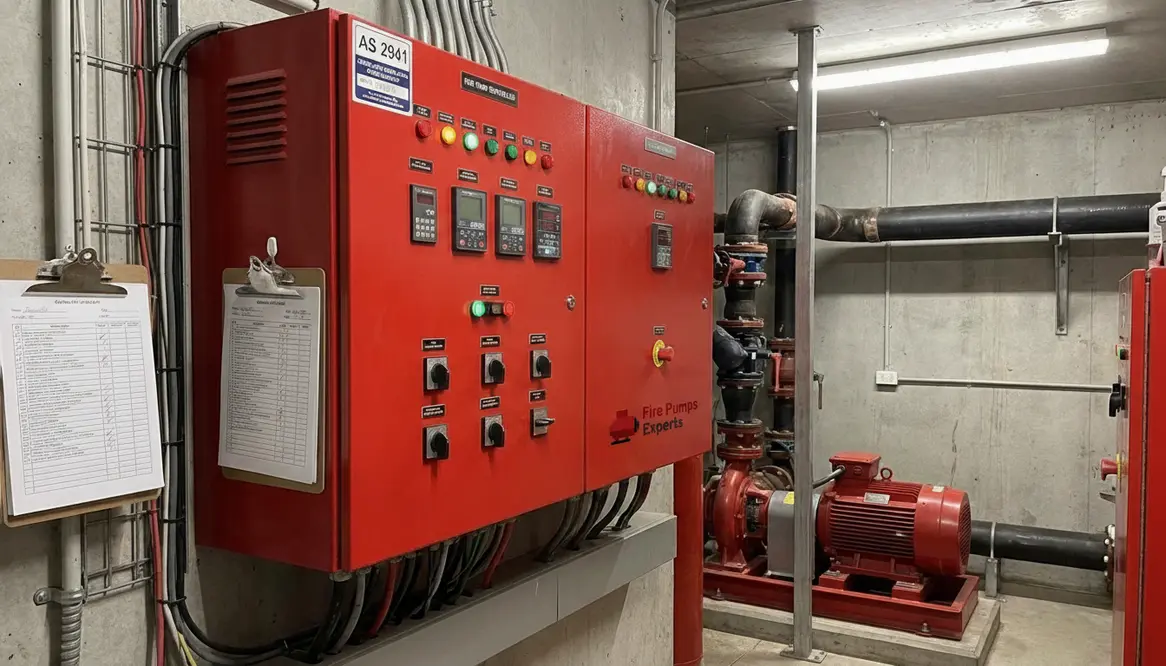
AS 2941 Fire Pump Controller Requirements
AS 2941 Fire Pump Controller Requirements sit at the heart of fire pump reliability for commercial and industrial facilities. I like to think of the controller as the quiet stage manager behind the curtain, never glamorous, always critical. If it fails, the whole show gets awkward fast. In this guide, I will break down what matters, why it matters, and how I approach compliance in a way that keeps major property buildings protected. I will also keep this grounded in real use, because nobody wants a fire safety article that reads like a robot wrote it after three cups of office coffee.
What AS 2941 Means for a Fire Pump Controller
AS 2941 sets the standard for fire pump installation and performance in Australia, and the controller plays a major role in that system. I focus on the controller because it starts, supervises, and helps protect the pump when pressure drops or demand rises. In simple terms, it tells the pump to get moving when the building needs water fast. That sounds basic, but the details are where compliance lives. This is exactly why an AS 2941 controller review needs to be taken seriously, not treated like a box-ticking exercise.
The controller must suit the pump type, the power source, and the building risk. For commercial and industrial sites, that means I look at duty, standby needs, alarm signals, and fault response. In addition, the controller must support safe operation during emergency conditions. If it cannot do that, it is not just a weak link, it is the weak link.
Key Compliance Points I Check First
When I review a fire pump controller against AS 2941, I start with the basics and then move deeper. First, I check that the controller matches the pump and system design. Next, I confirm that it handles automatic start and manual control where needed. After that, I look at alarms, isolation, and fault monitoring. These are not nice extras. They are core requirements.
The controller should also be easy to inspect and service. A neat panel may look boring, but boring is beautiful when you want the pump to work under pressure. I also check that labels, indicators, and access points make sense for operators and technicians. Clear layout saves time, and time matters when the fire alarm starts sounding like the world has gone full sci fi. When you are aligning your AS 2941 controller requirements, clarity is a safety feature.
How I Review Installation and Location
Installation matters just as much as the controller itself. I always check where the unit sits, because location affects safety, access, and reliability. The controller should be placed so staff can reach it quickly, yet it must stay protected from damage, heat, water, and harsh site conditions. For industrial sites, that point becomes even more important because dust, vibration, and moisture love to cause drama.
I also make sure the controller has enough space around it for service and testing. If a technician has to bend like a yoga instructor just to inspect a terminal, the setup needs work. Proper mounting, cable routing, earthing, and segregation all matter. In addition, the installation must support fast fault diagnosis, because a delayed fix can turn a small issue into a very expensive story. Under the AS 2941 controller requirements, installation is not a side quest.
AS 2941 controller testing and maintenance
Testing is where theory meets reality. I do not trust a controller just because it looks polished. Instead, I want proof. Routine tests should confirm automatic start, signal response, power changeover if fitted, and alarm operation. These checks show whether the system will do its job when the building faces a real emergency. If you are working to AS 2941 controller requirements, testing evidence is your best friend.
Maintenance should also follow a clear schedule. I look for worn parts, loose connections, damaged indicators, and signs of heat or corrosion. Furthermore, records should stay current, because good documentation helps with audits and repairs. If you want a useful reference point for site based planning, I recommend reviewing the commercial fire safety solutions at Kord Fire as a practical starting point for facility teams. It is not magic, it is planning done properly.
Here is a simple view of what I check during a controller review:
| Area | What I confirm |
|---|---|
| Power | Correct supply, isolation, and backup support |
| Controls | Auto start, manual run, and stop functions |
| Alarms | Fault, run, and status signals |
| Access | Safe reach for testing and service |
Why commercial and industrial facilities need a tighter approach
Major properties carry more people, more equipment, and more risk. So, I treat the controller as part of a larger fire safety chain, not an isolated box on a wall. Warehouses, plants, office towers, and large mixed use buildings need dependable fire pump control because water delivery must stay stable under pressure. One weak part can affect the entire response. That is why AS 2941 controller requirements are not something you leave to chance.
That is why I keep the focus on correct selection, proper installation, regular testing, and clear records. I also push for site specific checks, because no two facilities behave the same. A controller that works well in one building may not suit another if the load, layout, or environment changes. Standards help, but experience closes the gap between paper compliance and real world readiness. If your team is aligning an AS 2941 Fire Pump Controller compliance plan, consistency and proof matter more than vibes.
FAQ about AS 2941 controller requirements
Conclusion
If you manage a commercial or industrial property, I suggest you treat your fire pump controller as a mission critical asset, not background equipment. Review the installation, test the functions, and keep the records clean. Then, compare your current setup against AS 2941 with fresh eyes. If you want support for a site level review or need help planning the next step, reach out and get the system checked before a small fault becomes a big problem. Fire safety likes attention, and frankly, it deserves it. For that final stretch, keep your AS 2941 controller requirements aligned to what the site actually does, not just what the documentation says.