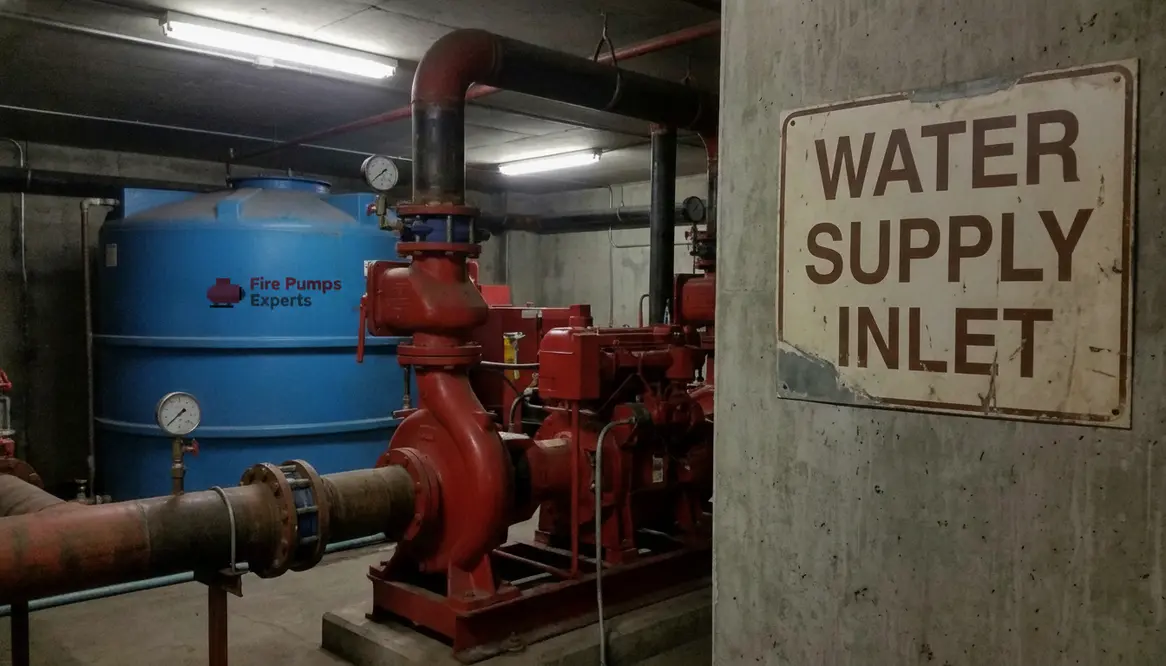
Available Water Supply Matters When Selecting a Fire Pump
Quick Reality Check
Pick the pump first, then discover the supply cannot perform. That is the mistake that keeps showing up.
Supply Sets the Limit
The fire pump water supply shapes the entire system: flow, pressure, storage, and reliability.
Balance, Not Drama
Match the pump to demand with room to spare. Oversizing without checking the supply is a fast track to trouble.
I have seen this mistake more times than I care to count: a team picks a fire pump first and asks about the water source later. That is a bit like buying a concert ticket before checking whether the band is actually playing. When I look at a commercial or industrial property, I always start with the fire pump water supply, because it shapes everything that follows. If the supply cannot meet the demand, the pump cannot do its job, no matter how impressive it looks on paper. And in fire protection, paper does not put out flames.
For major buildings and heavy use facilities, the available water supply sets the real limit for system performance. Therefore, I focus on flow, pressure, storage, and reliability before I even think about pump size. That approach keeps the design practical, code aware, and ready for the kind of day nobody wants to have.
How I check water supply before choosing a pump
I begin with a full water supply review. First, I look at the source type, whether it comes from a municipal main, tank, reservoir, or another dedicated source. Then I check the available flow and pressure at the needed time. A pump cannot create water out of thin air, no matter how heroic it sounds on the brochure.
I also watch for pressure drops during peak use. In many commercial and industrial settings, nearby demand can change the numbers fast. So, if the supply looks strong at one moment and weak the next, I treat that as a warning sign. Fire protection systems need steady support, not a dramatic plot twist worthy of a season finale.
Why flow and pressure must match the building need
A fire pump should not be selected by habit or guesswork. Instead, I match the pump to the actual demand of the building. That demand depends on the hazard level, pipe layout, sprinkler system, hydrants, and any standpipe needs. As a result, the available source must cover the total system demand with room to spare.
If the supply cannot support the required flow, the system may fail to maintain proper pressure during a fire event. On the other hand, if I oversize the pump without checking the source, I can create unstable operation, wasted energy, and more stress on the system than a Marvel movie on opening night. The goal is balance, not drama.
What happens when the fire pump water supply falls short
When the water supply falls short, several problems can show up. The pump may cavitate, which means it pulls in vapor instead of water. That creates noise, vibration, and damage. It also weakens performance right when the system needs strength. In a commercial or industrial facility, that is not a minor issue. That is the kind of failure that can trigger serious risk, business loss, and downtime.
Also, a weak source can cause the system to miss pressure targets at the farthest or highest points in the building. So, a pump that looks adequate during design may underperform in the field. I never ignore this step because the water source does not care about our optimism. It only does what physics allows.
How I use code and testing to guide the selection
I always compare the supply data with the project requirements and the local fire protection rules. In many cases, I also review guidance that helps confirm pump and hydrant performance. For example, I often use the AS 2419 fire pump and hydrant performance guide as part of the review process when I need a clear performance reference. That kind of check helps me confirm that the system can deliver what the building truly needs.
And because no one wants surprises after installation, I like to verify supply data through testing where possible. A measured result beats a hopeful estimate every single time. The pump selection becomes much cleaner when I know what the source can actually provide, not just what someone said it might provide during a rushed meeting with bad coffee.
Why water storage and backup planning matter for major buildings
In large facilities, I often look beyond the live supply alone. Sometimes the best answer includes storage tanks, transfer systems, or backup supply plans. That extra layer can save the day when the main source cannot keep up. It also gives the fire pump a stable base to work from, which usually means better reliability and less wear.
Where los angeles fire pump guidance fits in a commercial project
For local project planning, I also look at trusted regional resources that speak to commercial and industrial fire protection needs. For anyone building or upgrading a major property, the los angeles fire pump page offers a useful starting point for understanding pump options and system support. That matters because every site has its own water reality, and no two big buildings drink from the same faucet in quite the same way.
FAQ
Why does water supply matter for a fire pump? Because the pump can only perform if the source provides enough flow and pressure.
What should I check first? I check the available flow, pressure, and source type first.
Can a bigger pump fix a weak supply? No. A bigger pump cannot replace missing water.
Do commercial buildings need special planning? Yes. Large facilities need careful supply testing and pump matching.
Should I test the supply before final selection? Yes. Testing gives real data and reduces risk.
Conclusion
I never choose a fire pump without studying the available water supply first, because that one decision shapes the whole system. If you manage a commercial, industrial, or major property site, I recommend you treat supply review as the first real step, not a box to tick later. So, if you want a safer, stronger, and more reliable fire protection setup, start with the water source, then select the pump with confidence.