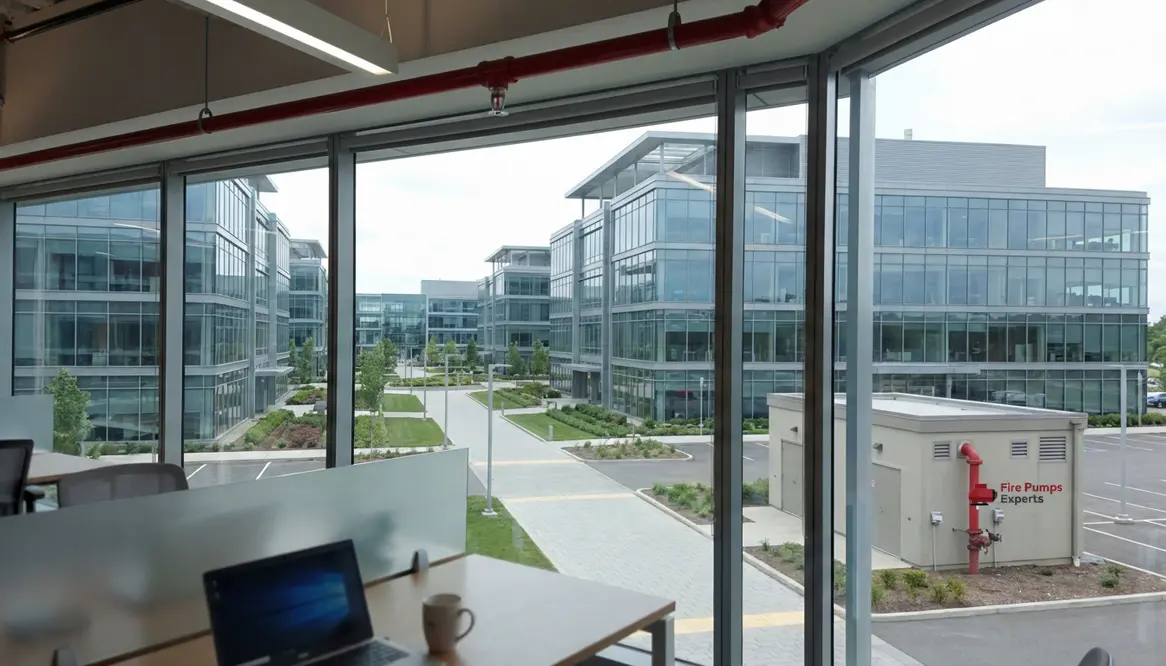
Business Center Fire Pump Requirements Guide
I have walked through enough office campuses to know one thing. Fire does not care about your glass walls, your open floor plans, or that espresso machine everyone loves. It only cares about fuel and time. That is why I always bring the conversation back to business center fire pump requirements. These systems are not just technical checkboxes. They are the quiet guardians that stand ready when everything else fails. And yes, they are far more interesting than they sound. Stick with me.
Why Fire Protection in Office Campuses Deserves More Respect
Office campuses are like small cities. People move constantly, systems run nonstop, and risk hides in plain sight. Electrical loads, server rooms, parking structures, and shared utilities all create layers of exposure. Because of this, fire protection cannot be an afterthought.
Moreover, large properties demand coordinated systems. Sprinklers, alarms, and pumps must work together without hesitation. When one piece lags, the entire response slows down. That is not a moment anyone wants to experience in real time.
And let me be honest. Fire safety meetings rarely win any popularity contests. However, ignoring them is like skipping leg day at the gym. Sooner or later, something gives.
How do business center fire pump requirements actually impact safety?
They impact everything. A fire pump ensures that water moves with enough pressure to reach every corner of a building, even the top floors or the far edges of a campus. Without it, even the best sprinkler system becomes a polite suggestion rather than a decisive force.
In addition, these requirements define reliability. Backup power, consistent flow rates, and proper installation standards all ensure that the system performs under stress. Because when a fire starts, it does not wait for your system to catch up.
I like to think of fire pumps as the action heroes of building systems. They do not say much, but when the moment comes, they deliver.
Core Components That Keep Systems Reliable
Every effective fire protection setup depends on a few critical elements working in harmony. I always focus on these when evaluating a commercial property.
Water Supply
A steady and sufficient water source forms the backbone of the system. Without it, nothing else matters.
Fire Pump Unit
This drives water through the system at the required pressure. It must meet commercial grade standards.
Control Panels
They monitor performance and trigger operation instantly when needed.
Backup Power
Because power outages love bad timing. Generators ensure uninterrupted performance.
Piping Network
Properly sized and maintained pipes deliver water efficiently across large properties.
Testing Systems
Routine testing confirms everything works before an emergency proves otherwise.
Together, these components create a system that reacts faster than human instinct. And in fire protection, speed is everything.
Designing for Scale Across Large Properties
Office campuses are not single buildings. They are ecosystems. Therefore, fire protection design must account for distance, elevation, and occupancy variations. A one size approach simply does not work.
For example, a multi building campus often requires zoned systems. This allows each structure to maintain proper pressure without overloading the network. In addition, redundancy becomes essential. If one system fails, another must take over seamlessly.
Meanwhile, underground parking structures and data centers introduce specialized risks. These areas demand tailored suppression strategies and careful integration with fire pump systems. It is not glamorous work, but it is deeply important.
Maintenance Is Where Most Systems Quietly Fail
Here is the part nobody likes to talk about. Even the best system will fail if it is not maintained. And unfortunately, this happens more often than people admit.
Routine inspections, flow testing, and performance checks ensure that systems remain ready. In addition, small issues caught early prevent major failures later. It is a simple principle, yet it saves lives and property every year.
I have seen pristine installations fall apart because someone assumed everything would just keep working. Fire protection does not reward assumptions. It rewards discipline.
Aligning Compliance With Real World Performance
Meeting codes is essential. However, compliance alone is not the finish line. Real world performance goes beyond paperwork.
That is why I always recommend evaluating how systems behave under actual load conditions. Simulated tests, pressure checks, and scenario planning reveal weaknesses that documents cannot. In addition, aligning systems with evolving commercial fire pump standards ensures long term reliability.
Think of it this way. Passing an exam does not guarantee you can handle the job. The same logic applies here.
FAQ: Fire Protection for Office Campuses
Before looking at the most common questions, remember that strong planning around business center fire pump requirements is just as critical as the hardware itself. The details below highlight why.
Conclusion
Fire protection is not just infrastructure. It is assurance. When I look at a well designed system that meets business center fire pump requirements, I see more than compliance. I see preparation, foresight, and responsibility. If you manage or own a commercial property, now is the time to evaluate your systems, close the gaps, and invest where it counts. Because when the moment comes, there are no second chances. Only readiness.
Treat business center fire pump requirements as the framework for your strategy rather than a hurdle to clear. The stronger that framework, the more confidently people can walk into your lobbies, ride your elevators, and sit in those glass-walled conference rooms knowing that if something goes wrong, the hidden machinery of safety is ready to act.