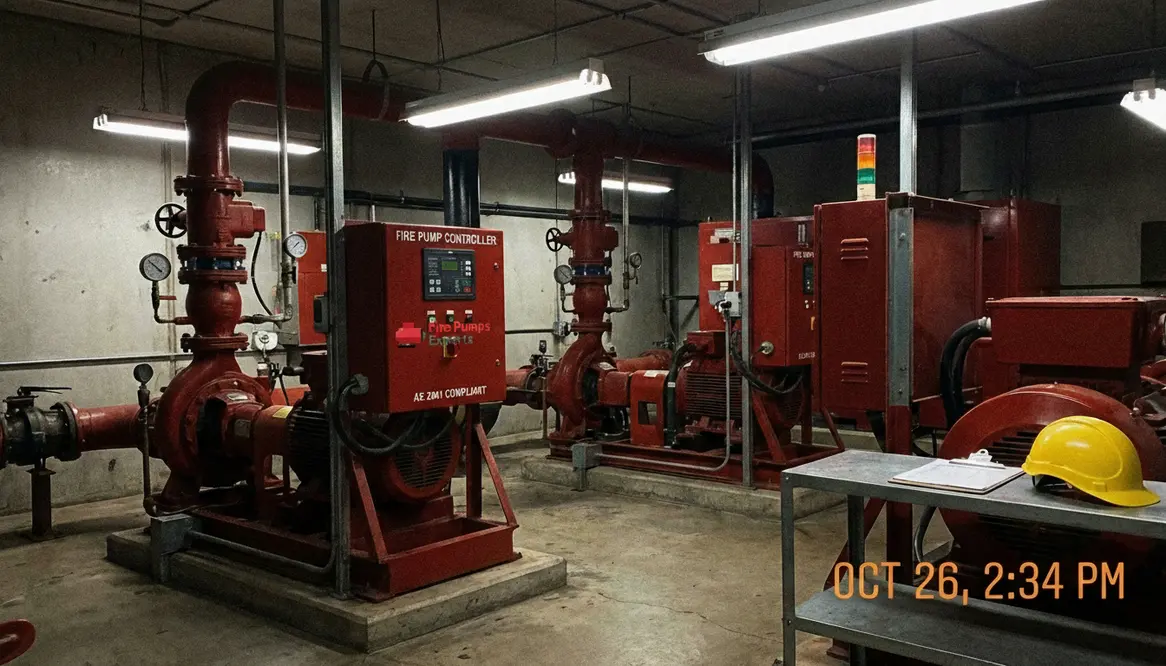
Campus Fire Pump Australia Design for Universities
I have spent years around pump rooms that hum like quiet engines of safety, and if there is one place where that hum matters most, it is a university campus. A campus fire pump Australia setup is not just another mechanical system tucked behind concrete walls. It is the silent guardian that stands ready while lectures carry on, coffee spills, and deadlines loom. Today, I want to walk you through how I approach fire pump design for large Australian campuses, with a tone as steady as the systems themselves and, occasionally, a wink to keep things human.
What makes fire pump design different for university campuses?
Let me answer this straight away. University campuses are not single buildings. Instead, they are small cities with libraries, labs, residential towers, and research facilities all stitched together. Because of that, I must design systems that handle varied risks while staying consistent across the network.
For example, laboratories often demand higher water flow due to hazardous materials. Meanwhile, lecture halls require broad sprinkler coverage for large occupant loads. Therefore, I never treat a campus like a standard commercial block. I treat it like a puzzle where each piece needs protection but must still connect to a central strategy.
And yes, sometimes it feels like designing for Hogwarts. Different buildings, different rules, and a lot of responsibility if things go sideways.
Campus Fire Pump Australia design essentials for large properties
When I design for major institutions, I focus on reliability first. Because in fire protection, failure is not an option you can shrug off and blame on Monday traffic.
Here is what I always prioritize:
- Redundancy: I include backup pumps so that if one fails, another takes over instantly.
- Pressure consistency: Multi building campuses need stable pressure across long pipe networks.
- Zoning: I divide the campus into manageable fire zones to improve response time.
- Compliance: Australian standards such as AS 2941 guide every decision I make.
Additionally, I ensure that the fire pump system integrates smoothly with hydrants, sprinklers, and alarm systems. Without that coordination, even the best pump is just a very expensive paperweight.
How do I size a fire pump system for a university?
I start with demand calculations. That means I analyze the worst case fire scenario across the campus. Then, I calculate flow rates and pressure requirements based on building height, distance, and hazard classification.
Next, I factor in simultaneous demand. Unlike smaller properties, campuses may require multiple systems operating at once. Therefore, I design with peak load in mind, not average use.
After that, I choose between electric, diesel, or a combination of both. Electric pumps offer efficiency, while diesel pumps provide independence during power outages. And let us be honest, when the power goes out, that is not the time to cross your fingers and hope for the best.
Balancing performance and efficiency in modern campus systems
I often get asked if efficiency matters in fire systems. The short answer is yes, but not at the cost of performance. Safety always comes first.
However, modern campuses push for sustainability. So, I incorporate energy efficient controllers and intelligent monitoring systems. These allow facility managers to track performance and identify issues early.
Moreover, I design layouts that reduce friction loss in piping. That way, pumps do not need to work harder than necessary. Think of it like giving the system a clear highway instead of forcing it through rush hour traffic.
Common design pitfalls I avoid at all costs
Over the years, I have seen mistakes that could make even the calmest engineer sigh deeply.
Pitfall
- Undersized pumps
- Poor maintenance access
- Ignoring future expansion
- Inadequate backup systems
My approach
- Always design for peak demand
- Ensure easy service access
- Plan for campus growth
- Include redundancy at every level
Additionally, I never overlook testing requirements. A system that cannot be tested properly is a system that cannot be trusted. And trust me, that is not the kind of surprise anyone wants during an emergency.
Campus Fire Pump Australia compliance and long term reliability
Compliance is not just a checkbox. It is the backbone of everything I do. Australian standards set clear expectations, but I go beyond minimum requirements whenever possible.
For instance, I design pump rooms with proper ventilation, drainage, and accessibility. I also ensure that control systems are intuitive, because in a high pressure situation, no one wants to decode a control panel like it is an escape room puzzle.
Furthermore, I emphasize regular maintenance plans. Even the best designed system will fail if it is ignored. So I work closely with facility teams to ensure long term reliability and to keep every campus fire pump Australia system ready when it is needed most.
For deeper technical guidance on performance and testing, one valuable resource is https://www.firepumps.org, which offers additional insights that complement local Australian requirements.
FAQ
Conclusion
Designing fire pump systems for universities is not just engineering. It is about protecting people, research, and infrastructure that shape the future. If you are planning or upgrading a campus system, I encourage you to work with specialists who understand large scale commercial environments. The right design today prevents costly failures tomorrow. Reach out, start the conversation, and let us build something that stands ready when it matters most.