Hospital Fire Pump Australia Guide for Healthcare
I have spent years around critical infrastructure, and few systems carry as much quiet responsibility as a hospital fire pump Australia setup. It does not ask for attention. It does not need applause. Yet when everything goes wrong, it becomes the heartbeat of protection. In healthcare facilities, where lives depend on constant care, fire protection must work without hesitation. So today, I will walk you through what truly matters in these systems, with a steady voice and maybe a small smile along the way. After all, even serious topics deserve a little humanity.
What makes fire pump systems critical in Australian healthcare facilities?
In hospitals, fire safety is not just compliance. It is survival layered with responsibility. Patients cannot simply walk out during an emergency. Therefore, I always design systems that assume the worst while hoping for the best.
Moreover, Australian healthcare buildings often operate around the clock. This means the fire pump must deliver consistent pressure at any hour. Unlike an office building that sleeps at night, a hospital is more like a city that never blinks.
Additionally, redundancy becomes essential. I typically recommend backup pumps and reliable power sources. Because if your main pump fails during a crisis, that is not a plot twist anyone wants. Hollywood might enjoy drama, but hospitals do not.
Design standards and compliance for hospital fire pump Australia
Australia does not take fire safety lightly, and neither should you. I always align designs with AS 2419 and related standards. These rules ensure the system performs under real world conditions, not just on paper.
Furthermore, hospitals often require higher flow rates and pressure levels compared to standard commercial buildings. This is due to their size, layout, and the need to protect sensitive equipment.
At the same time, I pay attention to local authority requirements. Each state may interpret guidelines slightly differently. So while the code sets the stage, local enforcement directs the performance.
And yes, paperwork matters. I know, it is about as exciting as watching paint dry. However, proper documentation ensures your system passes inspections and remains operational long term.
Key components I prioritize in healthcare fire pump systems
When I design or assess a system, I focus on components that deliver reliability, not just compliance. Because ticking boxes is easy. Keeping people safe is the real goal.
Primary Pump
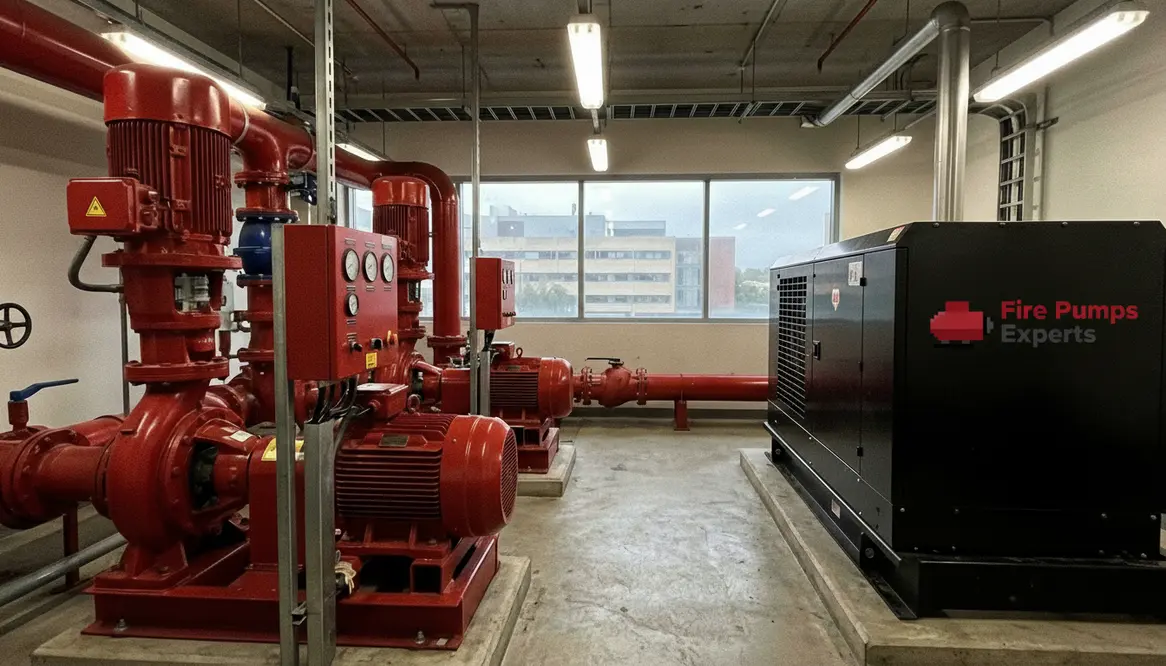
This is the workhorse. I select pumps that handle peak demand without strain.
Backup Pump
Because even heroes need backup. Redundancy prevents single point failure.
Power Supply
Diesel engines or independent electrical feeds ensure operation during outages.
Controller Systems
Smart controls allow automatic activation and monitoring.
Water Storage
Adequate supply ensures sustained firefighting capability.
Pressure Relief
Prevents system damage during pressure surges.
In addition, I always consider maintenance access. A system you cannot service easily is like owning a sports car with no doors. It looks impressive until you actually need to use it.
How do I ensure reliability and ongoing performance?
I treat maintenance as part of the design, not an afterthought. Because even the best healthcare fire pump systems in Australia will fail if ignored.
First, I establish routine testing schedules. Weekly churn tests and monthly inspections keep everything in check. Moreover, I ensure staff understand basic system indicators. You do not need a PhD to notice when something sounds wrong.
Then, I integrate monitoring technology. Remote alerts allow facility managers to respond quickly. It is a bit like having a fitness tracker, except instead of counting steps, it saves lives.
Finally, I work closely with facility teams. Communication ensures issues are resolved early. And in this field, early action makes all the difference.
Challenges unique to healthcare facilities
Hospitals present challenges that standard commercial buildings simply do not. For example, expansions often occur in stages. This means the fire pump system must adapt over time.
Additionally, sensitive medical equipment requires protection from water damage. Therefore, I balance fire suppression needs with asset protection strategies.
Noise and vibration also matter. Patients need rest, not a mechanical symphony at midnight. So I incorporate dampening measures wherever possible.
And let us not forget accessibility. Emergency responders must navigate the building efficiently. A well designed system supports them, rather than slowing them down.
Smart planning for future ready fire protection
I always design with tomorrow in mind. Because healthcare facilities evolve, and systems must keep up.
For instance, I consider scalability. Can the system handle future expansions? If not, you are building a solution that expires too soon.
Likewise, I look at energy efficiency. Modern pumps and controls can reduce operational costs without compromising performance.
And yes, digital integration is becoming standard. Smart systems provide data that helps predict failures before they occur. It is not quite science fiction, but we are getting close. Think less Terminator, more helpful assistant.
FAQ: Fire pump systems in Australian hospitals
Before setting up or upgrading a hospital fire pump Australia configuration, these common questions tend to come up in planning meetings and boardrooms alike.
Final thoughts and next steps
When I think about fire protection in healthcare, I think about trust. A well designed system stands ready without question, without hesitation. If you are planning or upgrading a hospital fire pump Australia system, now is the time to act. Partner with experts who understand large scale facilities and demand precision. Because in this line of work, preparation is not optional. It is everything.