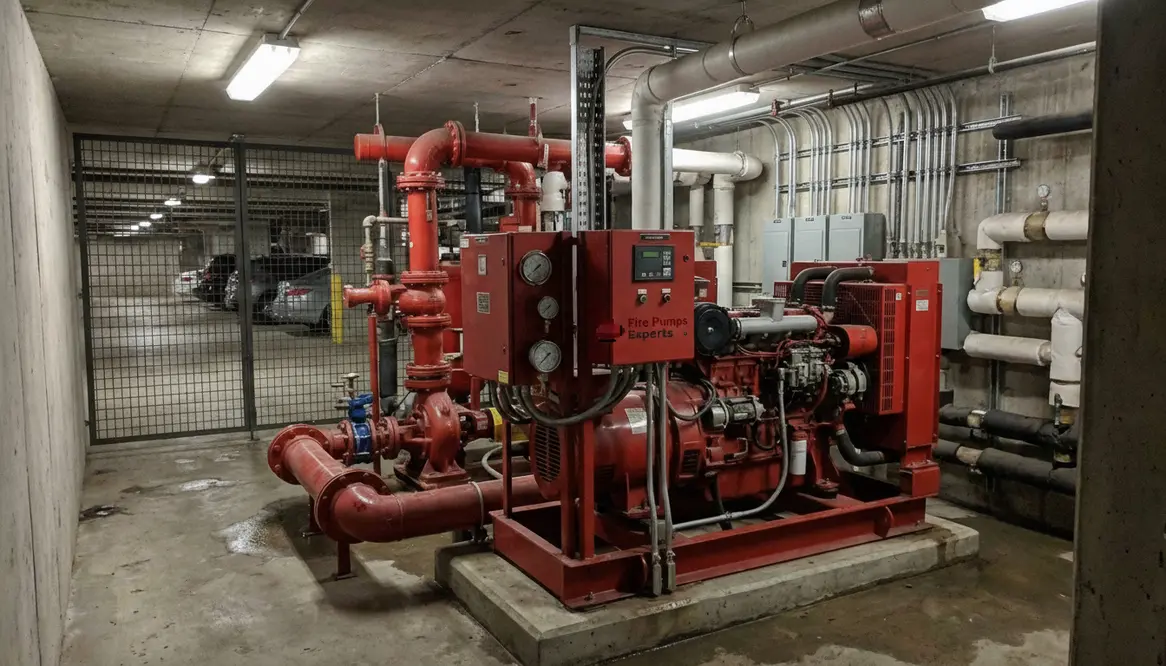
Commercial Fire Pump Requirements Los Angeles Guide
A practical look at how Downtown LA buildings can meet commercial fire pump requirements Los Angeles codes without last‑minute chaos.
When I look at commercial fire pump requirements los angeles, I see more than a code issue. I see a life safety system that helps keep a building ready when the water pressure drops and the clock starts to move fast. In Downtown LA, where tall commercial buildings, mixed use towers, and packed garages all stack risk on top of one another, a fire pump can make the difference between a close call and a major loss. So, I want to walk you through what matters, what inspectors expect, and why smart planning beats expensive panic every single time.
Think of the fire pump as the quiet support act that steps in when city water and gravity are not enough. When it is sized, powered, and maintained properly, the building’s fire protection behaves like it has been rehearsed for years. When it is not, the whole system starts improvising at the worst possible moment.
What a Downtown LA commercial building fire pump must do
First, I focus on the job of the pump. A fire pump boosts water pressure for sprinkler systems, standpipes, and other fire lines when the normal supply cannot do the work. In a dense area like Downtown Los Angeles, that matters because tall buildings and long pipe runs can weaken pressure fast. Also, many buildings depend on municipal water that does not always deliver the same performance at the top floors. That is where the pump steps in, calm as a stagehand, making the whole show run on cue.
In practice, the system must match the building risk, height, and water demand. Therefore, I check whether the pump supports the fire protection design without strain. If the building has high rise floors, underground parking, or heavy tenant load, I expect stronger planning. A pump that looks good on paper but fails under real demand is just expensive gym equipment.
commercial fire pump requirements los angeles for code, design, and placement
Next, I look at the core rules. The commercial fire pump requirements los angeles usually tie back to local fire code, building code, NFPA standards, and the water supply itself. Because each site in Downtown LA has its own conditions, I never treat one building like another.
Here is the practical side:
- The pump must support the required flow and pressure for the system.
- The pump room must stay protected, accessible, and properly ventilated.
- The power source must stay reliable, with backup where required.
- The suction supply must stay adequate so the pump does not starve.
- The system must allow testing, service, and emergency access.
Also, placement matters as much as size. I want the pump in a room that stays dry, secure, and easy to reach during an emergency. If the room feels like a storage closet for old office chairs and one lonely treadmill, that is a problem. Fire pumps need room to breathe, and inspectors know it.
Key focus areas in Downtown LA
Urban sites stack challenges: fluctuating city pressure, mixed use occupancies, and tight mechanical spaces. A serious look at commercial fire pump requirements Los Angeles expectations has to factor in all three or you end up redesigning the system before the ink is dry on the permit.
The most successful projects treat the pump room like a mission‑critical space, not leftover square footage that happened to be near the loading dock.
How I check pump size, water supply, and power backup
Now I get into the part that separates a compliant system from a costly headache. I start with the water supply. Then I check whether the source can give enough volume at the right pressure. If the supply drops too low, the pump can only do so much. It is like asking a backup singer to headline Coachella. Nice try, but no.
After that, I review the pump curve, system demand, and elevation changes. Tall Downtown LA buildings often need careful pressure math because upper floors create more resistance. So, I look at the full path from the source to the highest demand point. I also check power. Some buildings use electric fire pumps, while others rely on diesel units or a mix with a backup setup. In either case, the power plan must support emergency operation without delay.
Dual view
Design side: pump size, water source, pressure loss, floor height, sprinkler demand
Operations side: access, testing, backup power, routine checks, service records
This split helps me catch weak points before they turn into repair bills or failed inspections. And yes, that is the kind of drama I prefer to keep off the evening news.
Inspection, testing, and maintenance steps I follow
Once the system is in place, the work does not stop. In fact, this is where many owners relax too much. I do not. Fire pumps need regular testing because a system that sits untouched can fail when it matters most. Therefore, I check the test schedule, suction conditions, controller status, alarms, and flow results.
I also watch for common issues like seal leaks, vibration, weak batteries, fuel problems, and low room temperature. These small problems can turn into large ones if nobody pays attention. Moreover, Downtown LA buildings often run busy tenant operations, so it helps when maintenance teams coordinate with fire service work to avoid disruption. Nobody wants a surprise test during a board meeting or a tenant event with catering trays and a string quartet.
Why documentation matters
Good records matter too. If a fire marshal or inspector asks for proof, I want logs that show test dates, repairs, and any part replacements. Clear records build trust and save time. They also help when ownership changes and the new team wants to understand how the system has been treated over the last few years.
What I see when the building asks the right questions
When a property team asks the right questions early, the whole process gets smoother. I like when owners ask about system fit, future upgrades, and long term service, because those questions show real planning. For a deeper look at how fire pumps vary by property, I also recommend this commercial and industrial fire pump facility guide. It helps frame the differences by building type and keeps the focus on major properties, where the stakes stay high.
In my experience, the best projects do not start with panic. They start with a clean review, a clear plan, and a team that understands what the building actually needs. That is how I approach commercial fire pump requirements los angeles for Downtown LA commercial buildings every time.
Smart questions to ask early
- Does our current water supply and pressure truly match our latest occupancy and tenant load?
- Will future renovations or added floors change our fire pump demand?
- Is the pump room laid out for safe access, testing, and equipment replacement?
- How does our maintenance plan measure up to commercial fire pump requirements Los Angeles inspectors actually enforce?
The earlier these questions show up, the less likely you are to be stuck choosing between schedule, budget, and compliance when the project is already under construction.
FAQ
These are some of the questions that come up most when owners and facility teams start talking about commercial fire pump requirements Los Angeles specifics.
Bringing it all together
If you manage a Downtown LA commercial building, now is the time to check your fire pump system before a small gap becomes a big problem. I can help you review the setup, spot weak points, and make sure your system fits the building, the code, and the real pressure demands of the site. Reach out now, and let’s get your property ready with a plan that feels steady, simple, and built for the real world.