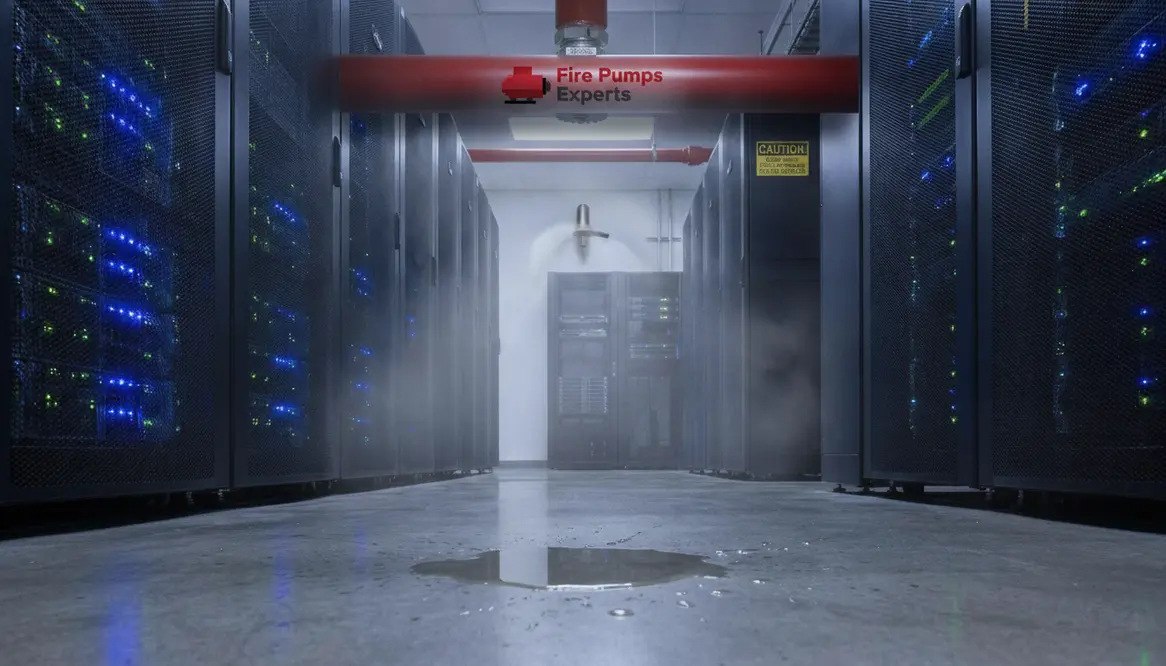
Data Center Fire Protection: Sprinklers vs Clean Agent Systems
When I talk about data center sprinkler vs clean agent protection, I’m not comparing two random tools in a storage closet. I’m looking at the life support system for a building full of expensive servers, nonstop traffic, and the kind of uptime promises that keep CIOs awake at night. One system uses water, the other uses gas or chemical agents, and both can save a facility. However, the right choice depends on risk, layout, budget, and how much downtime your business can swallow before it starts feeling like a scene from a bad reboot. In other words, this is not just fire safety. It is business continuity with a hard hat on.
How I Compare Sprinklers and Clean Agent Systems
I start with the basic difference. Sprinklers control fire with water. Clean agent systems suppress fire with a gas or chemical agent that leaves little or no residue. That sounds simple, yet the real decision runs deeper. Sprinklers protect the structure and can handle larger fire loads. Clean agents, on the other hand, protect sensitive equipment better because they avoid water damage. So, if I am weighing data center sprinkler vs clean agent options, I look at what matters most: rapid suppression, equipment survival, and the time it takes to get the room back online.
Here is the key point. A sprinkler system may activate only where heat rises enough to trigger it. That helps limit damage. Still, even a small discharge can shut down racks, ruin components, and turn a normal Tuesday into a disaster movie nobody asked for. Meanwhile, clean agents can stop a fire before it spreads through cabinets and cable trays. However, they work best in enclosed rooms that hold the agent long enough to do its job. If the room leaks like a cheap umbrella, the system loses power.
What I Look For in a Data Center Fire Plan
I do not choose a system by habit. I choose it by risk. First, I look at room size, ventilation, cable density, power load, and how many people enter the space. Then I ask a simple question: what fails first, the equipment or the building? If the main concern is electronic loss, clean agent often makes sense. If the concern is structural fire spread or code requirements for a large commercial site, sprinklers may be the stronger base layer.
Also, I care about response time. Fire in a data center can move fast, and smoke can damage equipment even before flames do. Because of that, early detection matters just as much as suppression. I want a system that catches trouble quickly, alerts the team, and limits the mess. No one wants a heroic sprinkler save followed by three weeks of drying gear with industrial fans humming like a low budget sci fi set.
Why Clean Agent Systems Fit Sensitive Equipment
Clean agent systems shine where uptime and equipment protection matter most. They do not leave water behind, so I can avoid shorted boards, corroded parts, and the smell of disaster in the server room. In addition, they can suppress fire fast enough to reduce heat damage and smoke spread. That matters in high value rooms with storage arrays, network gear, and control systems that cost more than a small house.
Still, I never treat clean agents like magic. They need proper design, tight room integrity, and regular testing. Also, some systems require people to leave the room before discharge, so alarms and controls must work smoothly. A good setup feels like a coordinated stage crew. Everyone knows the cue, and nobody stands under the spotlight when the curtain drops.
Sprinklers Still Matter for Large Commercial Sites
Sprinklers remain vital in commercial and industrial facilities, especially where the fire load is high or the building code demands a full life safety plan. I see them as the larger shield. They protect the property envelope, support insurance goals, and help stop fire from jumping to other areas. For major buildings, that layer counts.
Here, I like a dual column view of the tradeoff:
Sprinklers
Control fire across larger spaces
Support code compliance in many buildings
Lower system cost in many cases
Can cause water damage to electronics
Clean Agent
Protects sensitive equipment better
Leaves little to no residue
Needs sealed space and careful design
Usually costs more upfront
This is why I do not frame the choice as one system replacing the other. In many data centers, both work together. One handles the room. The other protects the gear. That is the kind of teamwork even a Marvel team up would respect.
How I Decide Which System Fits Best
When I help evaluate a site, I begin with the building use, then I move to the mission of the room. If the space supports core digital operations, I lean hard into clean agent coverage and strong detection. If the site includes storage, loading zones, or heavy industrial risk, I push for sprinkler protection as well. Then I check code needs, maintenance access, and the facility’s downtime tolerance.
Just as important, I look at service and repair plans. A system only helps if it gets inspected, tested, and maintained on schedule. For businesses that rely on fire pumps and broader suppression support, I recommend reviewing reliable commercial resources like los angeles fire pump solutions for site readiness and system support. Also, if your operation needs help with large scale protection planning, I suggest keeping your fire safety strategy focused on commercial and industrial property needs, not small scale shortcuts that look cheap until they cost millions.
FAQ
Conclusion
If I were protecting a data center, I would not treat this as an either or choice without a hard look at the site. I would match the fire system to the risk, the room, and the cost of downtime. For many commercial and industrial facilities, the smartest move is layered protection that blends suppression, detection, and planning. If you want a safer, stronger facility, now is the time to review your fire strategy, ask better questions, and build a system that protects both your building and your business, especially when weighing data center sprinkler vs clean agent decisions that impact uptime and recovery.