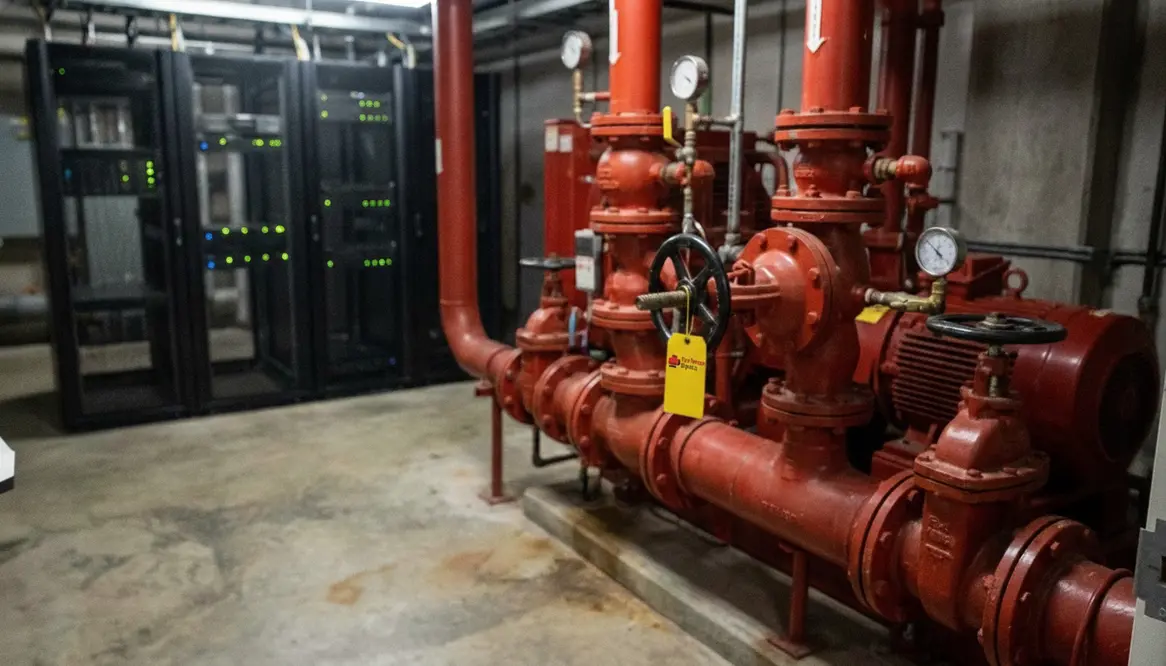
Do Data Centers Need a Fire Pump? Water Supply Demand
I look at a data center the way I look at a steel vault full of digital life. It hums, it runs, and it never really sleeps. But behind all that quiet power, one question keeps showing up: do data center fire pump systems matter when the water supply already looks strong on paper? The short answer is yes, often they do. In fact, once I start tracing the flow from the municipal main to the riser, the story gets much more interesting than it first appears. And yes, unlike a superhero origin story, this one usually starts with pressure, not lightning.
For commercial and industrial facilities, data centers sit in a special class. They hold critical equipment, dense cabling, and high heat loads. So, when I talk about fire protection, I am not guessing. I am looking at demand, reliability, and what happens when the water system acts tired on a bad day. Because in this world, “good enough” is not a strategy. It is a risk with a clean shirt on.
Do Data Centers Need a Fire Pump?
Yes, many data centers need a fire pump when the available water supply cannot meet the system demand at the required pressure. I start with the fire protection design, then I check the water source, elevation, pipe loss, and sprinkler or standpipe needs. If the incoming pressure drops below what the system must deliver, a pump steps in and lifts the performance to the right level.
That matters because data centers often use special layouts, raised floors, and heavy equipment rooms. As a result, water has to travel farther and faster than people expect. If pressure fades along the way, sprinklers may not perform as designed. So, the pump acts like the backup quarterback who actually knows the playbook. Quiet, useful, and not glamorous until the game gets real.
How I Check Water Supply Demand in a Data Center
I start with a flow test or a municipal water report, then I compare it against the system demand. After that, I review the worst case fire scenario, not the best case fantasy. That includes the highest hose friction loss, the most remote area, and the required density for the hazard type. If the water source cannot keep up, I look at pump sizing and storage options.
Here is the simple logic I use:
Water supply check
Pressure at the site
Flow available from the main
Pipe size and friction loss
Elevation changes
System demand check
Sprinkler demand
Standpipe demand if used
Backup duration needs
Safety margin for peak load
Once I line up those numbers, the answer becomes clearer. If the source can deliver enough water, great. If not, the fire pump enters the picture. And in major properties, that is often the smart move, not the dramatic one.
Why Commercial Data Centers Often Need More Pressure
Commercial data centers pack a lot into a small footprint. Servers generate heat, electrical systems need careful protection, and uptime rules everything. Because of that, fire systems must work fast and work right. Water demand can rise when the building includes multiple levels, long pipe runs, or special suppression systems tied to critical zones.
Also, many facilities grow in stages. A site may start with one load and later double in size. Then the water supply that once looked fine starts to feel a bit like a phone charger from 2012. It still exists, but nobody trusts it. That is why I always verify current demand, not just original design intent.
What I Look for in Fire Pump Design
When I review a data center fire pump setup, I focus on reliability first. The pump must match the system demand, support the right pressure, and stay ready under real site conditions. I also check the power source, controller, test flow, and access for maintenance. If the pump sits in a cramped room with poor service access, that is a problem waiting to happen.
I also look at redundancy. Data centers hate single points of failure, and fire protection should feel the same way. If the water source, pump, or controller fails, the whole system loses strength. So, I pay close attention to backup power, pump arrangement, and inspection plans. After all, a fire pump is not a decoration. It is a working part of the building’s life safety plan.
When Water Supply Alone Is Not Enough
Sometimes the municipal supply looks fine on a calm Tuesday and falls apart when the system needs real volume. That is where pressure loss, peak demand, and site layout start to matter. If the building sits far from the main, or if nearby users pull from the same line, pressure can slip. And when it slips, sprinklers do not care about excuses.
In those cases, I treat the pump as a control tool. It helps the facility meet code, protect assets, and keep response systems steady. For more guidance on system types and design needs, I often recommend reviewing commercial fire pump solutions for major facilities as part of the planning process. You can also explore los angeles fire pump services for industrial and commercial buildings for a local service reference.
FAQ
Quick answers for the questions that come up right before the review starts.
Conclusion
If I am protecting a data center, I do not gamble on water pressure and hope for the best. I verify the supply, measure the demand, and choose the right protection path for the building. That is how I keep critical systems safer and more dependable. If your facility needs a clear data center fire pump review, reach out, compare your site data, and get a plan that fits real conditions. The next step is simple: confirm your water supply before it surprises you.