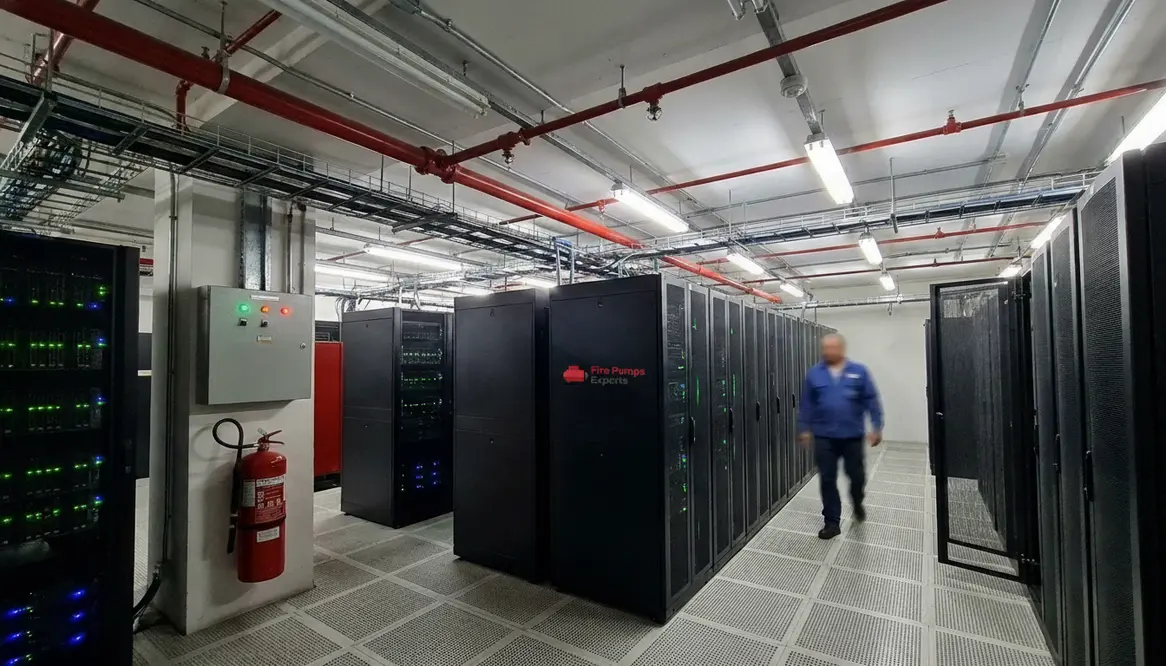
Data Center Fire Suppression Design Guide
Data Center Fire Suppression Design: when I look at a server room, I do not just see blinking lights and polished racks. I see a live system that protects business, data, and uptime. A good data center fire suppression design does more than put out flames. It helps stop damage before it spreads, keeps cooling and power gear safe, and gives teams time to act. In other words, it is the quiet guardian in the room. No cape, no drama, just solid protection doing its job while the rest of us try to keep the internet from having a very bad day.
In this guide, I break down the main systems, the real risks, and the water supply needs that shape a strong plan for commercial and industrial facilities and major property buildings.
What a good fire suppression plan needs
I start with the basics because the basics matter. A data center does not behave like a normal office. It has heat, cable loads, power gear, and constant airflow. Therefore, the fire plan must match that risk.
A strong plan usually includes three things. First, it must detect smoke fast. Second, it must suppress fire with little harm to equipment. Third, it must fit the site’s water, power, and building limits. If one of those pieces fails, the whole system can wobble like a sitcom plot twist that nobody asked for.
Here is how I think about the core goal:
Primary need
Detect early and respond fast
System need
Control fire without large shutdowns
Building need
Match protection to water, pressure, and layout
Which systems work best in data centers
I see several systems used in modern facilities, and each one serves a different need. Clean agent systems use gas to knock down fire without soaking gear. That makes them a strong fit for high value rooms where water can cause heavy loss. However, they must be designed with room tightness in mind, or the agent escapes faster than a rumor in an office kitchen.
Pre action sprinkler systems also play a major role. They keep water out of the pipes until detection confirms real danger. As a result, they lower the chance of accidental water damage. For many sites, this gives a practical mix of safety and control.
Water mist systems can also help in some rooms. They use very fine droplets to cool flames and reduce heat. Meanwhile, inert gas systems lower oxygen to levels that stop fire growth. I like these systems for certain mission critical spaces, but I always match them to the room size, seal quality, and occupancy plan.
Common risks that shape data center fire suppression design
I always tell clients that fire risk does not come only from open flame. In fact, many problems start small. Loose wiring, overheated UPS gear, failing batteries, blocked airflow, and dust buildup can all spark trouble. So can human error. Yes, even the best team can pull the wrong switch on a long Tuesday. It happens.
Next, the biggest risk is often not the fire itself but the damage from the response. Water spread, false discharge, power loss, and smoke residue can take out far more equipment than the fire would have at first. That is why the design must protect both life and uptime.
I also look at these key risks:
- Fast fire spread through cable paths and raised floors
- Smoke moving through air handling systems
- Battery and electrical room hazards
- Delayed detection in hidden spaces
- Water damage from leaks, sprinklers, or bad drainage
How I plan water supply for data center protection
Water supply sounds simple, but in fire protection it gets serious fast. If a facility uses sprinkler or pre action systems, I have to check the flow, pressure, and duration. If the supply falls short, the system may not work as planned. That is not the kind of surprise anyone wants when the stakes are this high.
I review the source, the pump, the tank, and the piping. Then I confirm that the system can support the needed demand under real conditions. For commercial and industrial sites, the water supply must also handle peak use without starving other critical systems. Therefore, the fire pump becomes a key part of the plan.
For a deeper look at pump support, I recommend this los angeles fire pump resource. It helps explain how pump capacity supports strong fire protection in major buildings.
How I test and keep the system ready
A design only matters if it stays ready. So I build regular testing into the plan. I check alarms, detectors, agent release panels, valves, pump starts, and water pressure. Then I review access, labels, and clear paths to critical gear. If the system looks good on paper but fails in a drill, it is not ready. Simple as that.
I also keep maintenance tied to real facility use. If the building changes, the protection should change too. New racks, new cable loads, or new room use can shift the fire profile. As a result, the design should never sit still while the building moves on without it. That would be like dressing for winter in July.
FAQ
What is data center fire suppression design?
It is the plan for detecting and controlling fire in a data center with the least damage to equipment and uptime.
Which fire suppression system is best for data centers?
Clean agent and pre action systems are often the best choices, depending on the room and risk level.
Why is water supply important?
Water supply affects sprinkler performance, fire pump support, and the system’s ability to control a fire.
Does a data center always need sprinklers?
Not always, but many sites use pre action or sprinkler based systems as part of a larger protection plan.
How often should fire protection be tested?
It should be tested on a regular schedule set by code, the equipment maker, and site risk needs.
Conclusion
I treat data center fire protection as a business safeguard, not just a code item. When the system matches the space, the risks, and the water supply, it protects both assets and uptime. If you manage a commercial or industrial facility, now is the time to review your setup, check your pump support, and tighten your plan. I recommend taking the next step today and building a fire suppression strategy that can stand up to real world conditions.