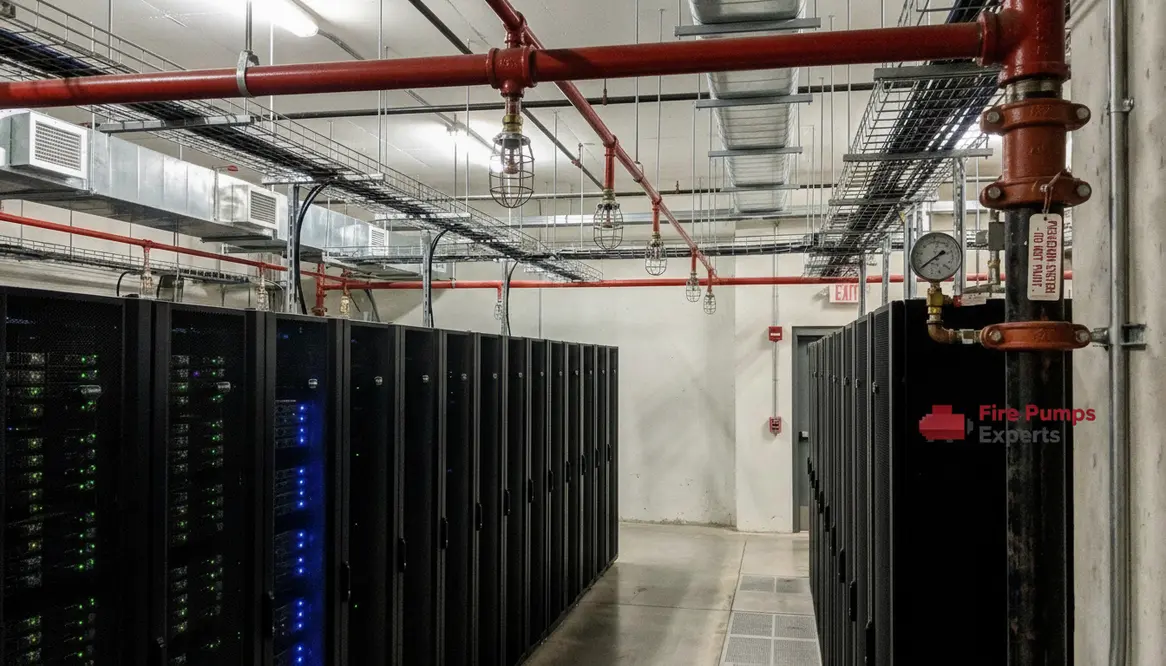
Data Center Fire Sprinkler Design and Uptime
Design That Moves Fast
A data center fire sprinkler system has to be ready before smoke has time to do creative writing.
Uptime Is Part of the Plan
Good fire protection isn’t a box to check later. It supports recovery when every minute matters.
Water Control, Not Water Drama
The goal is to stop fire fast while limiting accidental discharge risk with smart design choices.
When I talk about a data center fire sprinkler system, I am not talking about a simple ceiling pipe and a prayer. I am talking about a life safety tool built for a place where heat, uptime, and expensive hardware all live in the same tight room and pretend to get along. In a data center, one small fire can snowball fast, so the sprinkler design has to be sharp, calm, and ready. And yes, the stakes are high enough to make even a server rack sweat.
In this article, I will walk through the main design choices, the real world challenges, and the best ways I have seen teams protect critical equipment without turning a clean tech space into a water damage scene from a bad movie.
How I Approach Data Center Fire Risk
First, I look at the fire load, the room layout, and how air moves through the space. Data centers are not all the same. Some hold dense server rows, while others mix power gear, batteries, and support systems. That matters because a fire can start in a rack, a cable tray, or electrical equipment, and each one behaves a bit differently.
Because of that, I focus on early detection and fast response. I also check how the data center fire sprinkler system fits with suppression goals, power protection, and business continuity. In other words, I do not treat the sprinkler design like a side character. It belongs in the main cast, right next to cooling and power redundancy, not hiding in the credits like a forgotten extra.
What Design Choices Matter Most
The right design depends on building use, protection goals, and local code. However, a few choices come up again and again.
1. System type
I often see wet pipe systems in areas where freezing is not a concern, because they react quickly and stay simple. On the other hand, dry or preaction systems often make more sense in sensitive spaces since they reduce the chance of accidental water release. That extra control can save a room full of equipment, and that is no small thing.
2. Detection method
Sprinklers work best when detection gives them a head start. So I pay close attention to smoke detection, heat detection, and how alarms connect to the larger fire plan. Quick warning lets staff respond before a small issue becomes a full tech drama series.
3. Discharge layout
Coverage has to match the space. Therefore, I check ceiling height, obstruction patterns, cable trays, and raised floors. A sprinkler that cannot reach the right area is like a security guard asleep at the desk. It looks official, but it does not help much.
Protection Goal
- Fast fire control
- Low water damage risk
- Equipment continuity
- Code compliance
Design Focus
- Spray coverage, activation speed, and reliable detection
- Preaction design, zone control, and tight inspection
- Layout planning, separation, and room specific strategy
- Local rules, hazard class, and approved materials
Challenges I Watch Closely
Data center fire protection sounds simple until real life enters the room wearing muddy boots. The biggest challenge is balancing fire control with equipment protection. Water stops fire, but water can also damage servers, storage systems, and electrical gear. So I have to think in layers, not shortcuts.
Another challenge is airflow. Modern data centers move huge amounts of conditioned air. As a result, heat and smoke may travel in ways that confuse basic assumptions. I always look at rack spacing, underfloor plenums, and return air paths before I lock in the data center fire sprinkler system plan.
Then there is maintenance. A system may look perfect on paper, but if valves stay untested or heads get blocked, the whole setup becomes theater. And nobody wants a sprinkler system that only performs for the inspection photo.
How I Balance Code, Safety, and Uptime
I always start with code compliance, but I do not stop there. Standards set the floor, not the ceiling. For critical sites, I work with fire protection teams, facility managers, and engineers to align the sprinkler design with the actual business risk. That means I think about occupancy, equipment value, recovery time, and whether the facility can tolerate even short downtime.
In many commercial and industrial facilities, the fire pump also plays a major role in keeping pressure steady across the system. If you want a deeper look at that side of the design, I recommend reading this internal resource on commercial fire pump systems for critical facilities. Also, for local support, you can review los angeles fire pump service for commercial and industrial properties.
Just as important, I do not treat the sprinkler system as a separate island. I make sure it works with alarms, shutoff controls, inspection access, and emergency response plans. That way, the facility does not just meet code. It actually performs when the heat is on, which is rather the point. When the lights stay on, the data center fire sprinkler system did its job.
FAQ
Quick answers that help you map design decisions to real outcomes, including uptime goals and water damage risk for your data center fire sprinkler system.
Conclusion
If I want a data center to stay safe and stay online, I have to treat fire protection as a core part of the building plan, not a box to check later. A smart data center fire sprinkler system protects people, limits loss, and supports uptime when every minute matters. So if you manage a commercial or industrial facility, now is the time to review your design, test your plan, and tighten the weak spots before fire does it for you. Act early, inspect often, and protect the room that keeps the lights on.