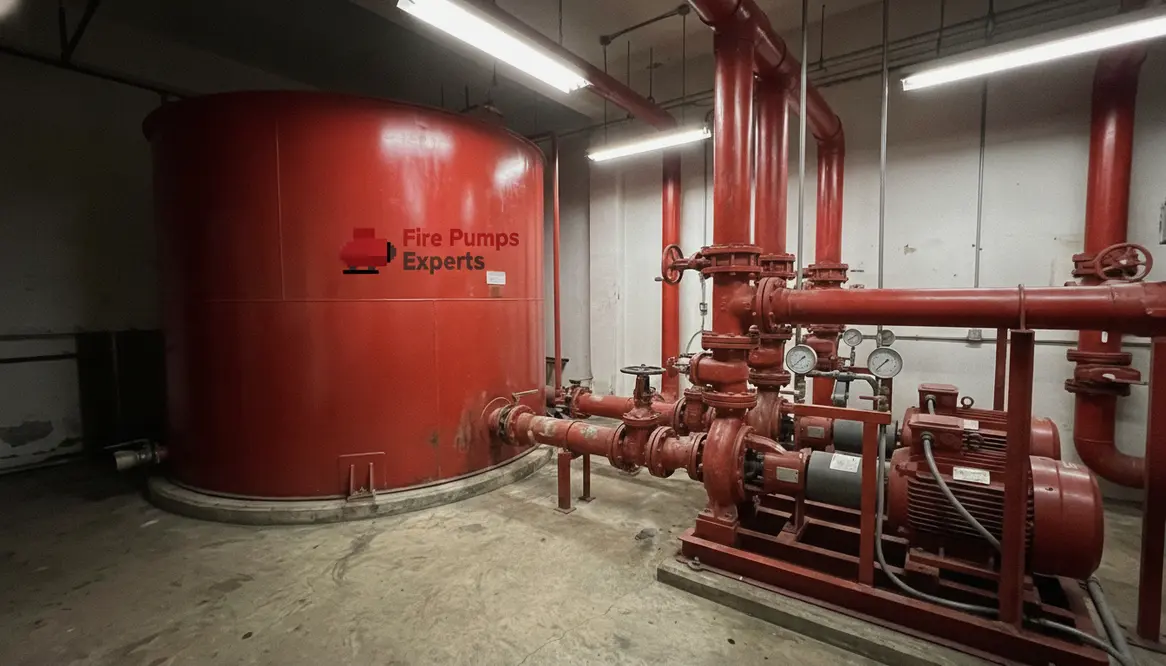
Fire Water Storage Tanks: How They Support Fire Pumps
When I talk about fire protection for commercial and industrial buildings, I always start with the basics. A fire water storage tank gives a fire pump the water it needs when the main supply falls short, drops pressure, or fails completely. That matters a lot in big facilities, because fire does not wait for the city system to catch up. It wants action now. And like a tired action hero in the final scene, a fire pump is only as strong as the supply behind it. So, in this article, I will break down how these tanks support fire pumps, why they matter, and how they help protect major properties with less drama and more reliability.
Why a fire pump needs a dependable water source
Fire pumps do one job very well. They boost water pressure so sprinklers, standpipes, and hydrants can do their job. However, a pump cannot create water out of thin air. It needs a steady source, and that is where a water storage tank steps in. In many commercial and industrial sites, the public water line cannot deliver enough flow or pressure during an emergency. Therefore, the tank becomes the backup supply that keeps the system alive when every second counts.
In practice, I see this setup protect large buildings that have long pipe runs, high floors, or heavy water demand. For example, a warehouse with tall racking and a manufacturing plant with wide open floor space can both drain a weak water supply fast. A properly sized tank solves that problem by giving the pump a reserve. No reserve, no confidence. And frankly, confidence matters when the stakes are higher than a season finale cliffhanger.
How the fire water storage tank works with the pump
The tank and pump work like a team. The tank stores the water, while the pump moves it into the fire protection system at the right pressure. First, the system senses a drop in pressure. Then, the pump starts and draws water from the tank. After that, the pump sends water through the network to sprinklers, hose reels, or hydrants. This simple handoff keeps the system ready without delay.
However, the details matter. The tank must hold enough water for the required duration of the fire event. It also must sit at the right level, connect correctly to the pump suction line, and stay protected from contamination, freezing, and damage. In other words, the tank is not just a big box of water. It is a planned part of the fire protection design, and it must play nicely with the pump or the whole system becomes a very expensive paperweight.
What makes the setup reliable in real buildings
For commercial and industrial properties, reliability depends on three things: capacity, access, and maintenance. The tank must store enough water for the building risk. It also needs clear access for inspection and service. Finally, the owner must check it often, because even the best system gets cranky if ignored.
Here is how I think about the main support points:
Tank Function
- Provides stored water during supply loss
- Maintains pump suction during demand spikes
- Supports system pressure when the city line fails
Why It Matters
- Keeps sprinklers and hydrants supplied
- Reduces downtime during an emergency
- Improves overall fire protection reliability
As a result, the pump does not struggle to find water, and the fire system stays ready for real use. That kind of stability helps large properties avoid weak performance when it matters most.
How the tank supports code compliance and system performance
I also look at compliance, because fire protection is not the place for guesswork. A fire pump and its water supply must meet the building needs and local rules. For that reason, many teams use guidance from trusted resources such as AS 2419 fire pump and hydrant performance guide to understand how pumps, hydrants, and water supply performance work together.
When a project uses a tank, the design must account for flow demand, pump curve, refill strategy, and the type of hazard on site. For major properties, that often means careful planning from the start. If the tank is too small, the system may run dry too soon. If the tank is too large for the site design, the project can waste space and budget. And nobody wants to explain that to a client with a straight face.
Therefore, I always recommend treating the tank as part of the full fire system, not as an add on. That view leads to better performance, smoother inspections, and fewer surprises later.
What facility owners should check before installation
Before I approve a tank and pump plan for a commercial site, I check a few practical items. These points help keep the system strong and simple to manage:
- Tank size matches the required fire demand
- Pump suction line stays clear and well protected
- Tank materials suit the site and local conditions
- Water level monitoring works properly
- Routine inspection and testing have a clear schedule
Also, I remind owners that service matters as much as design. A fire water storage tank can look fine from the outside and still hide trouble inside. Sediment, leaks, corrosion, or blocked fittings can cut performance fast. So, regular checks keep the system honest. Fire protection likes discipline. It is not glamorous, but neither is a flooded pump room.
FAQ
Conclusion
If you manage a commercial or industrial building, treat your fire water storage tank as a core part of your fire protection plan. It supports the pump, strengthens system reliability, and helps your property stay ready when pressure drops or supply fails. So, review your setup, verify your tank capacity, and make sure your pump has the backup it deserves. When the alarm sounds, preparation speaks louder than hope.