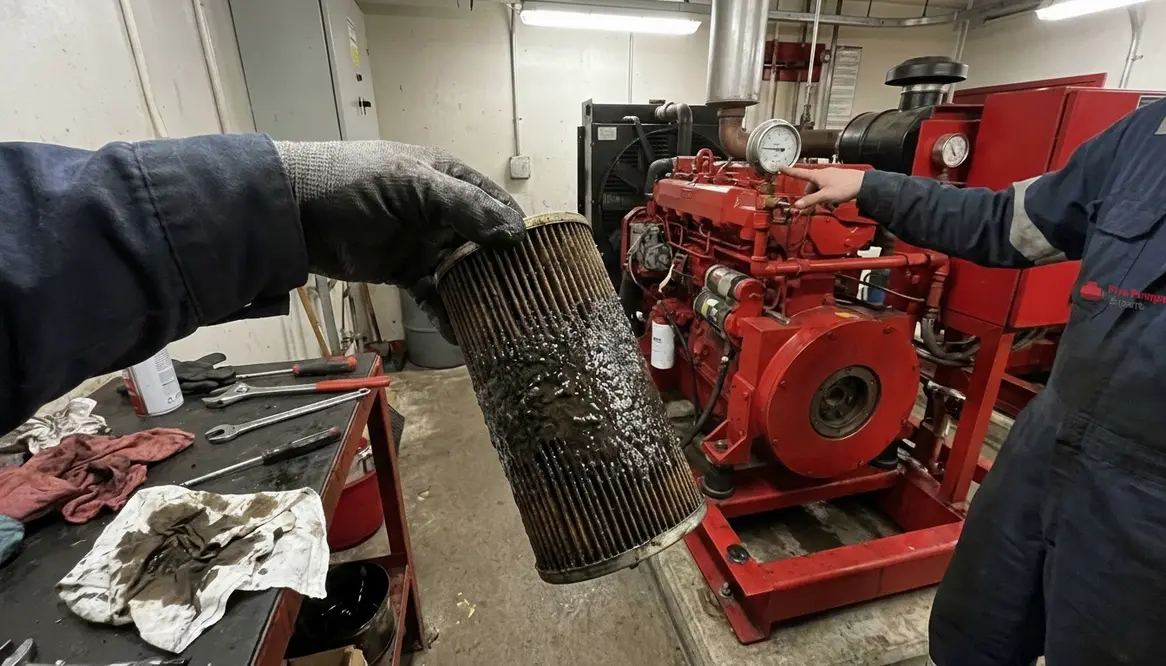
Diesel Fire Pump Fuel Filter Maintenance Guide
I have seen a lot of fire pump issues over the years, and one of the quiet troublemakers is the diesel fire pump fuel filter. It does not make much noise. It does not flash a warning like a movie villain. Yet when it gets restricted, the whole system can suffer. In diesel fire pump maintenance, I always treat fuel flow like a heartbeat. If the fuel cannot move cleanly, the engine cannot answer the call. And when that happens, fire pump troubleshooting turns into a long afternoon with a flashlight, a tool bag, and a fair bit of mild regret.
In commercial and industrial facilities, and in major property buildings, this matters even more. These systems must stand ready. So I want to break down why filters become restricted, what signs I look for, and how I keep the problem from coming back like a sequel nobody asked for.
Why Diesel Fire Pump Fuel Filters Become Restricted
A restricted diesel fire pump fuel filter is one of those problems that looks quiet right up until it is not. The restriction chokes the fuel path, which means the engine does not get what it needs. Not enough clean flow turns “ready to respond” into “why won’t it start?” The filter is doing its job, but it needs help staying ahead of the mess.
Quick promise
You will learn what causes restriction, what signs show up during diesel fire pump maintenance, and a practical way to prevent repeat issues before fire pump troubleshooting becomes an all-day project.
What makes a fuel filter clog in a diesel fire pump system?
A fuel filter becomes restricted when it traps too much debris, water, or sludge. That sounds simple, but the source is often a mix of small problems. Fuel can age in storage. Water can enter the tank through bad seals or condensation. Dirt can sneak in during fuel delivery. Over time, the filter catches all of it. That is its job, but every filter has limits.
I also see trouble when fuel sits too long. Diesel can break down and form sticky deposits. Those deposits love to collect in lines, tanks, and filters. If the fuel system has poor tank care, the filter works overtime. In other words, it becomes the bouncer at a very messy club.
Signs I look for during diesel fire pump maintenance
When I inspect a system, I do not wait for a full failure. I look for early signs. A restricted filter often causes hard starts, weak engine response, or low fuel pressure. Sometimes the pump runs, but it sounds strained. Other times, it starts and then stumbles, which is never a great mood for a fire pump.
I also check for dark fuel, sludge in the bowl, or water near the drain point. If the filter housing shows repeated buildup, I know the root cause may sit upstream. That is why I never stop at the filter itself. I follow the trail.
Most common causes behind fuel restriction
Several issues can lead to restriction, and I usually find more than one at once:
- Dirty fuel from delivery or storage
- Water inside the tank
- Old fuel that has started to break down
- Poor tank venting that invites moisture
- Rust or scale from inside metal tanks
- Worn seals that let contamination enter
These problems often build slowly. That is what makes them tricky. A system may seem fine for months, then one day it struggles to start during a test. I have seen that story more than once, and it never gets less annoying.
How I check the filter path before a failure
When I do fire pump troubleshooting, I do not just replace parts and hope for the best. I check the fuel path in order. First, I inspect the tank condition. Then I look at the suction lines, fittings, and filter housing. After that, I review the service history. If the filter keeps clogging early, I know the real issue is not the filter. It is the fuel source or the system around it.
Here is the simple logic I follow:
Step 1
Check fuel age and storage condition.
Step 2
Inspect for water, rust, and sludge.
Step 3
Review filter change timing and pressure drop.
Step 4
Confirm proper tank sealing and venting.
This approach saves time. It also helps me avoid the classic “replace one part, fix nothing” routine. That routine has the charm of a bad sitcom rerun.
How I reduce repeat restriction in industrial fire pump systems
To keep the filter clear, I focus on prevention. I test fuel quality on a schedule. I drain water from the tank when needed. I replace diesel fire pump fuel filter elements before they fail, not after the system starts to complain. I also make sure storage tanks stay clean and sealed. Good housekeeping may not sound glamorous, but neither does a fire pump failure.
For commercial and industrial sites, I also recommend working with a service team that understands fire pump systems, not just general engines. If you need related support, I suggest reviewing los angeles fire pump service for local fire pump needs. For electrical coordination and system support, Kord Electric solutions can also help. In addition, facilities that manage sprinkler and protection systems may benefit from fire sprinkler service information.
FAQ
Conclusion
I take diesel fire pump fuel filter restriction seriously because a fire pump has one job: start when needed and keep going. If you manage a commercial or industrial facility, do not wait for a weak start or a clogged filter to tell the story. Review the fuel system, inspect the tank, and keep the maintenance schedule tight. If you want help protecting your system, reach out now and get ahead of the problem before it grows teeth.