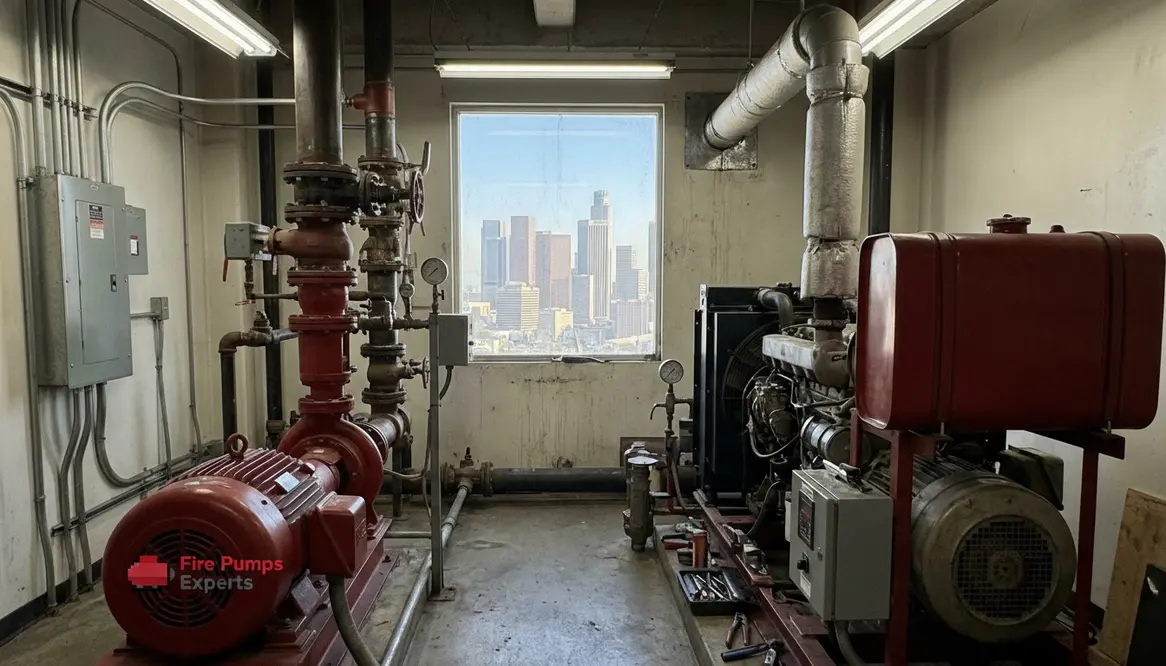
Electric vs Diesel Fire Pumps in Downtown LA
Electric vs Diesel Fire Pumps for Downtown LA Buildings
When I look at electric vs diesel fire pumps commercial buildings, I see more than a equipment choice. I see a decision that can shape safety, cost, and long term peace of mind in a busy downtown LA tower. In this part of the city, where high rises, mixed use spaces, and tight utility access all share the same skyline, the wrong pump choice can turn into a very expensive headache. And nobody wants that kind of drama, not even in a city that already has enough plot twists for three seasons of prestige TV.
So, I want to walk through the real differences, not the brochure version. I will keep it practical, clear, and built for commercial properties that need fire protection to work when it matters most.
What I look at first in downtown LA fire pump planning
First, I look at power reliability. Electric fire pumps depend on stable utility power, so they fit buildings with strong electrical service and backup systems. Diesel fire pumps, however, bring their own engine and fuel supply, which gives them more independence during a blackout. That matters in downtown LA, where grid issues, seismic risk, and emergency demand can all show up without an invite.
Next, I look at building use. A high rise office tower, a hotel, and a large mixed use property may have different fire flow needs. Therefore, the pump choice must match the water demand, sprinkler setup, and local code path. I also think about space. Electric pumps usually need less room and less ventilation support. Diesel units, on the other hand, need fuel storage, exhaust handling, and more service access. In a crowded mechanical room, that can feel like trying to park a bus in a compact spot. Not ideal.
Electric fire pumps for commercial buildings: when they make sense
I usually recommend electric fire pumps when the building already has strong electrical infrastructure and a reliable backup power plan. They run with fewer moving parts than diesel models, so they often need less routine maintenance. As a result, they can lower daily hassle for property teams that already juggle too much.
They also tend to run quieter. In a downtown building with tenants above, below, and all around, that matters more than people think. No one wants a fire pump room to sound like a Marvel villain is testing a jet engine at 2 a.m. Electric pumps also avoid fuel delivery concerns, which makes life simpler for buildings that want fewer stored hazards on site.
That said, I do not treat electric as the automatic winner. If the building faces long outage risks or has weak utility resilience, then a diesel unit may offer stronger backup comfort. So, I always match the pump to the property, not the other way around.
Diesel fire pumps for major properties: where they earn their keep
Diesel fire pumps work well when a building wants more self reliance. Because they do not depend on the grid, they can keep going during a power failure as long as fuel and maintenance stay in check. For some downtown LA commercial properties, that kind of independence is worth a lot.
They also help in facilities where electrical service upgrades would cost too much or take too long. However, diesel systems need more care. I have to account for fuel storage, battery health, exhaust routing, and regular test runs. If anyone thinks a diesel pump is a set it and forget it hero, well, that is a little like expecting a classic car to stay perfect without ever opening the hood.
Still, when the risk profile demands strong on site backup, diesel often earns its place. It can give property managers a deeper sense of control, especially in larger buildings where outage planning matters just as much as water pressure.
Electric vs diesel fire pumps commercial buildings: side by side
Here is the simple comparison I use when I help evaluate electric vs diesel fire pumps commercial buildings for downtown LA.
Electric pumps
- Better for buildings with stable power and backup systems
- Usually quieter and smaller
- Often simpler to maintain
- No on site fuel storage needed
Diesel pumps
- Better for outage resilience
- Useful where utility power feels less certain
- Require more service and more space
- Need fuel, exhaust, and engine care
In other words, electric often wins on simplicity, while diesel often wins on independence. The right answer depends on what kind of risk the building can accept. That is why I never treat this like a flavor choice at an ice cream shop. It is a life safety decision, and the stakes are much higher than vanilla versus chocolate.
How I use cost and code to narrow the choice
Cost always matters, but I look at more than the upfront price tag. Electric systems can have lower maintenance costs over time, while diesel systems may bring more service needs and fuel related upkeep. For a helpful cost breakdown, I also like to review this electric fire pump cost guide for commercial systems. It gives a solid starting point for budgeting around commercial and industrial facilities.
Code and inspection requirements also shape the final choice. Downtown LA buildings must stay aligned with local fire rules, insurance expectations, and testing schedules. Therefore, I always consider what the authority having jurisdiction will expect during review, installation, and long term operation. A pump that looks good on paper but creates inspection friction later is not a smart win.
FAQ
Conclusion
If I had to sum it up, I would say this: downtown LA buildings need fire pumps that fit their power reality, space limits, and safety goals. Electric systems bring simplicity. Diesel systems bring independence. The best choice comes from a real look at your property, not a guess and a prayer. If you manage a commercial or industrial building and want a smarter path forward, now is the time to review your fire pump plan, compare options, and make sure your system is ready before anyone needs it. In every comparison of electric vs diesel fire pumps commercial buildings, the right answer is the one that keeps people safe, keeps inspectors satisfied, and keeps your tower ready for the kind of emergency nobody puts on a postcard.