EN 12845 Diesel Fire Pump Requirements Guide
EN 12845 Diesel Fire Pump Requirements Explained
When I talk about EN 12845 diesel fire pump systems, I am talking about the kind of backup muscle that commercial and industrial buildings rely on when water pressure drops and the fire alarm starts singing a very unwanted solo. This standard matters because it sets the rules for diesel driven fire pumps used in sprinkler systems where power loss cannot be part of the plan. In plain terms, EN 12845 helps make sure the pump starts fast, runs hard, and keeps going when life gets serious. And yes, unlike a movie hero, it does not need a dramatic speech to do its job.
For major properties, warehouses, factories, and large commercial sites, the right setup is not just smart. It is expected. So I will break down the main requirements in a way that is clear, practical, and useful if you need to understand what this standard asks for.
What EN 12845 diesel fire pump systems must do
The standard expects the diesel fire pump to provide a reliable water supply for sprinkler protection when the main supply cannot do the job. I see this as the whole point of the system. It must start automatically, reach operating speed quickly, and keep a steady flow and pressure for the sprinkler demand.
Also, the pump must serve a proper risk profile. This is not a one size fits all setup. A high rack warehouse, a manufacturing plant, and a large office complex each bring different fire loads, so the system design must match the site. That is why the standard focuses on dependable performance, not just shiny equipment with a loud badge.
Key design rules for a diesel fire pump
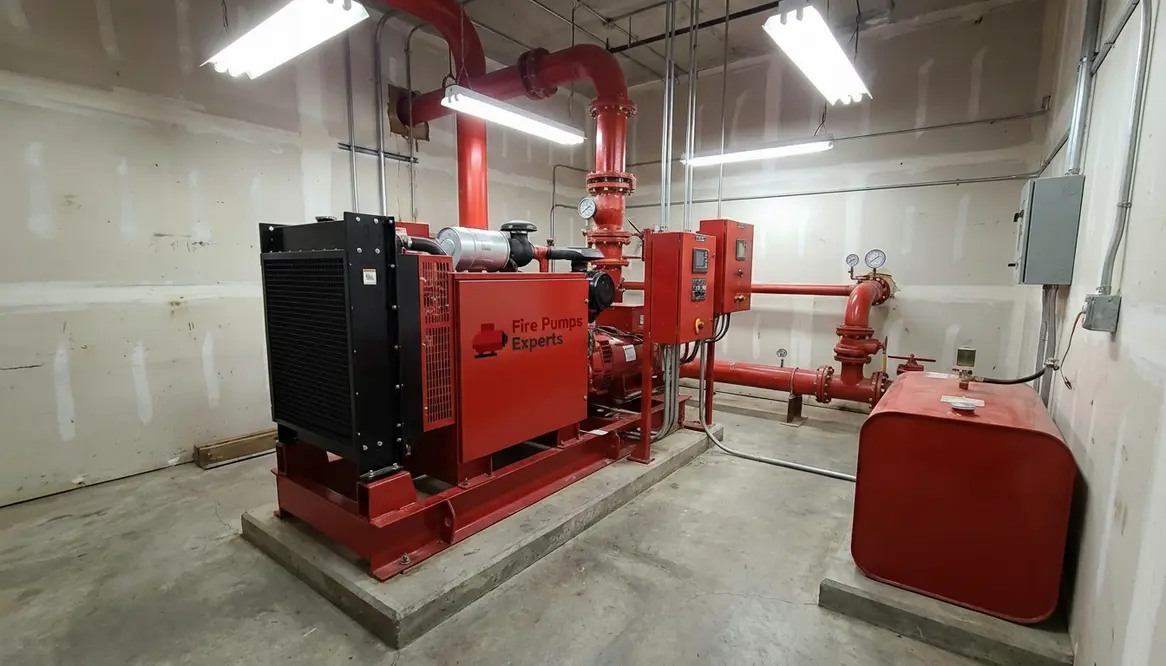
Here, the details matter. The pump room must give the engine clean air, safe exhaust routing, and enough space for service. In addition, the fuel supply must support long run times, because fire does not care if the tank is “almost full.” It wants commitment.
The system also needs:
Fuel and engine needs
- A main fuel supply sized for the required duty
- A protected day tank or fuel arrangement if needed
- Battery starting with reliable charging
- Cooling and ventilation that suit the engine load
Pump room and setup needs
- Easy access for inspection and repair
- Proper drainage to handle leaks or test water
- Sound separation from fire risk areas
- Clear labeling and controls that staff can use fast
Because the pump often protects a large commercial site, I always treat layout as part of safety, not as decoration. You do not want a fire pump squeezed into a room like a forgotten prop in a backstage storage closet.
How EN 12845 diesel pump testing works
Testing proves the system can perform when it counts. Therefore, the standard calls for regular checks of starting, running, pressure, and fuel condition. The driver should start on demand, and the pump should reach the required flow without delay. If it does not, the system has failed the very job it exists to do.
In practice, testing usually includes weekly or scheduled starts, plus full performance checks at set intervals. I also look at battery health, oil level, coolant condition, and any signs of vibration or leaks. Small issues often whisper before they shout, so I prefer to catch them early. That approach saves money, time, and a great deal of stress.
What building owners should check first
If you manage a major property, I suggest starting with four questions. First, does the pump meet the required duty for the sprinkler design? Second, does the fuel system support the expected run time? Third, is the room built for ventilation, access, and protection? Fourth, do your inspection records show consistent testing?
These questions sound simple, but they point straight to the heart of compliance. Moreover, they help you spot gaps before an audit or an incident does it for you. And audits, as we know, have a special talent for arriving at the least convenient time possible.
Common mistakes with diesel fire pumps
Many problems come from weak planning, not bad equipment. For example, I often see poor ventilation, undersized fuel storage, blocked access, or a lack of regular testing. Sometimes the system looks complete, but the practical details fall short. That is where trouble starts.
Another common issue is poor coordination between the fire pump, sprinkler demand, and building risk. If the pump is not matched to the actual site need, the protection may look fine on paper and fail in the real world. And the real world, unlike a presentation deck, does not care about neat charts.
Where to get support for commercial fire pump compliance
If you want a deeper look at system planning, testing, and compliance guidance for major properties, I recommend reviewing a trusted resource like commercial fire pump compliance guidance for EN 12845 systems. It helps connect the standard to real site needs, which matters when you manage a large facility and need answers that are useful, not just theoretical.
At firepumps.org, the focus stays on commercial and industrial sites, along with major property buildings. That matters because these facilities face bigger risks, heavier demands, and tighter safety expectations. So the advice should match the job, not wander off into unrelated property types like a confused extra in the wrong scene.
EN 12845 diesel fire pump essentials in practice
In real facilities, the EN 12845 diesel setup has to balance paperwork with practical realities. You have a standard that expects reliable starting, enough fuel for the design duration, protected pipework, and a pump room that will still function under fire conditions. Then you have the daily world of budgets, space pressure, and maintenance teams who are already stretched.
The most effective sites treat the EN 12845 diesel pump as critical infrastructure, like the main electrical switchboard or the sprinkler control valves. It gets scheduled checks, clear ownership, and simple procedures that staff can follow without hunting for a manual at three in the morning.
Linking EN 12845 diesel rules to daily operations
When the standard is built into contracts, maintenance routines, and training, it stops being a theoretical document and starts becoming part of how the building runs. That is the point where compliance supports people instead of just filling a binder on a shelf.
FAQ
Conclusion
If you manage a large commercial or industrial property, I urge you to treat your fire pump as a serious safety asset, not a box to tick. Review the design, confirm the fuel and testing plan, and make sure the room, controls, and records all support real performance. Then, if you want help turning EN 12845 diesel requirements into practical action, reach out and get expert support before a problem decides to introduce itself.