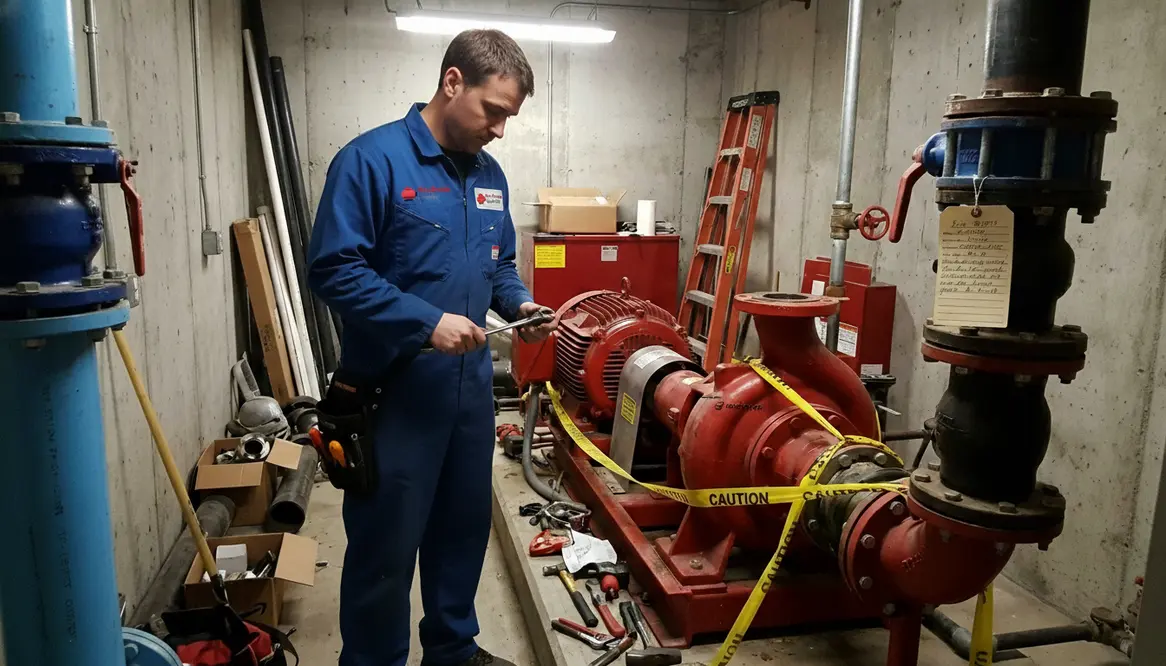
EN 12845 Fire Pump Installation Mistakes to Avoid
When I talk about an EN 12845 installation, I am not talking about a box of parts and a hopeful handshake. I am talking about a life safety system for commercial and industrial buildings that must work the first time, every time. One loose detail can turn a solid fire plan into a very expensive lesson. So, if you manage a plant, warehouse, data hall, shopping center, or other major property, this matters. A lot. In the next few minutes, I will walk you through the most common fire pump installation mistakes, why they happen, and how to avoid them before they turn into trouble with a siren and a very bad day.
An EN 12845 installation is not a one-size-fits-all project. The risk profile, building use, and water supply all shape the final design. Treat it as a bolt-on accessory and you will miss critical details that only show up when it is far too late to fix them quietly. The aim is simple: a robust, predictable system that responds exactly as the standard expects when everything else on site is going wrong.
Get the site ready before the pump arrives
The first mistake I see is simple, yet costly: people rush the site prep. An EN 12845 fire pump set needs the right room, the right access, and the right support. If the floor cannot handle the load, if the room gets too hot, or if service teams cannot reach key parts, the system starts life at a disadvantage.
For commercial and industrial sites, I always check these points first:
- Enough space for pump, driver, valves, and testing access
- A stable base with proper leveling
- Good ventilation and room temperature control
- Drainage that can handle test water and leaks
- Safe access for inspection and repair work
Why basic site prep still trips people up
It may sound basic. However, basic is where many costly failures begin. Even Batman would struggle with a pump room that looks like a storage closet after a bad Friday. Poor access, overheating pump rooms, and makeshift cable routes all come from the same root cause: the pump room was treated as spare space, not as critical infrastructure.
If you would not hide your main electrical switchboard behind pallets and random storage, do not do it to your fire pump. Treat the pump room as a dedicated, controlled environment from day one and your EN 12845 installation will have a far better chance of meeting its performance targets when it matters.
Match the pump to the building demand
Another major mistake is choosing equipment that does not match the real system demand. I have seen teams size a pump from a rough guess, and that is never smart. An EN 12845 fire pump installation must support the pressure, flow, and reserve conditions the building actually needs. If the pump is too small, the sprinkler system may not perform as designed. If it is too large, the system can suffer from poor control and wasted energy.
I always start with the building use, hazard level, water supply, and the sprinkler layout. Then I check the full hydraulic demand. This is where the numbers tell the truth, and the truth is usually less polite than the sales pitch. You also need to consider future changes. A warehouse expansion, new racking, or a change in stored goods can shift the risk profile fast.
Think ahead, not just to handover
A correctly sized EN 12845 installation today can become undersized tomorrow if the fire load on site grows. Designing with a bit of headroom, and with clear records of the design assumptions, gives future engineers something solid to work with when the building changes. Guesswork at the start guarantees confusion later.
Use a dual column check for the core risks
Here is a simple way I like to compare the biggest mistakes side by side:
What goes wrong
Poor pump sizing
Bad suction layout
Weak power supply
Hard to reach valves
Why it matters
The system may not meet fire demand
Cavitation and pressure loss can follow
The pump may fail when needed most
Maintenance becomes slower and riskier
This quick view helps teams spot the weak points before they become the headline act. And nobody wants their facility featured in that kind of show.
Respect suction, discharge, and alignment
If I had to name the most common technical error, I would point to piping. A pump can be excellent, but poor pipe work can drag it down. Incorrect suction pipe size, too many bends, bad valve placement, and weak supports all create stress. That stress leads to vibration, noise, wear, and possible performance loss.
Alignment also matters more than many teams expect. A pump and driver must sit and run in line with proper support. If the base or couplings are off, the system may vibrate, heat up, and wear out sooner. That is not drama you need in a fire protection room.
I also check the suction side for air leaks and the discharge side for proper flow control. Small leaks may seem harmless during commissioning. However, under demand, they can cut into system strength. In fire protection, “close enough” is just another way to say “not enough.”
Suction rules worth remembering
Treat the suction line as the pump’s lifeline. Keep it short, straight, and correctly sized. Avoid unnecessary fittings close to the suction flange, support it properly, and make sure strainers and valves do not choke the flow. When in doubt, check the standard and the pump manufacturer’s limits instead of trusting a rough sketch on a site whiteboard.
Why testing and commissioning must be done right
Many teams install the pump, then treat testing as a quick box tick. That is a mistake. EN 12845 testing should prove the full chain, not just the pump spin-up. I want to see clear evidence that the pump starts, reaches the right pressure, and responds as expected under load. I also want alarms, power changeover, and control functions checked in real conditions.
Commissioning should include:
- Start and stop checks
- Controller and alarm tests
- Flow and pressure verification
- Power supply checks, including backup arrangements
- Clear records for handover and future service
This is also the time to catch sloppy labels, wrong settings, or a missed valve position. Those little errors love to hide until someone is in a hurry. Then they appear like a villain in a season finale.
Document what you test
A well-documented EN 12845 installation is far easier to maintain and audit. Record setpoints, observed pressures, flow test results, power changeover times, and alarm responses. When something changes years later, those records become your map back to what “good” used to look like.
Plan for upkeep from day one
A common trap is treating the installation as the finish line. It is not. It is the starting point. An EN 12845 installation needs regular checks, testing, and fast service access. If a maintenance team cannot isolate parts safely, inspect the unit, or run tests without shutting down half the site, the design already has a weak spot.
I always advise major property owners and industrial operators to build maintenance into the layout from the start. Leave room for inspection. Keep records close. Make sure spare parts and service routes are clear. If you want a useful guide to system support, see commercial fire pump installation best practices for large buildings and industrial facilities. That kind of planning saves time, money, and a great deal of stress.
Designing for easy maintenance
If technicians have to climb over pipework or squeeze behind panels to reach critical equipment, your EN 12845 installation will eventually suffer from corners being cut. Clear working space, logical valve locations, visible labels, and safe test outlets are not luxuries; they are the foundations of reliable long-term operation.
When you combine smart layout with a solid testing regime and accurate records, you give every future service team a fighting chance to keep the system close to its original performance rather than watching it slowly drift into “good enough” territory.
FAQ
Conclusion
I have seen enough fire pump projects to know this: good results come from careful planning, not hope and a clipboard. If you want your EN 12845 installation to protect a commercial or industrial building the way it should, avoid these mistakes from the start. Review the site, size the pump with care, test every function, and plan for maintenance before the system goes live. If you are ready to protect a major property with confidence, now is the time to act and get the installation done right.