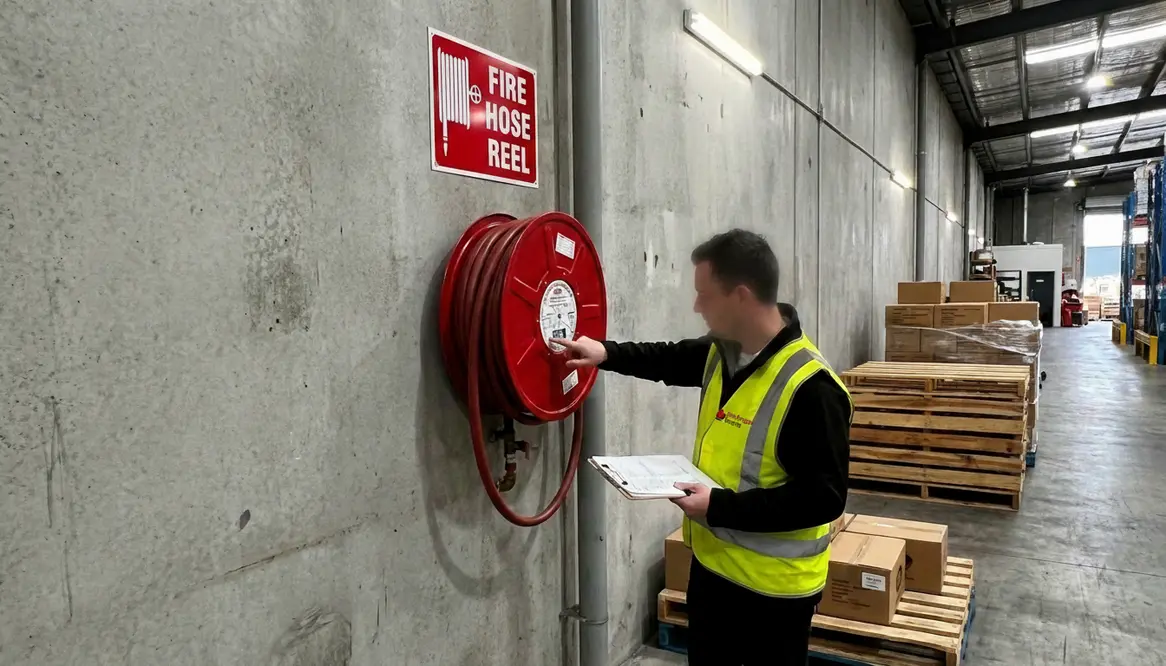
Fire Hose Reel Requirements Australia: Compliance Basics
Fire Hose Reel Requirements Australia: what I check before I call a site compliant
When I look at fire hose reel requirements in Australia, I focus on one thing first: can people use the reel fast, safely, and without guesswork when smoke fills the air and everyone suddenly turns into a very confused cast member from a disaster movie. In commercial and industrial buildings, and in major property buildings, the rules are not just box ticking. They protect staff, visitors, and critical assets. So, I keep my eye on location, reach, water supply, signage, testing, and access. If any of those slip, compliance gets wobbly very quickly. And in this game, “almost compliant” is a phrase nobody wants near a fire safety audit.
What I check first in fire hose reel requirements Australia
I start with the basics, because the basics do the heavy lifting. A fire hose reel must sit in a spot people can reach quickly. It should be clearly visible, easy to access, and not blocked by storage, furniture, or that one box everyone pretends will be moved “tomorrow.” I also check that the reel suits the building use and layout. In large commercial and industrial sites, placement matters even more because long corridors, plant rooms, loading zones, and multi level areas can slow response time.
Next, I look at the hose length and coverage. The reel must let a person reach the right parts of the floor area. If the hose cannot cover the risk area, the reel may exist on paper, but in real life it is about as useful as a chocolate teapot. I also confirm the reel sits near exits or along paths people already use during an emergency.
How I assess placement, reach, and access
Placement checks
- I confirm the reel is easy to see and reach
- I check that doors, racks, or equipment do not block it
- I make sure the path stays clear at all times
Coverage checks
- I measure whether the hose reaches the required area
- I check corners, service rooms, and long bays
- I confirm the reel supports the site layout, not just the floor plan
This part sounds simple, yet it causes endless trouble. A reel hidden behind stacked pallets is not a fire safety asset. It is a decoration with ambitions.
Fire hose reel requirements and water supply checks
Here is where the technical side matters. A hose reel needs a reliable water supply and enough pressure to work as intended. I always check whether the system supports the reel’s use in a real emergency, not just during a calm inspection when everyone smiles and nods. If pressure drops or supply problems show up, the reel loses value fast.
I also review the condition of the hose, nozzle, valve, and reel drum. These parts must work smoothly. If the hose kinks, sticks, leaks, or fails to retract properly, I treat that as a problem worth fixing. For commercial and industrial facilities, downtime is already costly, so fire equipment should not add another surprise invoice to the stack.
Regular testing matters too. I like to see a clear inspection schedule, service records, and evidence of maintenance by a qualified provider. That way, the building manager knows the system is not just sitting there looking brave. It is ready.
Compliance, signage, and maintenance in real buildings
Compliance goes beyond the reel itself. I always check signage, because in an emergency, people do not have time for a treasure hunt. The reel must be identified clearly so anyone can find it fast. I also look at floor markings and surrounding visibility, especially in busy industrial sites where equipment changes often.
Maintenance matters just as much. Over time, reels wear down, get painted over, or end up blocked by “temporary” storage that becomes permanent in the way only workplace clutter can. So I keep a close eye on regular servicing, fault repairs, and any changes to the building that might affect access or coverage.
For site teams who want a stronger compliance plan, I often point them to Kord Fire safety support for commercial sites. It helps when the goal is not just passing an inspection, but keeping the whole fire system sensible, serviceable, and ready for the real world.
How I align fire hose reel requirements with site risk
Not every building has the same risk, so I do not treat every reel the same way. A warehouse, a production site, and a major office tower each bring different challenges. For example, industrial facilities may have wider floor areas, more obstructions, and higher exposure to heat or fuel sources. That means I look harder at reach, access, and the chance of blockage. This is where fire hose reel requirements stop being a checklist and start being a practical risk response tool.
At the same time, I make sure the reel fits into the broader fire protection setup. It should work alongside extinguishers, alarms, emergency exits, and other systems. In other words, I want the whole team on the field, not one exhausted player trying to do everything alone like a bad superhero sequel.
When a building owner understands fire hose reel requirements Australia, they can make better decisions on upgrades, inspections, and repairs. That usually saves time, cuts risk, and keeps the site moving with fewer headaches. Even better, the reels stay ready even when the building layout changes and everyone is busy being busy.
FAQ
Final takeaway and next step
If you manage a commercial, industrial, or major property building, I suggest treating fire hose reel requirements as a live safety task, not a dusty compliance note. Review placement, reach, water supply, signage, and maintenance together, because they all work as one system. If you want a clearer path to compliance and fewer surprises at audit time, take the next step now. Get your reels checked, your records updated, and your site ready before a real emergency makes the schedule for you.