Fire Protection for Industrial Service Yards Guide
A practical, hard-nosed look at the systems that have to work when everything else is going wrong.
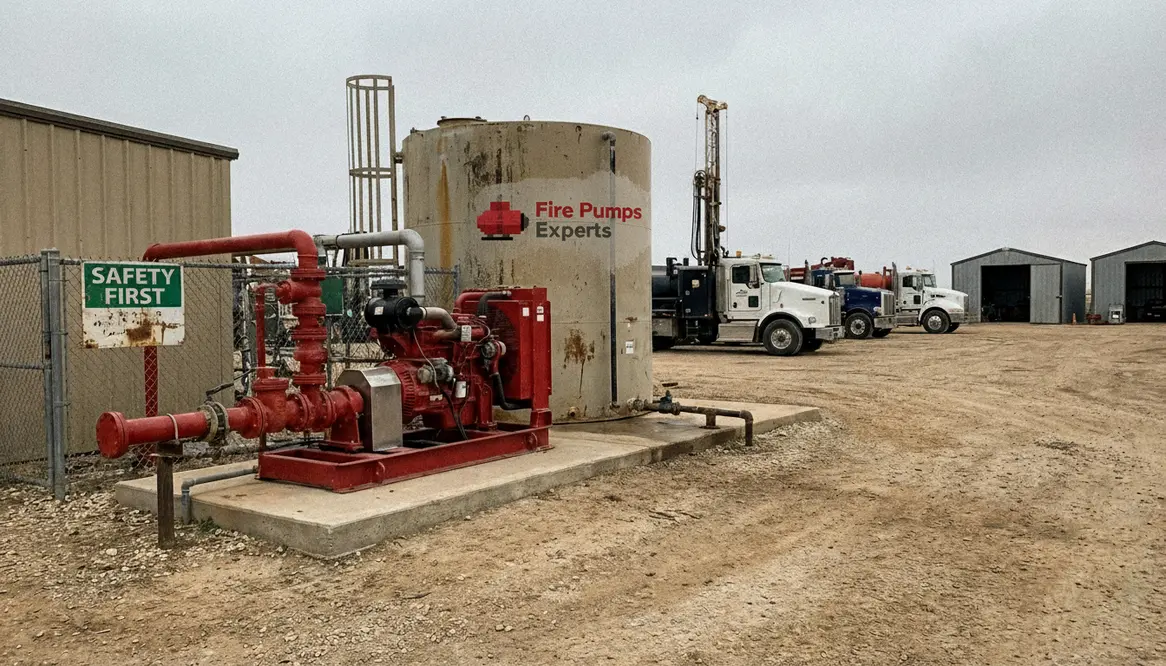
I have spent enough time around oilfield service facilities to know one truth that settles in like a slow bass note. Fire does not negotiate. It shows up uninvited, loud, and hungry. That is why Fire protection for industrial service yards is not a luxury. It is the quiet guardian standing watch when no one else is looking. In these environments, where fuel, pressure, and heavy equipment mingle like characters in an action movie, fire pump systems carry a responsibility that is both simple and immense. They must work. Every time. No excuses.
Fire protection for industrial service yards is about more than hardware. It is about buying time: time for alarms to sound, for people to move, and for responders to gain control before the script flips from incident to catastrophe.
What fire pump requirements apply to oilfield service facilities?
Let me answer this the way I would explain it over a cup of strong coffee. The rules are not vague suggestions. They are built on standards like NFPA 20, which governs fire pump installation, and NFPA 13 for sprinkler systems. In oilfield settings, these standards take on extra weight because of flammable liquids and high risk operations.
First, I ensure the pump can deliver enough flow and pressure to cover the largest hazard area. Then, I confirm redundancy. Because if your only pump decides to take a day off, you do not get a rain check on a fire.
Additionally, power supply matters. Diesel driven pumps are often preferred here. Why? Because when the grid goes down, and it will, diesel keeps humming like an old blues track that never quits.
Finally, compliance is not just about passing inspection. It is about designing a system that performs under real world stress, not just on paper.
Core Components That Keep Systems Reliable
Every fire pump system has a few essential players, and each one needs to pull its weight. I like to think of it as a band. If one member is off, the whole performance suffers.
Pump Unit handles the heavy lifting by moving water at the required pressure.
Controller acts as the brain, starting the pump automatically when pressure drops.
Water Supply must be dependable and sized correctly. A fancy pump without water is like a sports car without fuel.
Jockey Pump maintains system pressure and prevents unnecessary starts.
Moreover, I always stress material durability. Oilfield environments are harsh. Heat, dust, and corrosion are constant threats. Therefore, every component must be built to endure, not just exist.
Designing for Hazard Levels in Oilfield Yards
Not all areas in a facility carry the same level of risk. Some zones are calm. Others are one spark away from chaos. So I design systems that match those realities.
High Hazard Areas
- Storage tanks
- Fuel transfer zones
- Chemical handling spaces
- These demand higher flow rates and stronger pressure.
Moderate Risk Areas
- Maintenance bays
- Equipment storage
- Vehicle service zones
- These still require coverage, but with adjusted system demands.
Because of this variation, a one size fits all system simply will not cut it. Instead, I tailor the fire pump capacity to the most demanding hazard, while still ensuring coverage across the entire yard.
Fire protection for industrial service yards in remote locations
Now here is where things get interesting. Oilfield facilities often sit far from city infrastructure. No hydrants. Limited utilities. And sometimes, spotty access roads that feel like they were designed by a prankster.
So I plan for independence. Large on site water storage tanks become essential. In many cases, I incorporate dual pumps or backup units. Because help is not five minutes away. It might be hours.
Furthermore, automation plays a key role. Remote monitoring allows operators to track system health without being physically present. Think of it as giving your fire protection system its own set of eyes and ears.
And yes, even in the middle of nowhere, maintenance cannot be ignored. A neglected system out there is like a forgotten sandwich in a truck cab. It only gets worse with time.
Maintenance and Testing That Actually Prevent Failure
I have seen perfectly designed systems fail for one simple reason. No one checked on them. Fire pumps need routine testing. Weekly churn tests. Monthly inspections. Annual performance evaluations.
During these checks, I look for pressure stability, unusual vibrations, and controller response. Small issues tend to whisper before they scream. Catching them early makes all the difference.
Also, documentation matters. Not the glamorous part of the job, I know. But records prove compliance and reveal patterns. And patterns, if you pay attention, tell you where trouble is brewing.
Fire protection for industrial service yards and compliance strategy
Compliance is not just a box to check. It is a strategy. I align fire pump systems with local codes, insurance requirements, and national standards. Because failing one of those can shut down operations faster than you can say plot twist.
Equally important, I coordinate with engineers, safety managers, and facility operators. Fire protection does not live in isolation. It works best when it is part of a bigger safety ecosystem.
And yes, inspectors can be tough. But honestly, I respect that. They are the final line between preparation and disaster.
How Fire protection for industrial service yards connects to real operations
When I talk about Fire protection for industrial service yards with operators and yard supervisors, I keep it grounded. It is not about theory. It is about keeping a bad day from becoming the worst day.
In practice, that means clear access to equipment, valves that are actually labeled, and test headers that are not buried behind pallets and pipe racks. It means training crews so they know what that humming diesel pump is doing when it kicks on at 2 a.m., and why no one should be tempted to silence it just because it is loud and inconvenient.
If you want a starting point for evaluating your own setup, walk the yard with three questions in mind: Can we get water where we need it? Will the system start under the worst conditions? And can we prove it, on paper and in practice? Fire protection for industrial service yards earns its keep when the honest answer to all three is yes.
FAQ: Fire Pump Requirements for Oilfield Facilities
These are the questions that come up most often from yard managers, safety leads, and anyone who has stared at a pump room wondering if it will do its job when heat and pressure show up together.
Final Thoughts That Lead to Action
When I design or evaluate a fire pump system, I do not think about equipment first. I think about consequences. The right system protects people, assets, and operations without hesitation. If your facility depends on reliability, then your fire protection strategy should reflect that same standard. Take a closer look at your setup, ask the hard questions, and invest where it matters. Because when fire shows up, preparation is the only thing that answers back.