Fire Pump Acceptance Testing: Annual Performance Testing
Fire Pump Acceptance Testing vs. Annual Performance Testing
When I walk into a commercial or industrial property, I like to say this: a fire pump is not there to look handsome in the corner like a prop from a sci fi set. It is there to work, hard and fast, when the heat is on. That is why the fire pump acceptance test, the annual fire pump test, NFPA 20, and NFPA 25 matter so much. They set the standard for proving the system works at startup and keeps working year after year. In a major building, that difference is not a detail. It is the plot.
In this article, I will break down what each test does, how they differ, and why facility teams should treat both as part of one solid fire protection plan. In the fire world, “good enough” is just another way to invite trouble. And trouble, as we know, never knocks politely.
Quick orientation
- Use the fire pump acceptance test when a system is new or has had major changes.
- Use the annual fire pump test to confirm continued performance in real service.
- Keep NFPA 20 and NFPA 25 in view so design and maintenance stay aligned.
What the fire pump acceptance test proves
I use the fire pump acceptance test to verify that a newly installed system performs as designed. This test happens before the pump goes into service, after installation or major changes. It checks the full setup, including the pump, driver, controller, suction supply, discharge pressure, and flow. In simple terms, I want proof that the system can deliver water when the building needs it most.
NFPA 20 guides the design and installation side of that process. So, when I look at acceptance testing, I am not just checking if the pump turns on. I am checking whether the whole system matches the design intent. That includes the pump curve, the pressure at various flow points, and the condition of the water supply. If the system misses the mark, I do not wave it through like a game show contestant. I fix the issue first.
What the annual fire pump test checks
The annual fire pump test has a different job. It confirms that an in service pump still performs as expected after months or years of use. This is where NFPA 25 comes into play, since it governs inspection, testing, and maintenance for water based fire protection systems. I look for wear, drift in performance, trouble with controls, and signs that the water supply has changed.
Unlike acceptance testing, annual testing focuses on system health over time. A pump can pass at startup and still weaken later because of scale, valve issues, motor trouble, or bad water conditions. So, I treat annual testing like a health checkup, not a birth certificate. One proves it was born right. The other proves it still has strong lungs.
Fire pump acceptance test vs annual performance test
Here is the core difference. The fire pump acceptance test proves the system was installed and commissioned correctly. The annual performance test proves the system still meets expected output in real world service. Both matter, but they answer different questions.
Think of it like this: the acceptance test says, “Can you do the job?” The annual test says, “Can you still do the job after a year of snacks, stress, and a little corporate drama?”
Why commercial and industrial facilities cannot skip either test
For commercial and industrial facilities, major property buildings, and other large sites, fire pump testing supports life safety, business continuity, and code compliance. A failure here can shut down operations, damage equipment, and put people at risk. I have seen owners focus on the visible parts of the building while the fire pump quietly sits in the background, waiting for its one heroic moment. That is not the time to find a problem.
Also, insurers and AHJs often expect clear records. Good testing protects the owner, the facility team, and everyone who depends on that water supply. In other words, the paperwork may feel dull, but it can save a lot of money and grief later. Bureaucracy, somehow, finally earns its keep.
How I approach testing in real facilities
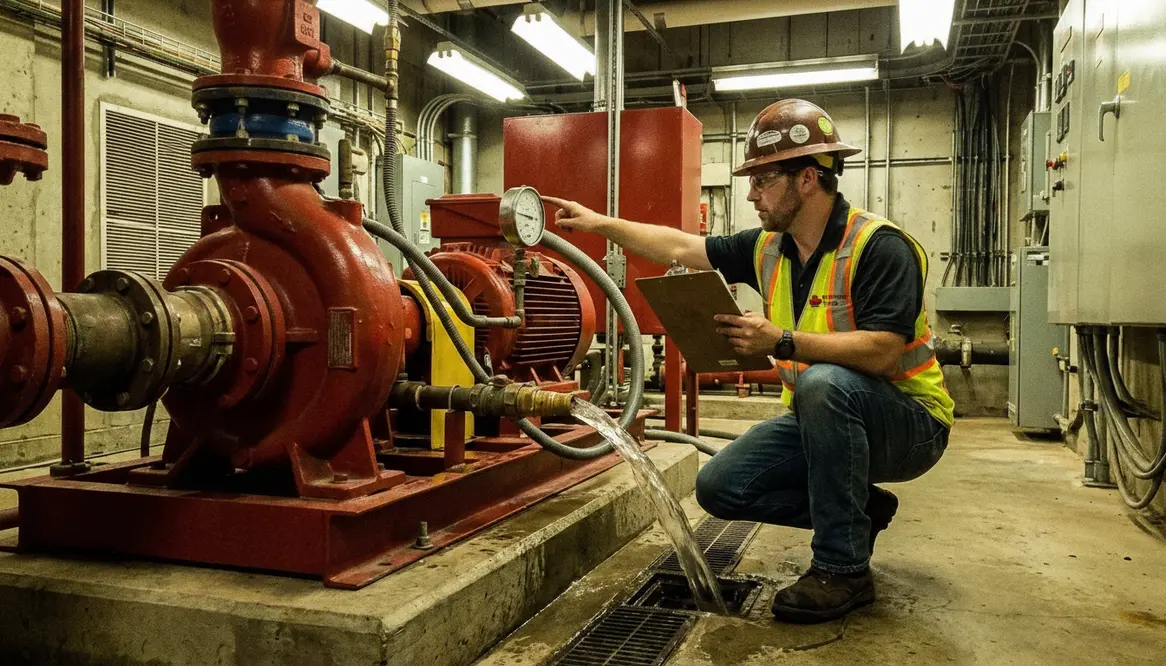
I start by reviewing the system design, service history, and any past deficiencies. Then I confirm the test setup, including the water supply, test header or flow method, gauges, and safe discharge path. After that, I watch the pump through each test point and compare the results with the required curve and acceptance limits.
To keep the process clear, I use this simple workflow:
Acceptance testing
New install or major upgrade
Confirms design and performance
Checks full system delivery
Based heavily on installation requirements
Annual testing
Recurring in service test
Confirms continued performance
Looks for wear and drift
Based on ongoing maintenance rules
That split keeps the job organized. It also helps facility teams understand why one test cannot replace the other. A building is not a movie sequel, after all. You do not just repeat the opening scene and call it progress.
How Kord Fire and related resources help facility teams
When I need a quick technical reference, I look to trusted resources like Los Angeles fire pump services for local support and compliance focused guidance. I also pay attention to related systems, because fire protection rarely lives in one box. For broader building needs, commercial electrical services for major facilities can help support the power side of the system. And for facilities that operate across regions, fire sprinkler service resources for large properties offer a useful point of comparison. If your site needs specialized fire pump support, los angeles fire pump support is a helpful place to start.
FAQ
Conclusion
If you manage a commercial or industrial property, do not treat fire pump testing like a box to tick and forget. The acceptance test proves the system started right, while the annual test proves it still stands ready. I recommend building both into your fire protection plan with clear records, skilled testing, and prompt repairs when needed. If your goal is strong compliance and real peace of mind, now is the time to review your fire pump program and act before a small issue becomes a big headline.