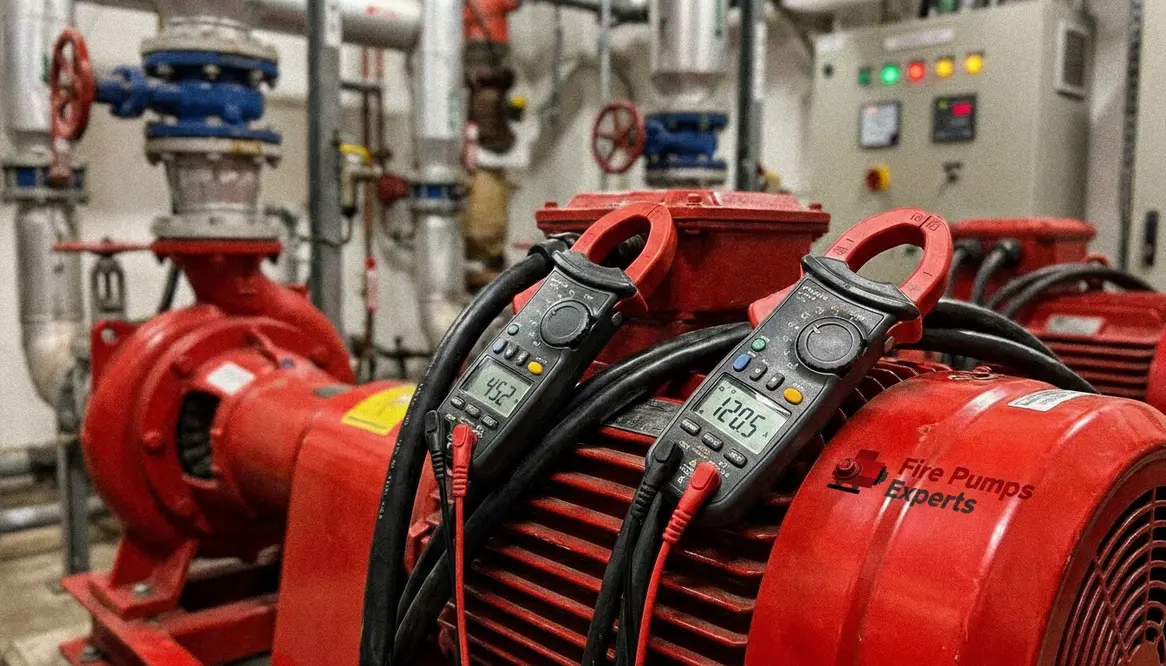
Fire Pump Amperage Churn vs Full Flow
Fire Pump Motor Amperage During Churn vs. Full Flow
I have seen a lot of plant rooms, risers, and pump houses in my time, and one thing always gets attention fast: fire pump amperage. At the start of a fire pump churn test, the motor behaves one way. During a fire pump flow test, it behaves another. That difference matters, because amperage tells me how hard the motor works, how much heat it builds, and whether the system can do its job when a commercial tower, warehouse, or industrial site needs it most. And yes, this is the kind of topic that sounds dry until the alarm panel starts singing and everyone suddenly becomes very interested in electrical numbers.
In this article, I break down what changes between churn and full flow, why those changes happen, and how I look at the results in real commercial and industrial fire pump systems.
Fire pump amperage during churn and why it often looks lower
When I test a fire pump at churn, the pump runs with little or no water flow. In many cases, the amperage stays lower than it does during active discharge. That happens because the motor does not always face the same load it sees at higher flow. However, lower does not mean harmless. The pump can still build heat, and that heat can creep up if the churn run lasts too long.
Here is the simple version. At churn, the pump spins, water moves inside the casing, but the system does not push much water out. So the motor draws enough current to keep the pump turning, yet it often does not reach the same load as it does when the system opens up. Still, I never treat churn as a casual warm up. It is a real operating condition, and it can reveal problems with wiring, bearings, voltage drop, or motor sizing. In other words, it is not the gym teaser trailer. It is the actual movie.
What changes during a full flow test
During a fire pump flow test, I let the system move water through the demand path. Now the pump works under a real hydraulic load, and the amperage often rises. The exact reading depends on pump type, motor rating, voltage, and system demand, but the key point stays the same: full flow gives me a truer picture of how the motor performs under service conditions.
That rise in current matters because the motor must stay within its rated limits. If amperage climbs too high, I start looking for trouble. Maybe the pump curve does not match the system. Maybe the suction side has an issue. Maybe the motor faces poor voltage. On the other hand, if the amperage looks too low during full flow, I ask more questions. A weak reading can point to a problem just as easily as a high one.
How I read the numbers in commercial and industrial facilities
I do not look at amperage in a vacuum. Instead, I compare current draw, voltage, pressure, and flow together. That gives me the real story. A motor may draw more current during full flow because the pump does more work. Yet the test only makes sense if the pressure and flow also line up with design needs for the building.
Churn
- Lower or steadier current
- Less hydraulic load
- More focus on heat, rotation, and motor condition
Full flow
- Higher current in many systems
- Real demand on the pump
- Clearer view of performance under load
I also watch for changes over time. A single test gives useful data, but trends tell me more. If the amperage drifts upward month after month, I treat that as a warning sign. Likewise, if the numbers jump around like a thriller plot twist, I check the electrical side first, then the mechanical side. That approach keeps me from guessing, which is always a good idea when a fire pump protects a major property.
What problems I look for before I blame the motor
Before I say the motor is the problem, I check the basics. First, I confirm voltage. Then I look at phase balance. After that, I review suction conditions, valves, strainers, and controller settings. A pump may show strange amperage because the system around it has an issue. The motor often gets blamed first, much like the intern who touched one cable and suddenly everyone thinks they are the villain.
I also pay close attention to the test method. If the fire pump churn test lasts too long, heat can distort the picture. If the fire pump flow test does not create the right demand, the amperage reading may not reflect real operating conditions. So, I keep the test clean, repeatable, and tied to the site’s actual fire protection needs.
For building owners who want more detail on fire pump systems for commercial and industrial properties, I often point them to los angeles fire pump service guidance. I also find it helpful to review commercial electrical support for pump systems when motor performance and power quality need a closer look. If the site includes sprinkler support work, the fire sprinkler service overview can also help connect the dots.
Why amperage matters for long term reliability
Amperage is more than a number on a meter. It tells me how hard the motor works, how stable the system feels, and whether the fire pump can stay ready for duty. For large facilities, that matters a great deal. A motor that runs outside the expected range can age faster, trip more often, or hide deeper problems in the pump train. And nobody wants a surprise at the exact moment the building needs confidence, not chaos.
So, when I test a fire pump, I use amperage as one part of the full picture. Churn gives me a baseline. Full flow gives me the real work condition. Together, they help me judge whether the system protects the property the way it should.
FAQ
What is fire pump amperage during churn?
It is the motor current when the pump runs with little or no flow.
Does amperage rise during a full flow test?
Often yes, because the pump works under a higher load.
Is a low amperage reading always good?
No. It can point to a system issue or weak load.
Why do I test both churn and full flow?
I use both to see how the pump behaves at rest and under demand.
What should I check if amperage looks wrong?
I check voltage, phase balance, suction, valves, and motor condition.
Conclusion
If you manage a commercial or industrial property, I recommend treating fire pump amperage as a serious part of your maintenance plan. Churn and full flow tell different stories, and both matter. Therefore, if you want reliable performance, accurate testing, and fewer expensive surprises, I suggest you review your system with a qualified fire pump team. The numbers will speak clearly, and I can help you make sure they say the right thing.