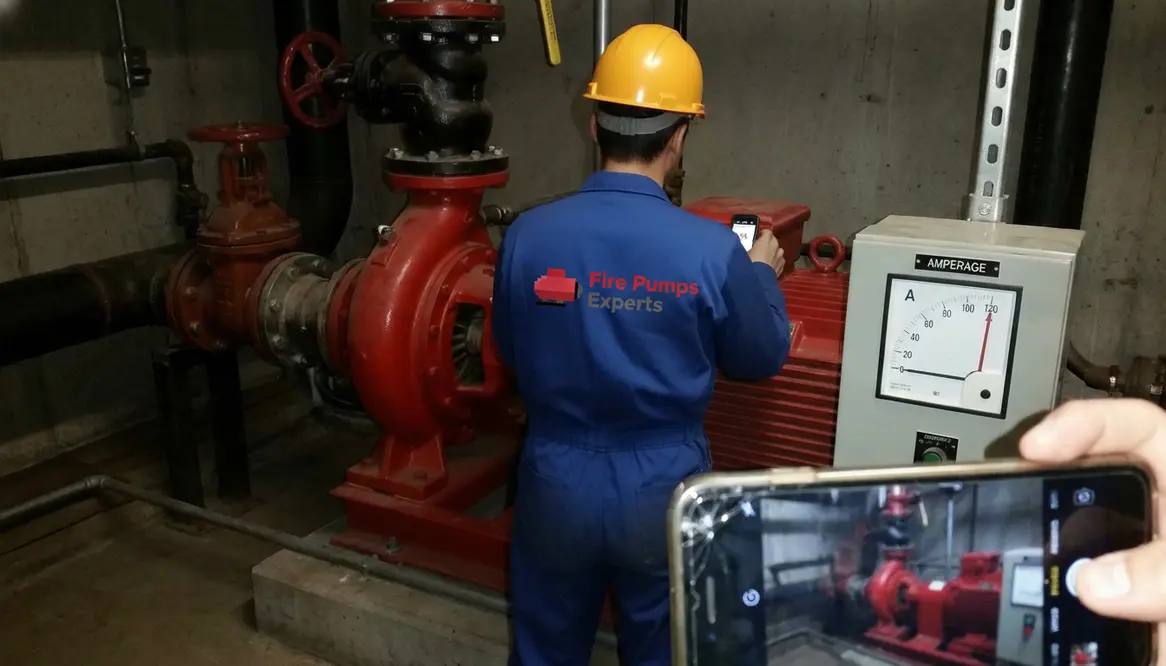
Fire Pump Current and Flow Reading for Performance
When I look at a fire pump motor, I do not just see a spinning machine. I see a system that lives and breathes with the demands of the building it protects. As fire pump flow rises, the motor current changes because the pump asks for a different amount of work. That shift matters for fire pump performance, especially in commercial and industrial facilities where every second counts and every amp tells a story. In plain terms, more water can mean more load, less load, or a mix of both, depending on the pump curve and the system around it. And yes, the laws of physics remain annoyingly unbothered by our schedules.
For major properties, understanding this relationship helps prevent nuisance trips, weak pressure, and costly damage. So let me walk you through why the current moves, what it says about the pump, and how I read the signs before they turn into a problem.
Why motor current changes as flow rises
Here is the short answer: as fire pump flow increases, the pump’s hydraulic load changes, and the motor responds by drawing a different amount of current. The pump does not work in a straight line. Instead, it follows a curve. That curve tells me how much power the pump needs at each flow point.
At low flow, the pump may run against higher pressure and lower water movement. As flow increases, the impeller pushes more water, which changes torque demand on the shaft. Depending on pump design, current may rise, level off, or in some cases drop slightly after a certain point. In other words, the motor is not being dramatic. It is simply reacting to the job in front of it.
How pump curve and system pressure work together
The pump curve and system curve work like two people trying to meet in the middle. One says how the pump behaves, and the other says what the building demands. When I see a higher demand from sprinklers, standpipes, or fire suppression zones in a commercial site, the operating point moves along the curve. That move changes the brake horsepower needed by the pump, and the motor current follows.
Also, a system with long piping, valves, fittings, or elevation changes can shift that load even more. So while the motor may seem like it is simply “using more power,” what it is really doing is matching the new hydraulic reality. The building sets the pace, and the motor keeps up like a very serious backup dancer.
What current tells me about fire pump performance
I treat motor current like a status report. It tells me whether the pump is under the load I expect or whether something feels off. Stable current during rated operation usually suggests the pump and motor are working in sync. However, abnormal current can point to trouble.
Quick view of what I check
| Current pattern | What it may mean |
|---|---|
| Low current at higher flow | Pump may not be loading correctly |
| High current at modest flow | Possible restriction, mechanical issue, or wiring problem |
| Current spikes or swings | System instability, valve issues, or air in the line |
That is why I never look at current alone. I pair it with pressure, flow, vibration, and sound. A motor can still run while the system quietly goes off script. And in fire protection, “quietly” is not a word I love.
Common reasons current rises with flow
Several things can push current upward as flow increases. First, the pump may simply be doing more hydraulic work. More water moving through the impeller can mean more torque demand. Second, a worn impeller or internal wear ring can change how efficiently the pump transfers energy. Third, a clogged strainer, closed valve, or dirty line can force the pump to fight harder to deliver the same result.
Motor size also matters. If the motor sits too close to its limit, even a normal rise in demand can push current near overload. That is especially important in large commercial and industrial facilities where the fire protection system serves wide areas or high hazard zones. A small problem there can grow legs real fast.
How I verify the system in the field
When I inspect a fire protection setup, I want proof, not guesswork. So I compare the measured current against the motor nameplate, the expected pump curve, and the real discharge pressure. I also watch for changes during churn, rated flow, and peak demand. If the current climbs faster than expected, I look for mechanical drag, poor voltage, or a mismatch between pump and motor.
In many facilities, I also check electrical health through trusted service partners. For example, the commercial electrical service team can help confirm that supply issues are not disguising themselves as pump problems. Likewise, if a property needs broader fire protection support, I review resources such as the los angeles fire pump service page for local service context. For properties that also manage sprinkler systems, the fire sprinkler service overview can help frame the full system picture.
FAQ
Conclusion
I always tell facility teams this: if you want strong fire protection, do not ignore the numbers your pump gives you. Motor current reveals how the system responds as demand rises, and that insight can protect a commercial or industrial property before a small issue becomes a costly one. If you need a closer look at your pump setup, now is the time to review the data, inspect the system, and bring in the right specialists. A healthy pump today is peace of mind tomorrow. And that, in this line of work, is worth its weight in copper.