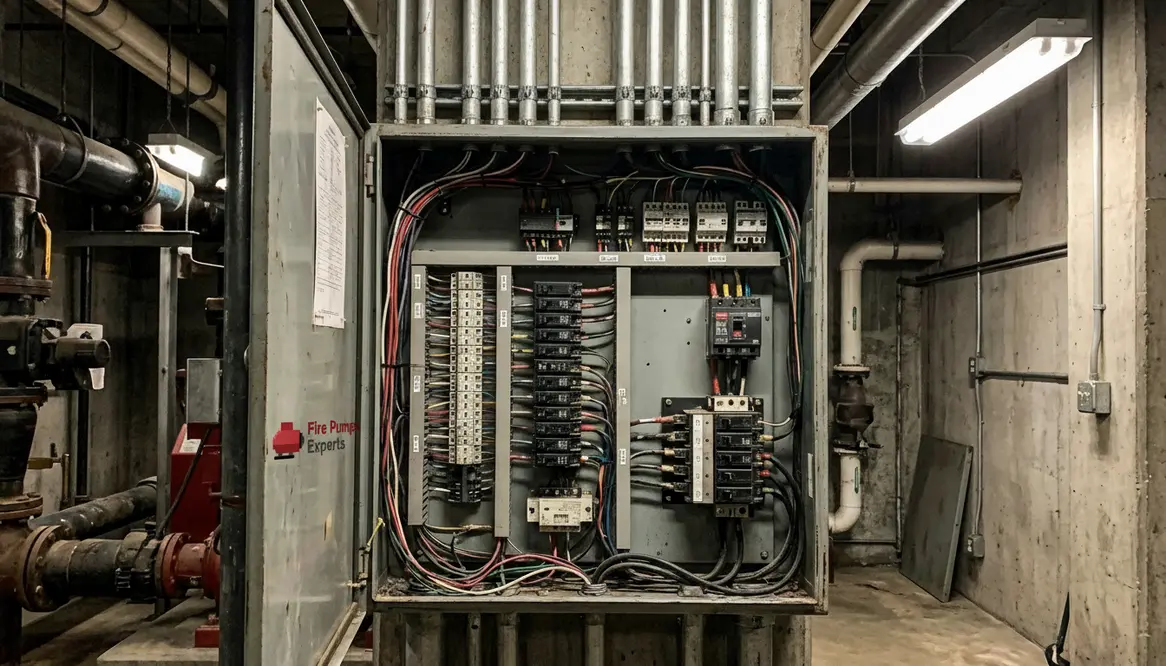
Fire Pump Controller Wiring for Commercial Safety
I have spent enough time around mechanical rooms to know this: when things go quiet, that is when you start worrying. Especially when you are dealing with something as critical as fire pump controller wiring. In large commercial and industrial buildings, this system is the nerve center. It tells the pump when to wake up, how hard to work, and when to keep pushing water even if everything else is failing. Get the wiring wrong, and you are not just dealing with a technical hiccup. You are gambling with safety, compliance, and a very expensive headache.
So let me walk you through it in a way that feels less like a dry manual and more like a calm conversation in a humming pump room, where everything matters and nothing should be rushed.
What actually matters in fire pump controller wiring
At its core, wiring a fire pump controller is about reliability under pressure. Literally. I always think of it like the last line of defense in an action movie. When everything else fails, this system still needs to perform.
First, power supply integrity takes center stage. You need a dedicated and stable source. In most commercial facilities, that means complying with strict electrical codes that prioritize separation from other building systems. In other words, your fire pump does not want to share. And frankly, it should not.
Next, signal wiring plays its part. These wires connect pressure sensors, alarms, and control relays. If those signals get noisy or interrupted, your pump might hesitate. And hesitation, in this case, is not dramatic. It is dangerous.
Finally, grounding ties everything together. A proper ground is like a good referee. Quiet, unnoticed, but absolutely essential when things get chaotic.
How do I wire a fire pump controller safely and correctly
I get this question a lot, and the answer is both simple and layered. You follow standards, but you also respect the environment you are working in.
Start with clear separation between high voltage and low voltage wiring. This is not just about neatness. It reduces interference and keeps control signals accurate. Then, use conduit that can handle the building conditions. Industrial sites are not gentle. Heat, vibration, and moisture all try to join the party.
After that, labeling becomes your best friend. I have seen panels where wires looked like spaghetti after a long day. That might impress a chef, but it does not help during an emergency or inspection.
And yes, testing matters. You do not just wire it and walk away like a movie hero. You simulate conditions, verify responses, and confirm that the system behaves exactly as intended.
Breaking down the components without the headache
Power connections
These deliver the muscle. They must handle full load conditions without voltage drop.
Control circuits
These act like the brain. They interpret pressure changes and trigger the pump.
Alarm wiring
This ensures the building knows what is happening. Silence is not golden here.
Transfer switches
These provide backup power transitions, often between utility and generator sources.
When these elements work together, the system becomes resilient. When they do not, you get confusion, delays, or outright failure. And trust me, confusion is the last thing you want in an emergency.
Common mistakes I see in commercial installations
Now, let me save you from a few classic missteps. Because while wiring might seem straightforward, the devil is always in the details.
One frequent issue is undersized conductors. It might pass initial checks, but under load, it becomes a bottleneck. Another is improper routing near interference sources. Large motors and heavy equipment love to disrupt signals.
Then there is the temptation to cut corners on compliance. I understand deadlines. I really do. But codes like NFPA standards are not suggestions. They are written in the kind of ink that comes from experience, and sometimes from past failures.
If you want a deeper look at professional standards and system expectations for fire pump controller wiring in large facilities, I recommend reviewing resources from commercial fire pump system experts. They align closely with the needs of large scale facilities.
Why fire pump controller wiring demands precision in large facilities
In a small setup, mistakes might stay small. In a high rise or industrial plant, they scale quickly. That is why I treat every connection as if it will be tested under the worst conditions imaginable.
Additionally, redundancy becomes essential. Dual power feeds, backup controllers, and fail safe wiring paths are not luxuries. They are expectations. When inspectors walk in, they are not just checking boxes. They are verifying that your building can handle real world emergencies.
And let me add a bit of perspective. A well wired controller does not get applause. It just quietly works. Kind of like a great bass player in a band. You may not notice it right away, but take it away, and suddenly everything falls apart.
How fire pump controller wiring fits into the bigger safety picture
In commercial properties, fire pump controller wiring does not live in isolation. It has to coordinate with alarms, monitoring systems, and building management. When you route and terminate each conductor, you are effectively scripting how the building reacts to stress.
That is why documentation matters as much as the hardware. Updated schematics, panel labels, and test records turn a tangle of wires into a system other professionals can understand in a hurry. When a technician opens the controller during a crisis, clarity buys time, and time buys safety.
FAQ about fire pump controller wiring
Final thoughts that might just save you a headache
When I think about fire pump controller wiring, I do not just see cables and terminals. I see a system that must perform perfectly when everything else is going wrong. So take your time, follow the standards, and respect the details. If you are managing a commercial or industrial property, invest in expertise that gets it right the first time. Because in this line of work, doing it properly is not impressive. It is expected.