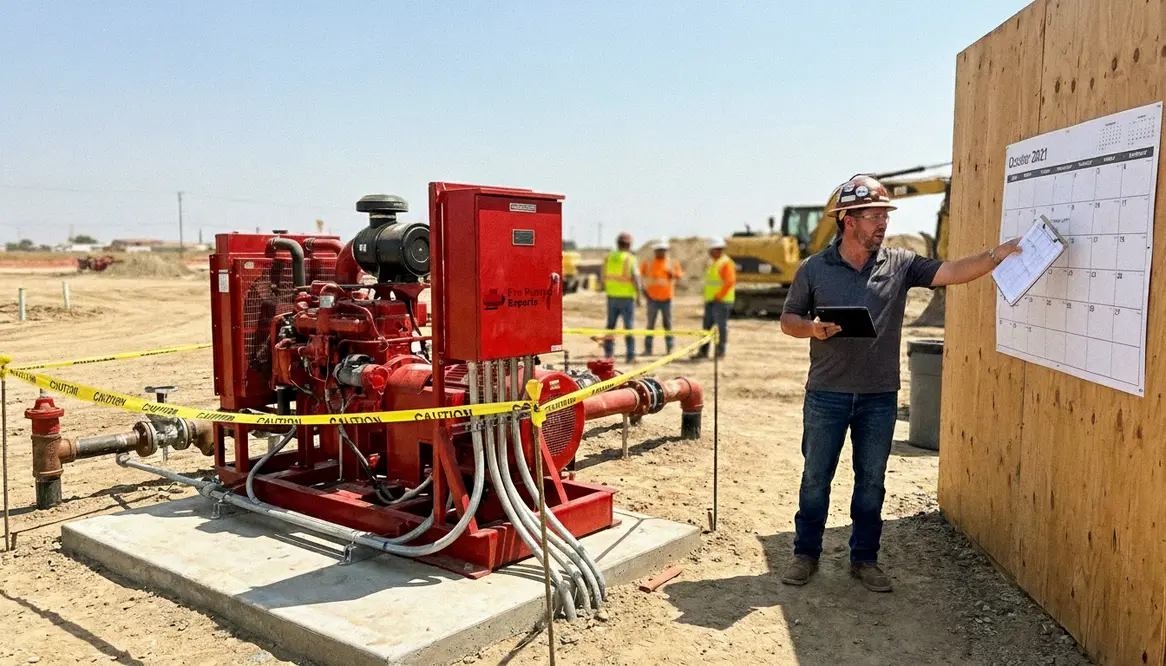
Fire Pump Delays in Kern County and How to Avoid Them
Keeping a fire pump project on schedule in Kern County is a little like keeping concrete dust off your boots: technically possible, rarely easy. The trick is knowing where schedules actually break, and fixing those weak spots before they cost you weeks.
I have spent enough time around commercial build sites in Kern County to know one truth. Fire pump delays rarely show up alone. They arrive with paperwork issues, missed inspections, and a contractor staring at a calendar like it personally betrayed them. While this article focuses on Kern County, I always keep New Jersey code compliance in mind as a benchmark for disciplined planning and documentation. That mindset alone can shave weeks off a project. So let’s talk about how I keep fire pump timelines tight, predictable, and just a little less painful.
Why Fire Pump Delays Happen More Than Anyone Admits
Most delays do not come from the pump itself. They come from everything wrapped around it. For example, I often see teams underestimate submittal approvals. Then, once the equipment finally arrives, someone realizes the power supply is not ready. It is like ordering a high performance car and forgetting to build the road.
Additionally, Kern County projects face coordination gaps between engineers, contractors, and inspectors. If one group lags, the entire schedule shifts. Meanwhile, long lead times for commercial grade fire pumps only make things worse. So instead of reacting late, I plan early and assume every step needs verification.
That is where treating documentation with the discipline of New Jersey code compliance actually pays off. When every assumption is backed by clear paperwork and confirmed timelines, surprises have fewer places to hide.
How I Plan Fire Pump Procurement Without Guesswork
I start procurement earlier than most people feel comfortable with. In fact, I treat fire pumps like critical path equipment, because they are. First, I lock in specifications that align with both California requirements and lessons learned from New Jersey code compliance. That cross reference helps eliminate vague approvals.
Then, I confirm manufacturer timelines in writing. Not estimates. Not hopeful guesses. Real dates. After that, I coordinate delivery windows with site readiness. Because nothing slows a project like a pump sitting on site with nowhere to go.
Also, I keep communication tight with suppliers. A quick weekly check in can catch production delays before they explode into schedule disasters. It is not glamorous, but neither is explaining a missed deadline to a room full of stakeholders.
What Do Inspectors Actually Look for in Kern County?
Inspectors are not trying to fail your project. They are trying to ensure systems work under pressure, literally. So I prepare for inspections long before they happen.
- I verify installation against approved plans, confirm flow test readiness, and ensure all components meet commercial and industrial standards.
- I make sure documentation is complete and easy to review. Inspectors appreciate clarity, and frankly, so do I.
- I align my internal checklists with the same kind of structure you would expect when chasing New Jersey code compliance, so nothing critical gets skipped.
Because when inspection day comes, I do not want surprises. Surprises are great for birthday parties. They are terrible for fire protection systems.
Coordinating Power, Water, and Controls Without Chaos
A fire pump is only as reliable as the systems supporting it. Therefore, I coordinate electrical, plumbing, and control teams early and often.
Power Coordination
- Confirm dedicated electrical supply is installed and tested
- Verify backup power systems are operational
- Align voltage requirements with pump specifications
Water and Controls
- Ensure water supply meets flow and pressure needs
- Test control panels and alarm integration
- Validate communication with building systems
When these elements come together smoothly, the fire pump performs as expected. When they do not, delays stack up fast. I have seen projects lose weeks over a single missing connection.
If your team does not live and breathe this work every day, bringing in a specialist fire pump service provider like Kord Fire Protection can keep these moving parts aligned instead of colliding.
Scheduling Strategies That Actually Hold Up
Schedules look great on paper. Reality tends to laugh at them. So I build flexibility into every phase. For instance, I allow buffer time between delivery, installation, and testing. That way, if one step slips, the entire project does not collapse.
At the same time, I prioritize sequencing. Fire pump installation should not compete with unrelated trades for space and attention. Instead, I carve out dedicated windows where teams can focus and move efficiently.
And yes, I track progress constantly. Not obsessively. Just enough to catch issues early. Think of it like checking your gas tank before a long drive. Simple habit, big payoff.
The more your schedule discipline starts to resemble a strict environment like New Jersey code compliance, the less room there is for “we thought someone else was handling that” to slip into your critical path.
Avoiding Documentation Pitfalls That Stall Approvals
Paperwork might not be exciting, but it can stop a project cold. So I treat documentation as part of the build, not an afterthought.
I ensure submittals are complete, accurate, and aligned with approved plans. Then, I organize test reports, certifications, and inspection records in a way that anyone can follow. Because when reviewers can quickly verify compliance, approvals move faster.
Also, I avoid last minute submissions. Rushing paperwork almost guarantees errors. And errors lead to rejections. It is a cycle I prefer to skip entirely.
The same habits that keep you on the right side of New Jersey code compliance — organized records, clear calculations, and traceable decisions — translate directly into smoother approvals for Kern County fire pump projects.
FAQ Quick Hits for Fire Pump Projects
Bringing It All Together Without the Headache
Fire pump delays in Kern County are not inevitable. With early planning, tight coordination, and clear documentation, I keep projects moving forward without the usual chaos. If you are managing a commercial or industrial build and want fewer surprises and smoother approvals, now is the time to take control of your fire protection timeline.
The same disciplined mindset that keeps projects in step with New Jersey code compliance can be your secret weapon in Kern County: start early, verify everything, and never assume someone else handled the critical details.
Reach out, align your strategy, and let’s keep your project flowing right on schedule.