Fire Pump Design for Large Office Complexes Guide
A practical walk through the real-world decisions behind dependable fire pump systems in big commercial buildings.
Fire Pump Design for Large Office Complexes
I have spent years walking through the mechanical hearts of towering office buildings, and let me tell you, nothing humbles a structure faster than a poorly designed fire pump system. Early in many projects, I often hear people compare requirements to multi story residential fire pumps, and while there is some overlap, large office complexes demand a different level of precision. After all, we are not just protecting apartments and hallways. We are safeguarding dense populations, critical infrastructure, and the occasional office worker who still cannot find the stairs.
So, let us take a calm, steady walk through what truly matters in fire pump design for these commercial giants.
How do I size a fire pump for a large office complex?
I always begin with demand. Not guesswork, not rules of thumb passed down like a secret family recipe. Actual hydraulic calculations. The size of a fire pump must meet both flow and pressure requirements based on the building’s sprinkler system and standpipe demands.
First, I evaluate the hazard classification. Office spaces usually fall under light hazard, but mixed use areas like server rooms or storage zones can raise the stakes quickly. Then, I calculate the most demanding remote area. This is where water pressure tends to struggle, much like me on a Monday morning.
Additionally, I factor in building height. As structures rise, so does the pressure needed to push water upward. Gravity, as always, remains undefeated. Therefore, I ensure the pump delivers enough pressure at the topmost outlet while maintaining system stability throughout.
In contrast to some multi story residential fire pumps, office systems often require higher flow rates due to larger floor plates and open layouts. So, precision here is not optional. It is survival.
Understanding system components that actually matter
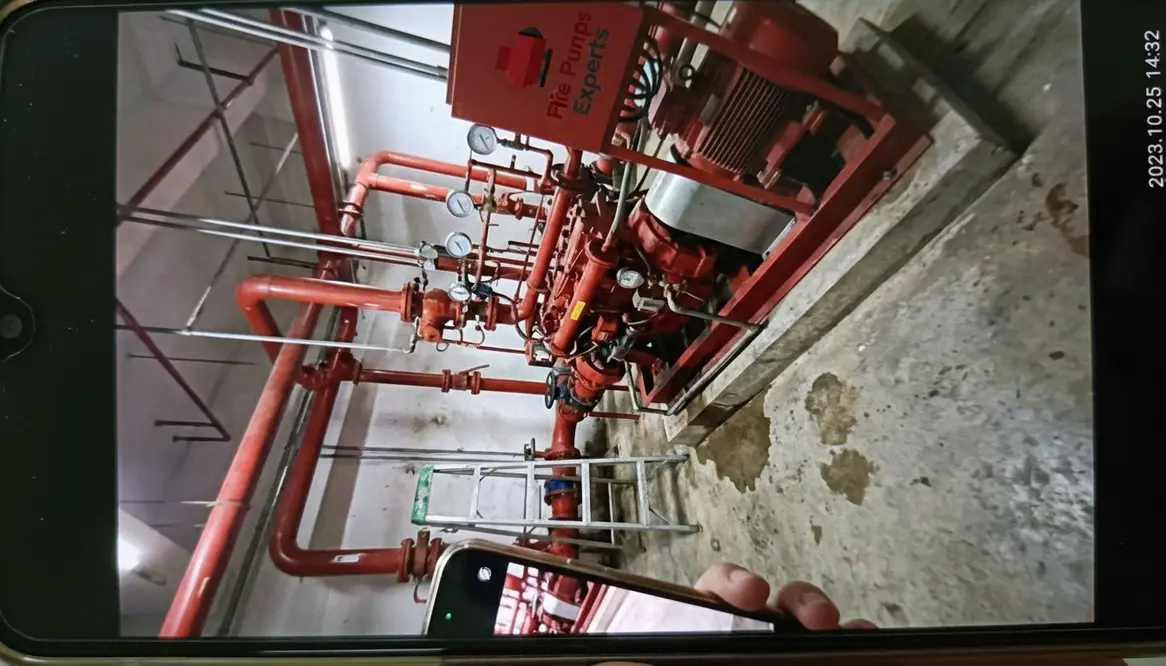
A fire pump is not a lone hero. It is part of a coordinated system, and each component must perform without hesitation.
Here is what I prioritize:
- Fire pump unit that matches calculated demand
- Reliable driver which is usually electric but sometimes diesel for backup
- Controller that acts like the brain and makes split second decisions
- Jockey pump to maintain pressure and prevent unnecessary starts
- Water supply that is dependable under worst case scenarios
Moreover, I pay close attention to redundancy. Large office complexes cannot afford downtime. If one component fails, another must step in without drama. Think of it as casting an understudy who actually knows the lines.
Designing for reliability in high occupancy buildings
When thousands of people occupy a building, reliability becomes non negotiable. I design systems that assume something will go wrong and prepare accordingly.
For example, I often specify dual power sources. If the primary electrical feed fails, a secondary source or generator keeps the pump running. Additionally, I consider environmental factors like temperature and flooding risks in pump rooms.
However, reliability is not just about hardware. It is also about accessibility. Maintenance teams need clear access to equipment. Because when a valve is hidden behind a wall of pipes, it might as well be in another dimension.
Dual perspective design insights
Operational reality
I design with the end user in mind. Facility managers need systems that are simple to test and maintain. Therefore, I avoid overcomplicating layouts. Clear labeling and logical piping routes make a world of difference.
Engineering precision
At the same time, I stick to strict codes and hydraulic accuracy. I verify every pressure point and flow rate. Because even the best intentions cannot compensate for poor calculations.
Common mistakes I avoid at all costs
I have seen enough design missteps to fill a blooper reel. And while some are harmless, others can be catastrophic.
One major mistake is undersizing the pump. It might save money upfront, but it creates long term risk. Another is ignoring pressure fluctuations across different floors. Office buildings are dynamic environments, and the system must adapt.
Additionally, I never overlook testing provisions. A fire pump that cannot be tested easily is like a parachute you never checked. It might work, but do you really want to find out the hard way?
Integrating fire pumps into modern building systems
Today’s office complexes are smarter than ever. Therefore, I integrate fire pump systems with building management systems for real time monitoring.
This allows facility teams to track performance, receive alerts, and respond quickly. Moreover, data trends help identify issues before they escalate. It is like having a crystal ball, but with fewer prophecies and more actionable insights.
While some principles overlap with multi story residential fire pumps, commercial environments demand tighter integration and higher performance thresholds. The margin for error is simply smaller.
When comparing modern office pump rooms to more traditional layouts for multi story residential fire pumps, I pay close attention to how data, alarms, and trending information are shared with building operators. That extra visibility often becomes the difference between a minor issue and a system failure.
Frequently asked questions about office fire pump design
Because fire pumps only spring into action during the worst possible moments, people naturally have questions about how they should be designed, sized, and maintained. Here are some of the most common ones I encounter on large office projects, especially when teams are comparing them to multi story residential fire pumps they have used in the past.
Conclusion
If you are planning a fire pump system for a large office complex, I encourage you to think beyond basic compliance. Design for performance, reliability, and real world conditions. At https://firepumps.org, we focus exclusively on commercial and industrial properties, delivering systems that stand up when it matters most. Reach out today, and let us build a solution that protects your people, your property, and your peace of mind.