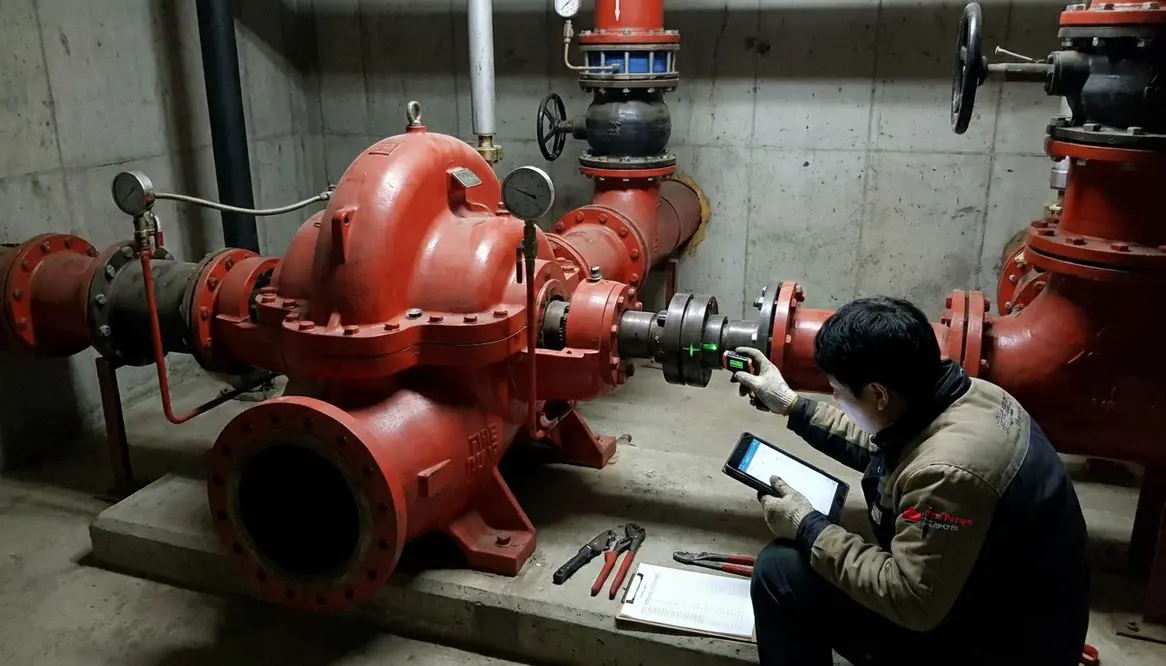
Split Case Pump Alignment for Fire Pump Reliability
I have spent enough time in fire pump rooms to know this simple truth: when split case pump alignment goes wrong, everything else starts to hum the wrong tune. And not the good kind. More like a tired jazz band at 2 a.m. in a basement. In commercial and industrial facilities, alignment is not a minor detail. It is the quiet force that keeps your fire protection system ready when it matters most. So today, I am going to walk you through what really happens down there, why alignment drifts, and how to keep things running smoother than a calm narration on a Sunday afternoon.
What Causes Split Case Pump Alignment Issues in Fire Pump Rooms?
Let me answer this plainly. Alignment issues rarely come from one dramatic failure. Instead, they creep in slowly, like dust settling on equipment that no one has checked in a while.
First, foundation settling plays a big role. Over time, even solid concrete shifts slightly, and that tiny movement can throw off pump and motor alignment. Next, thermal expansion steps in. When pumps run, heat builds up, and metal expands. Without proper compensation, that expansion nudges components out of line.
Then there is human involvement. Yes, us. Improper installation or rushed maintenance often leaves shafts slightly misaligned. It may look fine to the eye, but machines are less forgiving than we are.
Finally, vibration becomes both a symptom and a cause. Once misalignment starts, vibration increases. Then vibration worsens the misalignment. It is a loop, and not the fun kind you see in action movies.
How I Spot Alignment Problems Before They Get Expensive
I like to think of myself as part detective, part mechanic. The clues are always there if you know where to look.
For example, unusual vibration is the first red flag. If a pump feels like it is trying to dance its way out of the room, something is off. In addition, excessive heat around bearings often signals stress caused by poor alignment.
Noise is another giveaway. A properly aligned split case pump should hum steadily. If it starts rattling or whining, that is not personality. That is a problem.
Moreover, coupling wear tells a clear story. When I inspect couplings and see uneven wear patterns, I know alignment has drifted. It is like uneven tire wear on a car, except this car is responsible for fire protection in a high rise.
Split Case Pump Alignment Best Practices I Actually Trust
Over the years, I have learned that good alignment is not about luck. It is about discipline and the right approach.
First, I always use laser alignment tools. Old school methods had their time, but precision matters more than nostalgia. Laser systems give accurate readings and remove guesswork.
Next, I check soft foot conditions. If one foot of the pump or motor does not sit evenly, alignment will never hold. Fixing this early saves hours of frustration later.
Then, I account for thermal growth. I intentionally offset alignment slightly to compensate for operating temperatures. It feels counterintuitive, but it works.
Finally, I document everything. Measurements, adjustments, and conditions. Because when something changes, and it will, I want a baseline to compare against.
Key Factors That Keep Alignment Stable Over Time
Environmental Control
I keep pump rooms clean and temperature stable. Dust and heat swings are silent troublemakers.
Routine Monitoring
I schedule vibration analysis and thermal checks regularly. Not when something breaks, but before.
Proper Installation
I ensure baseplates are level and grout is solid. A strong start prevents future headaches.
Skilled Maintenance
I rely on trained technicians who understand alignment, not just tools. Experience matters here.
Why Alignment Matters More in Large Commercial Facilities
In large properties, failure is not just inconvenient. It is expensive and risky. A misaligned pump in a commercial high rise or industrial facility can reduce efficiency, increase energy use, and shorten equipment life.
More importantly, it can compromise fire protection readiness. That is not something anyone wants to explain after the fact.
This is why I often recommend working with specialists in commercial fire pump system maintenance. These environments demand precision, and not every service provider operates at that level.
Also, larger systems run longer and harder. That means alignment must hold under continuous stress. It is less about fixing problems and more about preventing them.
The Cost of Ignoring Alignment
Let me be blunt. Ignoring alignment is like ignoring a small crack in a dam. It may seem harmless at first, but it will grow.
Energy inefficiency is the first hit. Misaligned pumps require more power to operate. Then comes component wear. Bearings, seals, and couplings start failing faster.
Eventually, downtime enters the picture. And downtime in a commercial facility is never cheap. It disrupts operations, safety compliance, and peace of mind.
And yes, I have seen pumps fail completely because alignment was treated as an afterthought. It is not dramatic when it happens. It is just avoidable.
FAQ: Quick Answers on Split Case Pump Alignment
These are the questions I hear most often when people start taking split case pump alignment seriously in their fire pump rooms.
Conclusion
If you take one thing from this, let it be this: alignment is not a small detail. It is the backbone of reliable fire pump performance. I have seen what happens when it is ignored, and it is never pretty. So take action now. Inspect, measure, and correct before problems grow. And if you manage a commercial or industrial facility, partner with experts who treat alignment like the mission critical task it is. Your system will thank you.