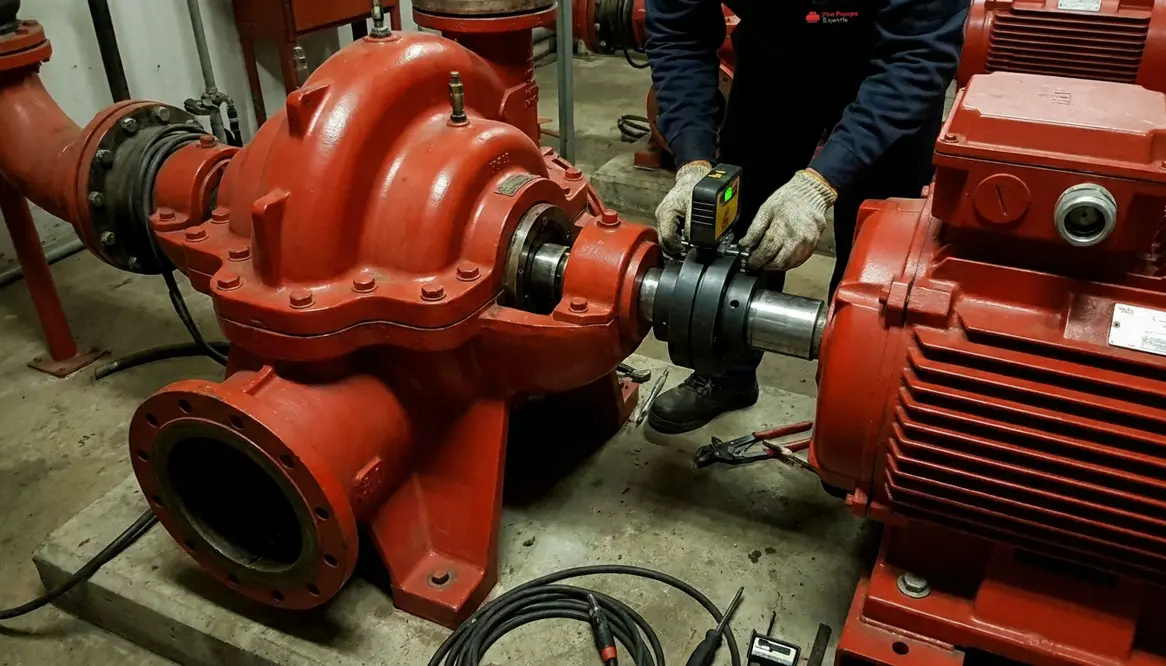
Split Case Pump Alignment for Fire Pump Reliability
I have spent enough time in fire pump rooms to know one quiet truth. When things go wrong, they rarely announce themselves with fireworks. More often, they whisper. A faint vibration. A subtle hum that feels just a little off. And more often than not, it traces back to one thing: split case pump alignment. In large commercial and industrial facilities, where reliability is not optional, alignment is the quiet backbone of performance. Ignore it, and your pump will eventually protest like an overworked barista on a Monday morning.
What causes alignment problems in fire pump rooms?
The answer is rarely just one thing. Instead, it is a chain reaction. First, installation errors sneak in. Then, thermal expansion joins the party. After that, foundation settling adds its own twist. Before long, your once perfectly aligned system drifts out of sync.
In my experience, the most common culprit is rushed installation. Someone eyeballs the alignment instead of dialing it in precisely. It looks good. It spins. Everyone moves on. However, precision equipment does not reward guesswork.
Additionally, environmental factors play their role. Fire pump rooms in large buildings often experience temperature shifts. As metal expands and contracts, even a small change can throw alignment off. Consequently, what started as a minor deviation becomes a measurable problem.
And yes, sometimes it is just wear and tear. Couplings loosen. Bases shift. Time does what time always does.
How do I know my split case pump alignment is off?
You do not need a dramatic failure to spot it. In fact, the early signs are almost polite.
First, vibration increases. Not enough to shake the room, but enough to feel if you pay attention. Then, noise follows. A slight whine or uneven hum replaces the smooth, steady sound you expect.
After that, component wear accelerates. Bearings begin to fail sooner than they should. Seals give up early. And suddenly, maintenance costs creep upward like a subscription you forgot to cancel.
Moreover, energy efficiency drops. The pump works harder to do the same job. That means higher operating costs, which no facility manager enjoys explaining during budget reviews.
If you are thinking, “That sounds expensive,” you are absolutely right.
Split Case Pump Alignment Best Practices for Commercial Facilities
Now we get to the part where we fix things before they spiral into chaos.
Proper alignment starts with the right tools. Laser alignment systems are not just fancy gadgets. They are essential. They remove guesswork and replace it with precision, especially for split case pump alignment where even a slight offset can trigger cascading problems.
Equally important is a stable foundation. A pump mounted on an uneven or shifting base is like building a house on sand. It might stand for a while, but it will not stay happy.
Simple, practical alignment habits
What to do
- Use laser alignment tools
- Check alignment during installation
- Monitor thermal growth
- Schedule routine inspections
- Train technicians properly
What to avoid
- Relying on visual alignment
- Skipping post installation checks
- Ignoring vibration data
- Using worn couplings
- Delaying corrective maintenance
Furthermore, regular inspections are your best defense. A well maintained split case pump alignment does not just extend equipment life. It protects the entire fire protection system.
The hidden cost of ignoring alignment issues
Let me paint a picture. The pump still runs. The system still passes basic checks. Everything seems fine. Meanwhile, behind the scenes, damage builds quietly.
Misalignment increases stress on every rotating component. Bearings degrade faster. Seals leak. Couplings strain. Eventually, something fails. And it never fails at a convenient time.
In large commercial properties, downtime is not just inconvenient. It can disrupt operations, trigger compliance issues, and create safety risks. That is why organizations that take pump alignment accuracy seriously tend to spend less over time.
Think of it this way. Preventive maintenance is like going to the dentist. Nobody looks forward to it, but it beats the alternative. A well planned split case pump alignment program is the equipment equivalent of those regular cleanings that stop the root canal from ever being needed.
Why alignment matters more in large scale fire protection systems
In smaller systems, a minor issue might go unnoticed for longer. However, in large facilities, the stakes rise quickly. High capacity pumps operate under greater loads, which means misalignment effects amplify faster.
Additionally, compliance standards for commercial and industrial buildings are strict. Fire protection systems must perform instantly and reliably. There is no room for hesitation.
That is why many facility managers turn to specialists. Partnering with experts who understand commercial fire pump system performance and maintenance ensures that alignment is not just checked, but optimized.
And let us be honest. When safety systems are involved, guessing is not a strategy. Documented, repeatable split case pump alignment procedures give everyone—from maintenance teams to executives—confidence that the system will do its job when it matters most.
FAQ: Quick answers for busy facility managers
Below are some of the questions that come up most often when teams start paying closer attention to split case pump alignment and long term reliability.
Conclusion: Keep it aligned, keep it reliable
If there is one lesson I have learned, it is this. Precision today prevents problems tomorrow. Split case pump alignment is not just a technical detail. It is a safeguard for performance, safety, and peace of mind. So take the time, use the right tools, and bring in the right expertise. Because when the moment comes, your system should not hesitate. And neither should you.
Treat every alignment check as a small investment that protects your capital equipment, your compliance record, and ultimately the people and property those pumps are there to defend. When split case pump alignment becomes a routine, disciplined practice rather than a one-time task, reliability stops being a hope and starts becoming a habit.