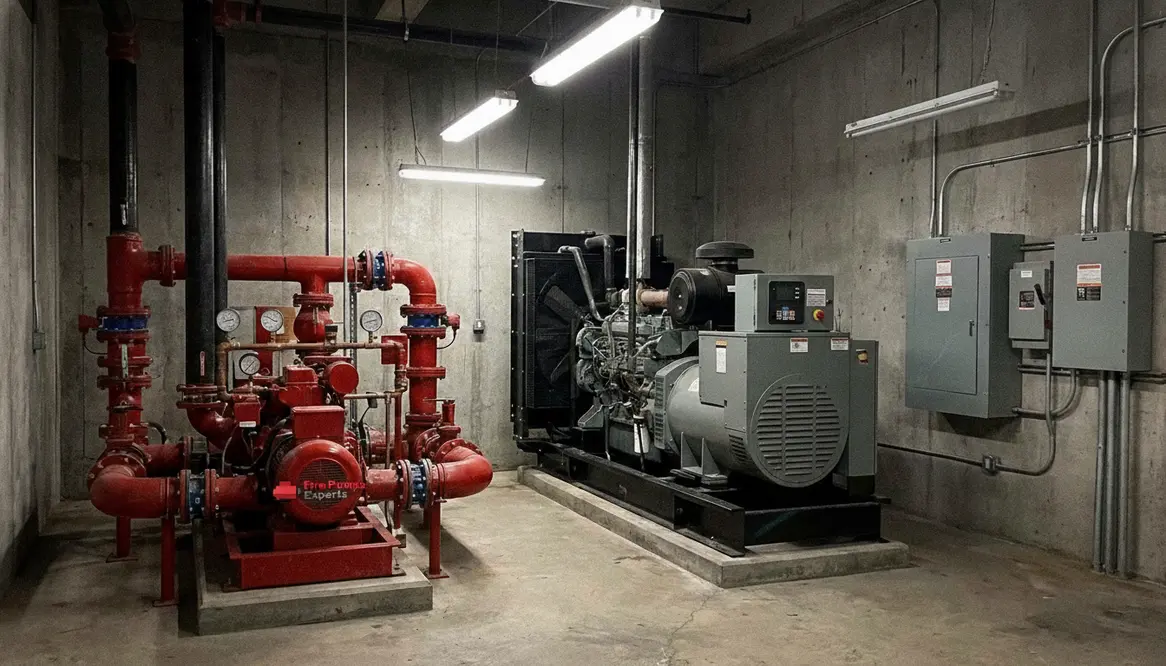
Fire Pump Emergency Power Guide for Buildings
A practical, field-tested look at how fire pump emergency power keeps commercial and industrial buildings ready when normal power does not stick around to help.
Fire Pump Emergency Power Systems Guide
When a building faces a fire, the last thing anyone wants is a power failure playing the villain. That is where fire pump emergency power steps in, quietly doing the heavy lifting while everyone else hopes the alarms stay louder than the chaos. I have seen how commercial and industrial facilities depend on this system to keep water moving when the main source goes dark. And yes, that matters in places where a few minutes can feel like a lifetime. In major properties, reliable backup power is not a nice extra. It is part of the safety backbone.
In this guide, I will break down how emergency power supports fire pumps, what parts matter most, and how I approach planning for buildings that cannot afford guesswork. For owners and managers of commercial and industrial properties, this is one of those topics that sounds technical until it suddenly becomes very, very personal.
How fire pump emergency power keeps systems alive
Fire pumps move water when pressure from the main supply falls short. However, if the building loses power, the pump cannot help anyone unless a backup source takes over. That is the whole point of fire pump emergency power. It gives the pump the juice it needs to keep running during an outage, a utility fault, or other event that knocks out normal service.
Most systems use one of two paths. First, some connect to a dedicated emergency generator. Second, others use a listed alternate power source designed for fire protection loads. Either way, the setup must start fast, run reliably, and support the pump without a dramatic speech or a shaky fanfare. The system should work like a good stunt double. You may never notice it, but you will be glad it showed up.
What I check in a commercial or industrial facility
When I review a property, I look at the whole chain, not just the pump. A strong design must cover the power source, transfer controls, fuel supply, wiring, and the room the equipment sits in. If one part fails, the rest can fall like a bad game of Jenga.
For commercial and industrial buildings, this review matters because these sites often carry higher fire loads, more people, and more business risk. Therefore, I treat the emergency system as a mission critical asset, not as an afterthought tucked into a basement and forgotten like an old gym membership.
Key checkpoints in the emergency power chain
Power source
It must match the pump load and start quickly under emergency conditions.
Transfer equipment
It must switch power without delay and without damaging the pump or controls.
Fuel and runtime
It must support the expected fire event duration, not just a short test run.
Wiring and protection
It must stay dedicated, well protected, and easy to inspect.
Room conditions
It must stay dry, accessible, and safe for operation and maintenance.
Fire pump emergency power planning for code and reliability
Balancing codes, risk, and real-world use
How do I make sure the system stays reliable?
I start with the code, then I build around real world use. That means I look at the fire protection standard that applies to the property, along with local rules and the facility’s own risk profile. Codes set the floor, not the ceiling. A building with a warehouse, a high rise, or a large industrial process needs more than the bare minimum.
Testing, maintenance, and documentation
Reliability also comes from regular testing. I want the emergency power source tested under load, the transfer sequence checked, and the fuel supply confirmed. If a generator only performs on paper, then it is basically a very expensive lounge chair. Functional tests show whether the system can carry the fire pump when it counts.
In addition, I always recommend a clear maintenance log. It should track inspections, repairs, test results, and any changes to the property. That record helps owners spot weak points before they turn into a headline nobody wants.
Common mistakes I see in major properties
Where good intentions go sideways
Many failures start with simple choices. For example, some facilities assume the emergency source can also serve other loads. That often creates trouble. Fire pump backup power needs focus. It should not share attention with nonessential systems that compete for capacity.
Another common miss is poor coordination between the electrical team and the fire protection team. One group may think the other handled it. Meanwhile, the system sits there like a confused extra in a sitcom, waiting for someone to call action.
Also, I often see weak maintenance planning. A system can look fine today and fail later because no one checked battery health, fuel quality, control settings, or transfer timing. So, I push for a schedule that keeps the entire emergency path in view.
When I recommend outside help
Knowing when to call in a specialist
I bring in a specialist when the facility grows, the equipment changes, or the owner needs a deeper review of fire pump emergency power performance. That is especially true for large commercial campuses, industrial plants, hospitals, and tall buildings where the risk level stays high.
If you want a deeper look at current best practices and service support for commercial and industrial sites, I suggest reviewing fire pump system services for commercial properties. It helps connect the technical side with the real world needs of major buildings, which is where theory meets the hard hat.
Why fire pump emergency power deserves priority
In practice, fire pump emergency power is the quiet partner in your fire protection strategy. It does not ask for attention until the worst day in a building’s life, and by then it is too late to rethink anything. Treating it as a critical system, not a checkbox, changes how budgets, designs, and maintenance plans are built.
From the first design sketches to the last inspection report, the question is simple: will this setup give the fire pump the power it needs, when it needs it, without excuses? If the answer is anything short of a confident yes, the design or maintenance plan still has work to do.
FAQ: Fire pump emergency power
Conclusion
If you manage a commercial or industrial property, I urge you to treat fire pump emergency power like the life safety system it is. Review the design, test the backup source, and keep the maintenance records current. Better yet, bring in a qualified fire pump expert before trouble ever shows up at the door. In this line of work, preparation always beats panic. If you want peace of mind, start with a system check today and make sure your building stays ready.