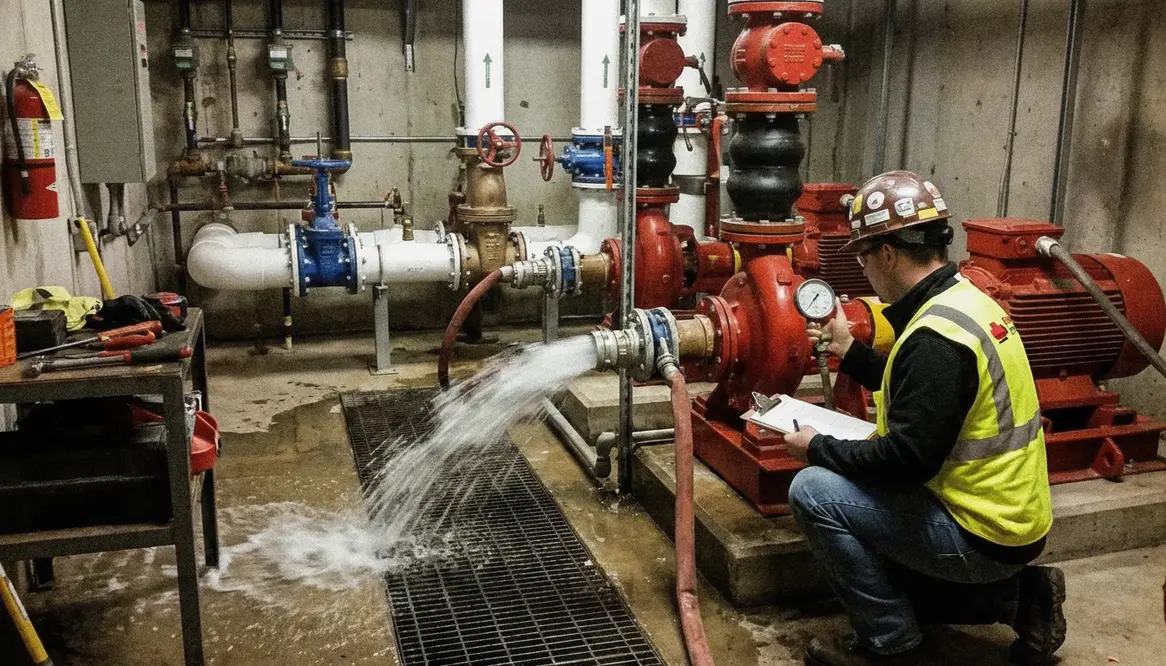
Fire Pump Flow Test After Water Supply Modification
When I look at a fire pump flow test, I do not see paperwork. I see protection. I see a system that has one job and no room for drama. And when a fire pump water supply changes, that job gets harder. A new tie in, a line replacement, a city main upgrade, or even a pressure shift can change how the system behaves. That is why fire pump testing after a modification matters so much. It confirms the pump still delivers the flow and pressure your commercial or industrial property needs, without any guesswork. And yes, guessing is fine for movie plot twists, not for life safety.
For major buildings, warehouses, plants, and large commercial sites, the water side of fire protection can change fast. So I treat every supply change like a fresh chapter. The system may look the same on the outside, but inside, the numbers can tell a very different story.
What changes in the water supply after a modification?
When I inspect a modified supply, I first check what actually changed. Sometimes the public main now delivers more pressure. Sometimes a private line has a smaller pipe size, a new valve, or extra friction loss. In other cases, the source may have better flow on paper but worse performance under demand. That is the plot twist nobody invited.
The main issue is simple. A fire pump does not care about assumptions. It responds to real pressure, real demand, and real resistance in the system. If the water supply shifts, the pump curve may no longer match the site needs. That can affect the whole protection plan, especially in large properties where flow demand stays high and response time matters.
How I prepare for a fire pump flow test
Before I test, I review the modification work and the current design basis. Then I check drawings, pump data, and recent utility changes. I also confirm that the test setup will not disturb the building or create a safety issue for operations. For an active commercial site, that part matters just as much as the numbers.
I look at the following items first:
- Current pump rating and controller data
- Water source details and any new connection points
- Recent pipe, valve, or meter changes
- System demand for the property
- Test equipment and discharge arrangement
Then I plan the test in a way that gives clean results. A sloppy setup can make a strong system look weak, and that is a fast way to start a very unnecessary fire drill of confusion.
Why fire pump testing matters after a supply change
After a water supply modification, I do not rely on old results. Conditions change, and performance can change with them. So I run fire pump testing to confirm suction pressure, churn performance, and flow at the required points. This helps me see whether the pump still supports the site under real demand.
In commercial and industrial facilities, this step protects more than equipment. It protects business continuity, life safety, and code compliance. If the water supply improved, great. If it weakened, I want to know before an emergency does the reporting for me. That is not the kind of surprise anyone wants.
What I check during the test
During the test, I watch pressure closely and compare the results with expected performance. I also listen to the pump, which may sound like old machinery or a tired superhero depending on the day. Either way, sound changes can signal trouble.
Here is the practical side of the test:
Testing point
Churn
Flow condition
Supply side
System behavior
What I want to see
Stable pressure with no odd vibration or drop
Strong delivery at required demand levels
Enough suction pressure without sudden loss
No leaks, no air issues, and no control faults
That kind of review helps me catch problems early. And early is good. Early is calm. Early is cheaper.
How I decide if the system needs more work
Once I finish the test, I compare results to the needed performance for the site. If the pump falls short, I do not shrug and walk away like a side character in a bad sequel. I dig deeper. The issue may come from supply loss, a worn impeller, valve problems, or a poor match between the pump and the modified water source.
For larger facilities, I also check whether the modification changed demand balance across the fire protection system. Sometimes the pump is fine, but the new supply path creates a pressure bottleneck. That is why I look at the full picture, not just the pump room gauge. Good fire protection lives in the details.
Where I turn for support on major properties
When a site needs support for a commercial or industrial system, I rely on proven resources and experienced service teams. For broader pump guidance, I use los angeles fire pump support as a reference point for local SEO and service context. I also review fire pump system services and related electrical support from kord electric solutions when the setup needs control or power side review. In some projects, I also use fire sprinkler service references to align the pump work with the rest of the protection system.
That said, I keep the focus where it belongs: on major property buildings, plants, and commercial operations that depend on strong water delivery when it counts.
FAQ
Conclusion
If I change the water supply, I do not leave the fire pump to “figure it out.” I test it, review the results, and make sure the system still protects the building the way it should. For commercial and industrial properties, that step can make the difference between confidence and chaos. If your site has had any supply modification, I recommend a full review now. I can help you verify performance before the next emergency writes its own script.