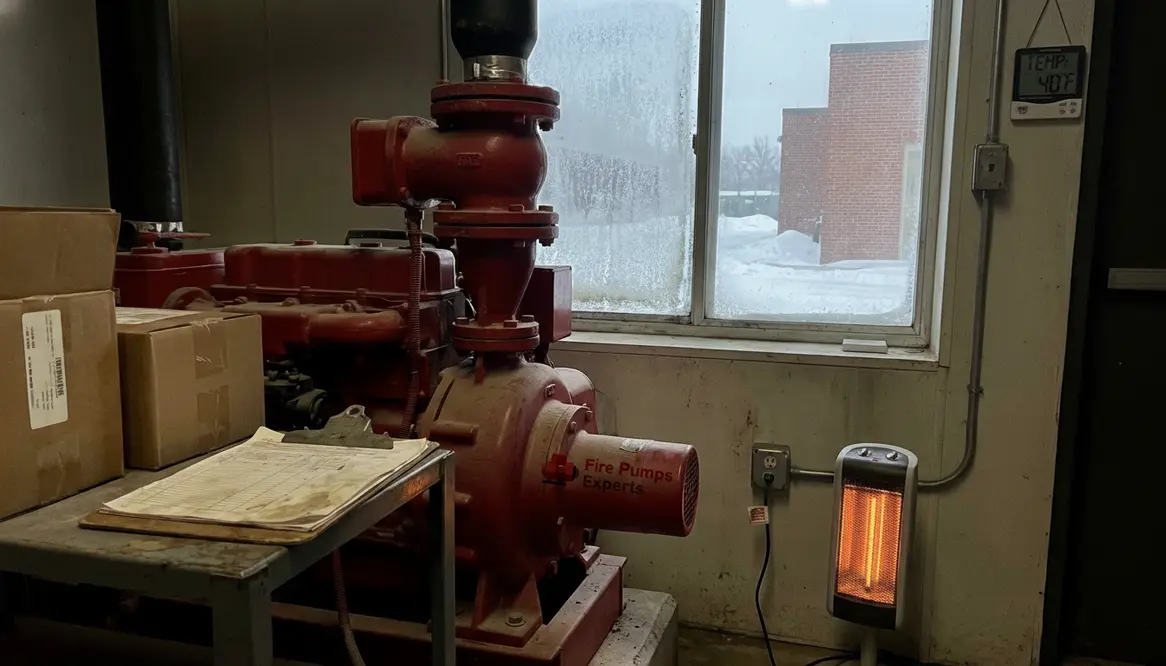
Fire Pump Freeze Protection and Room Temperature
Fire Pump Freeze Protection and Room Temperature
When I walk into a commercial plant in winter, I do not just look at the equipment. I listen to the room, feel the air, and check the basics that keep the system alive. That matters because fire pump freeze protection, fire pump room temperature, and fire pump requirements all work together. If one piece slips, the whole system can turn into a very expensive ice sculpture. And trust me, nobody wants their fire pump acting like Elsa from a movie that should have stayed in animation.
For facility managers, the job is simple in theory and serious in practice: keep the pump room warm, keep water moving when needed, and make sure the installation meets code. I will break down what I watch, what I test, and what I fix before cold weather turns into a problem.
What to do first
The room comes first. If the space drops too low, water in lines, gauges, and fittings can freeze before the pump even gets a chance to do its job. So, I start with the environment. I check insulation, door seals, vents, heaters, and any drafts from nearby loading docks or exterior walls. Then I confirm that the heat source works all the time, not just when someone remembers to flip a switch on a Monday morning.
The safest approach is steady heat, not heroic heat. Sudden temperature swings create trouble, especially in large buildings where mechanical rooms sit near outside walls. I also look for broken pipe insulation, open conduit penetrations, and floor drains that let in cold air. Small gaps can make a big difference. Cold air moves in quietly, much like a villain in a heist film, and the damage shows up later.
Winter readiness checklist
Once the temperature starts to fall, I focus on the details that often get ignored until a problem shows up.
Dual check list for winter readiness
Heating and airflow
I confirm that heaters run evenly and that warm air reaches the whole room. I also make sure no one blocked vents with storage carts, boxes, or that one mystery pallet that seems to live in every facility.
Water movement and system health
I verify that the pump, controller, and lines stay in good condition. I look for small leaks, slow pressure loss, and parts that may hold water where they should not.
Controls and alarms
I test alarms, pressure switches, and remote signals. If the system warns me about a fault, I want to know before the weather does.
These checks support good fire pump freeze protection and help me catch risk early. They also keep the system ready for the kind of cold that sneaks in overnight and overstays its welcome.
How to keep temperature steady without wasting energy
I like rooms that stay stable, not rooms that feel like a sauna in July and a freezer in January. Good fire pump room temperature control protects the equipment and avoids waste. In many facilities, I use a simple rule: keep the room warm enough for safe operation, but do not overheat it to the point where systems wear out faster or energy bills start acting like they have no manners.
I also watch how the building operates around the pump room. If exterior doors stay open for deliveries, or if a broken damper pulls in cold air, then the heater has to fight harder than it should. That is why I check the full space, not just the thermostat on the wall. A thermostat can be optimistic. The room usually tells the truth.
Fire pump requirements: what matters in design and installation
Every commercial and industrial site needs a pump setup that matches the building risk and local code. I review the installation against fire pump requirements, because a system can look clean and still fall short where it counts. The right setup includes proper room layout, dependable heat, safe drainage, clear access, and service space around the equipment.
I also pay close attention to the source of water, suction piping, and any exposed parts that face cold air. In larger properties, I look at how the fire pump ties into the rest of the life safety system. For example, electrical support matters just as much as piping, which is why I often coordinate with trusted partners like commercial electrical support for fire systems when I need a full facility check.
When I compare designs or plan upgrades, I also use resources like los angeles fire pump service guidance for local reference. And for buildings with sprinkler systems, I keep an eye on industrial sprinkler service insights to stay aligned with broader protection needs.
How to spot trouble before it becomes a shutdown
I have learned that freeze damage rarely shows up with a drum roll. Instead, it starts small. A noisy bearing, a damp floor, a heater that cycles too often, or a gauge that drifts out of range can all signal a problem. So, I inspect routinely, not just after a cold snap.
I also ask a few simple questions. Has the room stayed stable during overnight lows? Did anyone change the setpoint? Did a contractor leave a door open? Was there recent work that may have damaged insulation or controls? These questions save time because they uncover the cause, not just the symptom.
If I see repeated cold spots, I do not wait. I correct the airflow, repair insulation, and make sure the heater capacity matches the room. In other words, I do not let the pump room “tough it out.” That strategy belongs in action movies, not in life safety.
Quick FAQ
Use these answers to sanity-check your winter approach and keep your fire pump system positioned for reliable operation. Keeping the relationship between fire pump freeze protection, fire pump room temperature, and fire pump requirements in view is the fastest way to reduce surprises.
Conclusion
I take winter protection seriously because fire pumps do not get a second chance when the temperature falls. If you manage a commercial or industrial facility, now is the time to review the room, test the heat, and check the system against current standards. I recommend a full winter inspection before the first hard freeze. If you want a more reliable plan, reach out, review your setup, and tighten every weak point before cold weather does it for you.