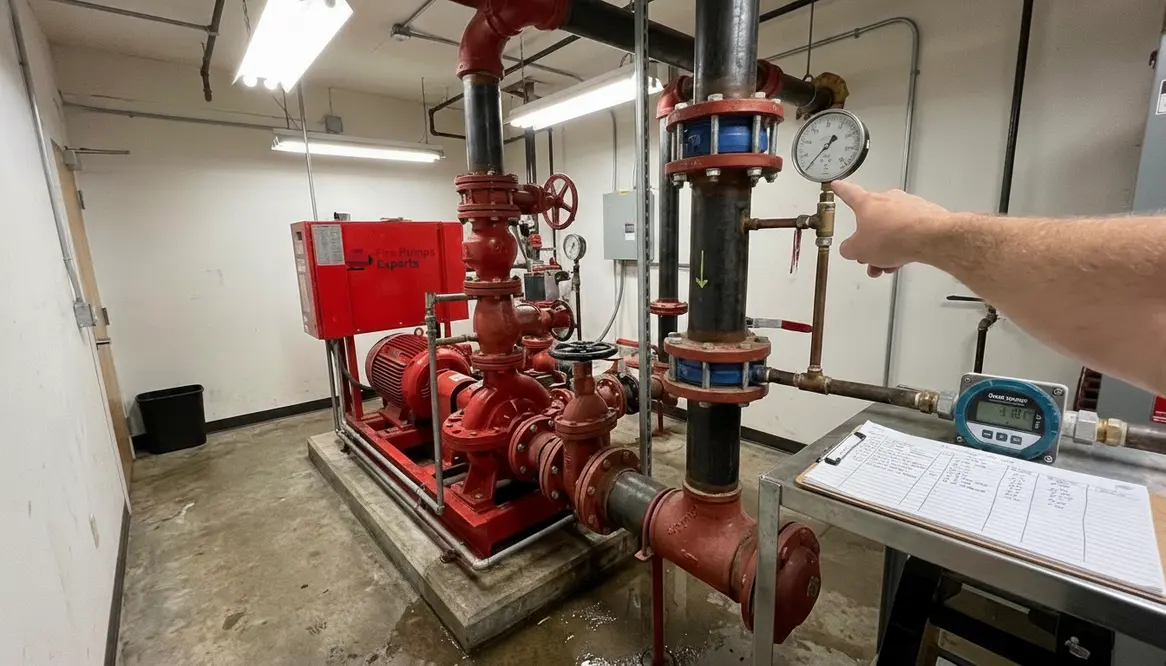
Fire Pump GPM and Pressure Requirements Guide
Fire Pump GPM and Pressure Requirements Explained
When I talk about fire pump flow rate, I am really talking about how much water a pump can move, how fast it can move it, and whether it can do the job when a fire system needs it most. In commercial and industrial buildings, that matters a lot. A weak setup can leave a big property scrambling, while a proper one gives the system the backbone it needs. In plain terms, GPM tells me the volume, and pressure tells me the force. Together, they decide whether the pump performs like a workhorse or like a sleepy extra in a disaster movie.
In this guide, I will break down how I read GPM and pressure requirements, why building size changes the answer, and how I keep the numbers tied to real world fire protection needs for major properties.
What GPM Means in a Fire Pump Setup
GPM means gallons per minute. It tells me how much water the pump can deliver to the fire protection system every minute. That number is not random. It comes from the demand of the system, the size of the building, the hazard level, and the type of sprinkler or standpipe setup in place.
For example, a warehouse, a data center, or a high rise office building will not all need the same water supply. That would be like saying every Marvel hero needs the same suit. Nice idea, but no. Some systems need more flow because they protect larger areas or more demanding hazards. Therefore, I always start with the building use before I touch the pump size.
Here is the simple rule I follow: if the system needs more water than the city supply can provide, the fire pump steps in to fill the gap. That is why the fire pump flow rate must match the real demand, not just a hopeful guess.
How I Match Pressure to Building Demand
Pressure pushes water where it needs to go. If flow is the volume, pressure is the muscle. A pump can move plenty of water, yet still fail if it cannot push that water to the highest point in the building or through long pipe runs with heavy friction loss.
In commercial and industrial facilities, I look at three pressure needs at the same time. First, I check the minimum pressure needed at the sprinkler or standpipe outlet. Next, I factor in elevation, because water has to climb floors, and gravity is not a team player. Finally, I add friction loss from pipes, valves, and fittings. Once I combine those values, I know the pump pressure target.
That combination of elevation, friction loss, and outlet pressure quietly shapes the entire design, and it decides whether the pump just runs or actually delivers when the system is at full demand.
How I Size the Fire Pump for a Major Property
When I size a fire pump, I do not pick numbers in a vacuum. I tie the pump to the system design and the water supply test. That means I need to know the available water flow, the residual pressure, and the peak demand of the fire protection system.
Need
Required sprinkler or standpipe demand across the most challenging area of the building.
Supply
What the water source can provide at the site based on an actual test, not a brochure claim.
Boost
What the pump must add in both flow and pressure to meet the system target without overdoing it.
This is where real engineering matters. A pump that is too small will underperform. A pump that is too large can create trouble with excessive pressure, which may damage system parts or complicate operation. So yes, bigger is not always better. That lesson applies to coffee and fire pumps alike.
I also keep an eye on future changes to the building. If an owner plans to expand, add higher storage, or shift hazard levels, I account for that early so the selected fire pump flow rate will not be obsolete before the ink dries on the drawings.
Why Water Supply Tests Matter So Much
I always treat the water supply test as the starting line. It shows what the site water can actually do under demand, not what someone hopes it can do on paper. The test helps me see static pressure, residual pressure, and flow. From there, I can judge whether a fire pump is needed and how much support it must give.
If the city supply drops hard under flow, the pump may need to carry a heavier load. If the site has a tank, I still need to confirm the pump can move water at the right pressure for the full system demand. In other words, the pump should not just look strong in a brochure. It must perform in the real world, under stress, with no dramatic plot twist.
That real-world performance is why I document each test and tie the results directly to the chosen fire pump flow rate and pressure rating, so anyone reviewing the design can see how the numbers connect.
When GPM and Pressure Must Work Together
Flow and pressure never work alone. They act like a team, and if one fails, the whole system feels it. A fire pump may be rated for a certain flow at a certain pressure, but that rating only helps if it matches the demand of the building.
I also remind clients that a system may need different performance points. For example, a high rise may need strong pressure for upper floors, while an industrial plant may need high flow for broad coverage. Therefore, I look at the system purpose before I set the final pump size.
Balancing curve, demand, and reliability
Each pump has a performance curve, and I compare that curve against the building’s demand points. The goal is to keep the primary fire pump flow rate within the most efficient portion of the curve while still covering lower and higher flow conditions that may appear during an actual event.
That balance keeps the pump from laboring too hard at normal demand or overshooting pressures during partial flow, and it helps the entire fire system operate in a stable, predictable way.
Common mistakes I try to avoid
Many problems come from simple misses. I see these most often:
- Choosing a pump before checking the water supply
- Ignoring friction loss in long pipe runs
- Forgetting elevation changes in taller buildings
- Matching the pump to guesswork instead of actual demand
When I avoid these mistakes, I help the system stay reliable, efficient, and ready. That matters most in commercial and industrial settings, where a weak link can become a very expensive headline.
Checking the numbers against reality
I cross-check hydraulic calculations, the chosen fire pump flow rate, and the pressure ratings against the latest code requirements at https://firepumps.org and the site’s actual test data. That habit catches errors early and keeps the installation aligned with both standards and real-world behavior.
FAQ: Fire Pump GPM and Pressure Requirements
Conclusion
If you manage a commercial or industrial property, I urge you to treat fire pump sizing as a serious planning step, not a box to check. The right GPM and pressure can protect your building, your people, and your operations when it matters most. So if you need a clear review of your system, now is the time to act. Get the numbers checked, get the design verified, and keep your fire protection ready for the real thing.