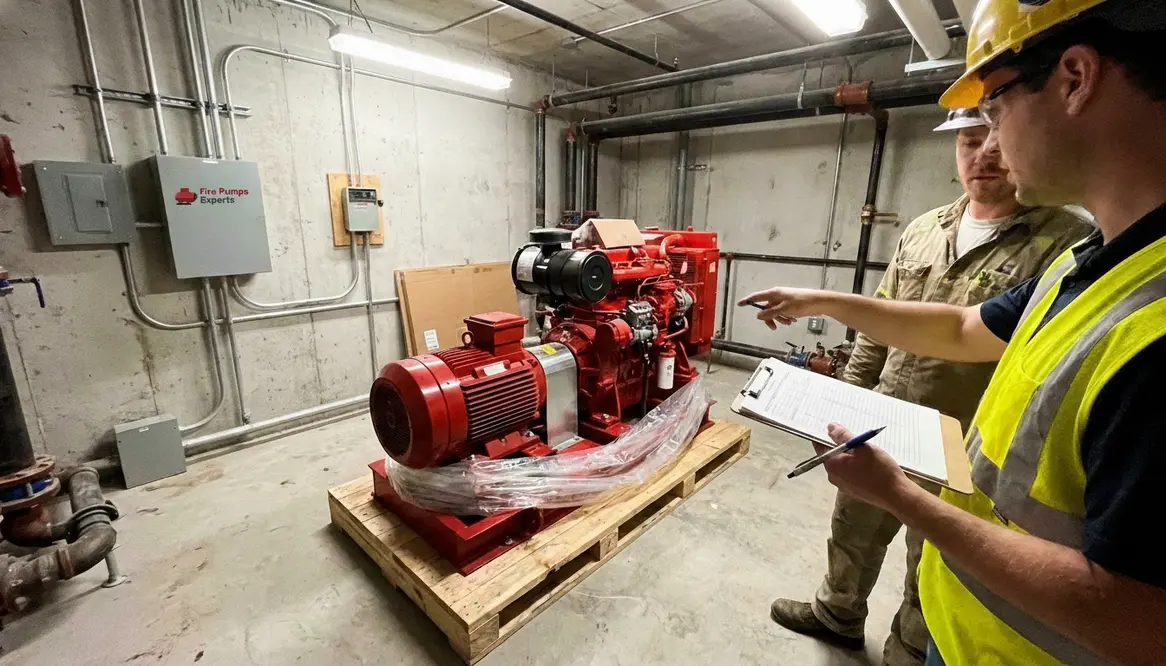
Fire Pump Installation Questions for Commercial Systems
Fire pump projects can look straightforward in the proposal binder, then turn into a slow march through code checks, water tests, and budget talks. Asking the right fire pump installation questions early turns that story around. It saves time, cuts risk, and keeps the whole job from turning into a scene from a bad office drama.
If you manage or design for a major commercial or industrial property, these questions matter because the pump must support real demand, real pressure, and real life when the alarm goes off.
Questions to Ask Before Installing a Fire Pump System
I have seen plenty of projects where a fire pump looked simple on paper, then turned into weeks of rewrites and “urgent” meetings. So before I install a fire pump system in a commercial or industrial facility, I ask the right fire pump installation questions early. That habit saves time, reduces risk, and keeps the whole job from turning into a never-ending status meeting.
Owners, facility managers, and design teams all benefit when those questions are on the table from day one.
Why questions matter more than equipment lists
A pump that “meets spec” on paper can still be wrong for the actual building. Asking detailed fire pump installation questions forces the design to match how the site really works instead of how the drawings wish it worked. That is the difference between a reliable fire protection system and a very expensive prop in a mechanical room.
What does my facility really need from the fire pump?
Start with the building, not the catalog
I start here because the pump must match the building, not the other way around. A warehouse, plant, high rise, data center, or large mixed use property all carry different risks. Therefore, I look at total water demand, system pressure, sprinkler layout, standpipe needs, and the fire load inside the building.
In plain terms, I want to know how much water the system needs and how hard the pump must work to deliver it. If I skip this step, I may end up with a pump that is too small, too large, or just plain awkward. And nobody wants a pump that acts like it trained for the wrong role.
Early fire pump installation questions around occupancy type, hazard classification, ceiling heights, and future expansion plans also keep the design from becoming obsolete the moment the tenant mix changes.
Will the water supply support the system under real fire conditions?
Boosting pressure is not the same as creating water
This question matters because a fire pump cannot work miracles. It boosts pressure, but it still depends on the water source. So I review the municipal supply, tank size, suction conditions, and flow data. I also want recent test results, since old data can tell a nice story and still miss the truth.
If the source cannot keep up, then the pump design must change. That can mean a storage tank, different pump sizing, or a more detailed water supply plan. In other words, I check the foundation before I build the house.
As part of the early fire pump installation questions, I also ask how seasonal changes, nearby developments, or shared infrastructure might affect that supply over time, not just on test day.
How do the fire pump installation questions connect to code and site rules?
Code is not a suggestion list
I never treat code as a side note. Instead, I use it as a map. Fire pump systems in commercial and industrial facilities must follow local fire code, NFPA rules, and insurer needs. Therefore, I ask which standards apply, what inspection steps the authority wants, and whether the site has any special limits.
I also check room size, access, drainage, and temperature control. A pump room cannot work well if it feels like a crowded closet with a badge. Good compliance keeps the system legal, safe, and easier to service later.
This is where thoughtful fire pump installation questions about noise, vibration, structural support, and shared spaces keep the project from clashing with the rest of the building’s operations.
What equipment should I plan for beside the pump?
The full supporting cast
A fire pump system is more than the pump itself. I also look at controllers, jockey pumps, suction and discharge piping, test headers, valves, alarms, and power supply. If the facility needs a diesel pump, I plan for fuel storage and ventilation. If it uses an electric pump, I review power reliability and backup options.
Designing a team, not a collection of parts
Because every piece matters, I want the full system to work as one team, not as a group of coworkers pretending to know each other at a conference. That includes space for safe egress, clear labeling, and routing that future technicians will not curse under their breath.
Which fire pump installation questions should I ask about testing and maintenance?
Day one performance and year ten reality
I ask how the system will be tested on day one and how it will be maintained for years after. That includes flow testing, churn testing, weekly checks, annual inspection, and repair access. I also ask who will handle service, how fast they can respond, and whether the site staff know what warning signs to watch for.
After all, a fire pump that gets ignored is like a superhero left in the break room. It still has power, but it will not save the day if nobody checks on it.
Structured fire pump installation questions here cover logbooks, remote monitoring, spare parts, and who actually owns the responsibility once construction ends and normal operations begin.
What should I ask before I approve the budget?
Seeing past the sticker price
I always ask for the full cost, not just the sticker price. That means equipment, labor, permits, design work, testing, electrical or fuel support, and future service. Then I ask what may change the price, because hidden site work can pop up fast.
To keep the process clear, I compare the main budget points like this:
Budget point
- Equipment cost
- Installation labor
- Site work
- Testing and permits
- Maintenance plan
Why it matters
- Covers the pump, controller, and parts
- Affects setup time and crew needs
- May include piping, pads, drainage, or room upgrades
- Helps the system pass review and start up cleanly
- Protects long term performance and uptime
Smart fire pump installation questions in budgeting dig into contingencies: what happens if the utility upgrade costs more, if the slab needs reinforcement, or if an extra test header is required by the authority?
How do I choose the right partner for the job?
Experience that matches your risk
I look for a team that understands commercial and industrial fire protection, not just general plumbing or simple equipment work. The right partner should know site demands, code needs, pump selection, and start up testing. I also want clear answers, fast communication, and proof of real project experience.
If I need more detail, I can also review expert guidance from commercial fire pump system resources to compare the plan with industry expectations. That way, I make a better choice before the first pipe gets set.
Fire pump installation questions: quick reference checklist
To keep projects on track, I keep a short list of fire pump installation questions handy:
- What does the facility truly need from the system today and five years from now?
- Does the water supply support the required flow and pressure under real conditions?
- Which codes, standards, and insurer requirements apply to this specific site?
- How will the full system (pump, controller, power, piping) work together in the room provided?
- Who will own testing, maintenance, and response when something is not right?
- What cost items could shift the budget mid-project, and how will that be handled?
- Which partner is prepared to support design, installation, and life cycle service?
FAQ
Conclusion
Before I install a fire pump system, I ask the hard questions, check the water source, review code, and plan for testing, maintenance, and budget. That process protects the building and the people inside it.
If you manage a commercial or industrial property, treat these fire pump installation questions as a starting point, not a final checklist. Review your site, talk with a fire pump expert, and build a system that works when it matters most. In fire protection, preparation is the quiet hero.