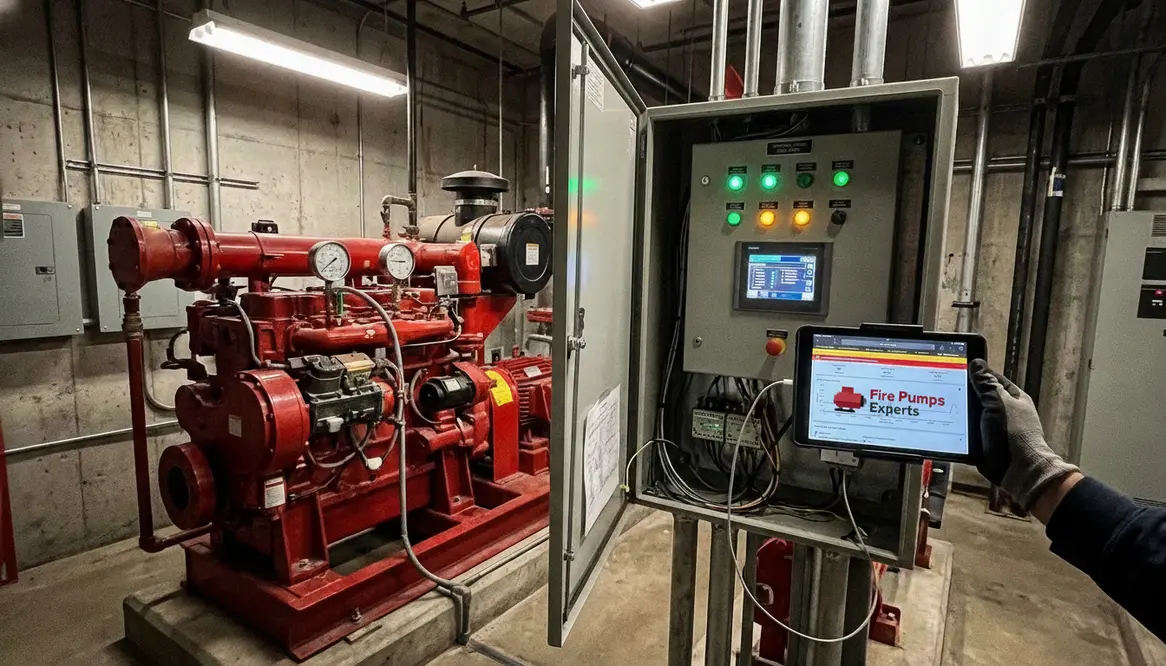
Fire Pump Monitoring Guide for Building Managers
Fire Pump Monitoring Systems: What Building Managers Need to Know
When I talk about fire pump monitoring, I am not talking about some fancy extra add on for a building that likes to look important. I am talking about a serious life safety tool for commercial and industrial facilities and major property buildings. If a fire pump fails, water pressure can drop fast, and that is when a small problem turns into a very expensive nightmare. So, if you manage a large site, I want to walk you through what matters, what to watch, and why this system deserves your full attention. Calmly, clearly, and with no unnecessary drama, because the fire already brings enough of that.
At a glance
- Protects sprinkler performance in large commercial and industrial properties
- Turns hidden pump problems into visible alerts before an emergency
- Supports inspections, records, and long term maintenance planning
- Works in the background so your building is actually ready when it matters
What fire pump monitoring actually does
I like to think of fire pump monitoring as the building’s quiet watchman. It checks the pump’s status, power supply, controller signals, valve positions, and trouble conditions in real time. As a result, building managers can spot a fault before an emergency turns into a bad scene worthy of a movie nobody wants to star in.
In a large facility, a fire pump often stands between normal sprinkler performance and failed suppression. Therefore, monitoring matters because it helps confirm that the pump is ready when the system needs it most. It also creates a trail of alerts and status data, which makes troubleshooting faster and far less painful for the maintenance team.
Why building managers should care now
Here is the plain truth. A fire pump can sit quietly for months, and then the one time it must work, it has to work perfectly. That is why I treat fire pump monitoring as a core part of building risk control, not a nice side feature.
It helps you do three things well:
First, it improves response time when something goes wrong.
Second, it supports code and inspection efforts by giving you clearer records.
Third, it reduces downtime by finding problems before an outage or failed test does the talking for you. And yes, those surprise failures love bad timing almost as much as a villain in a soap opera.
Risk, cost, and calm nights
When a fire pump is ignored, you trade quiet maintenance for noisy emergencies, insurance pain, and awkward meetings with leadership. Making fire pump monitoring part of your normal routine keeps those conversations a lot shorter and a lot less tense.
How fire pump monitoring works in commercial sites
In commercial and industrial buildings, the system usually ties into the fire pump controller and nearby sensors. Then, it reports alarms, power loss, pump run conditions, phase failure, overheating, low suction, and other issues to a central location or remote monitoring service.
This setup gives facilities teams a live view of the pump’s health. In practice, that means you do not need to wait for the next inspection day to learn something is off. Instead, the system can alert the right people right away so they can act before a small issue becomes a building wide headache.
What I look for in a reliable setup
When I review a system, I focus on a few basics that matter more than flashy promises. A good setup should be clear, fast, and built for the real world, not for a glossy brochure that looks great in a boardroom.
Here is the dual view I use:
System needs
Real time alerts, simple status reporting, dependable signal transmission, and easy access for authorized staff.
Manager benefits
Better response, fewer blind spots, stronger maintenance planning, and cleaner documentation for compliance checks.
Also, I always ask whether the monitoring can support the size and complexity of the property. A warehouse campus, for example, has different needs than a single office tower. So, the system should fit the site, not force the site to fit the system like an awkward suit at a wedding.
Fire pump monitoring and code compliance
For major properties, compliance is not just paperwork with a nice font. It is part of how you protect people, property, and your organization’s risk profile. Fire pump monitoring helps support inspection routines by showing when the pump ran, when it failed, and whether a trouble signal appeared.
That record helps during audits, service reviews, and maintenance planning. Moreover, it helps managers stay ahead of problems instead of scrambling after a failed test. I always suggest working with a provider that understands commercial and industrial fire protection needs, because the standards and stakes are not the same as a small site with a few offices and a coffee machine that thinks it runs the place.
If you want a deeper look at the service side, I recommend reviewing this commercial fire pump monitoring resource for more detail on how monitoring supports major buildings and industrial sites.
Maintenance habits that keep the system useful
Even the best monitoring setup needs regular attention. Otherwise, it becomes that one gadget everyone trusts until it stops working and nobody knows why. So, I keep maintenance simple and steady.
- Check the controller status often.
- Review alarms and logs after every event.
- Test communications so alerts reach the right team.
- Confirm that staff know who handles each type of signal, because a missed alert can waste precious time.
- Tie monitoring into your broader inspection plan so your records stay clean and your response stays quick.
Handled this way, fire pump monitoring stops being a mysterious black box in a pump room and becomes a normal, visible part of how you keep the building ready.
Quick FAQ on fire pump monitoring
Building teams often ask similar questions when they first look seriously at fire pump monitoring. The short answers sit below; the longer conversations usually happen in meeting rooms with test reports on the table.
Conclusion
If you manage a commercial or industrial property, I strongly suggest you treat fire pump monitoring as a priority, not an afterthought. The right system gives you faster alerts, better records, and more control over a critical life safety asset. So, take a hard look at your current setup, review your monitoring gaps, and make sure your building is ready before trouble shows up uninvited. Because when safety depends on seconds, calm preparation always wins.