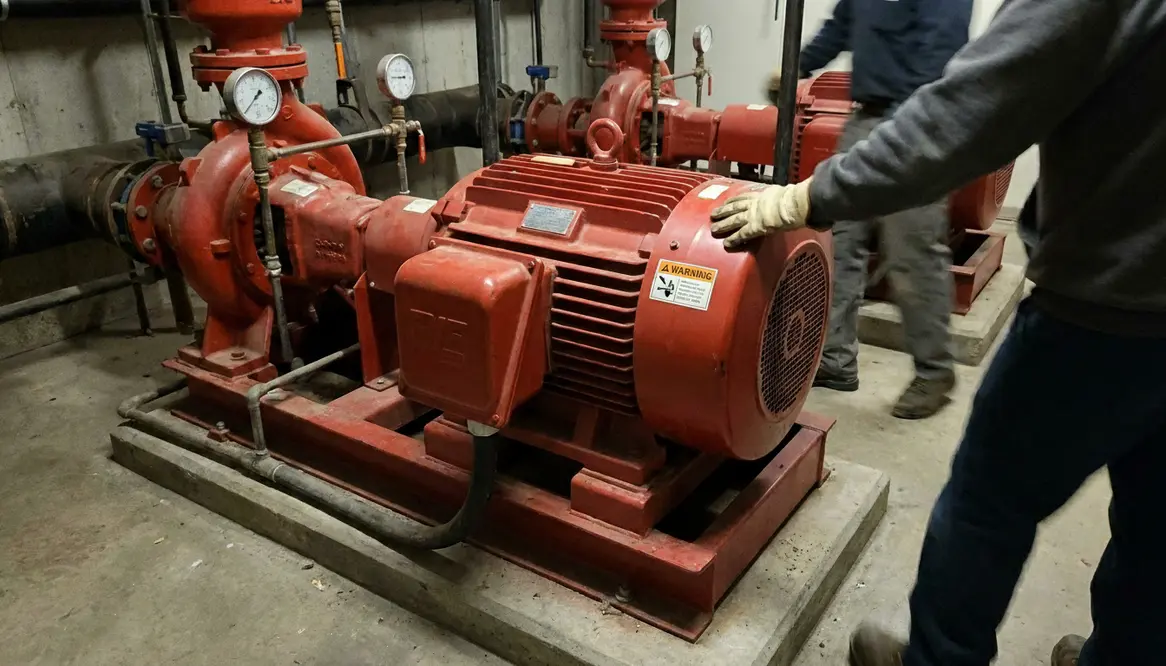
Fire Pump Motor Failure Warning Signs and Causes
I have spent enough time around mechanical rooms to know one thing. When a system whispers, it is trying to save you from a shout. And when it comes to fire pump motor failure, those whispers matter. In large commercial and industrial buildings, a failed pump motor is not just an inconvenience. It is a liability waiting to introduce itself at the worst possible moment. So today, I am going to walk you through the warning signs I look for, the subtle ones and the obvious ones, with a calm eye and maybe a raised eyebrow or two.
Early Clues I Watch Before Things Go Sideways
First, I pay attention to sound. A healthy motor hums like a well tuned orchestra. However, when I hear grinding, rattling, or that unsettling uneven rhythm, I know something is off. It is less symphony, more garage band on a bad day.
Then there is heat. Motors naturally run warm, but excessive heat is a red flag waving like it just spotted danger. If I cannot comfortably keep my hand near the casing, I start asking questions.
In addition, I look at startup behavior. A delayed or sluggish start often signals internal wear or electrical trouble. And while it might still run, it is already telling me it is tired.
Finally, I check for frequent tripping. Breakers do not trip for fun. If they keep interrupting operation, the motor is likely pulling more current than it should. That is not enthusiasm. That is distress.
What Causes Fire Pump Motor Failure in Commercial Systems
The real story behind “sudden” failures
Let me be clear. Motors do not just fail out of spite. There is always a cause, and usually, it has been building quietly.
Electrical issues that stack up over time
Electrical issues lead the pack. Voltage imbalance, poor connections, and insulation breakdown can slowly weaken a motor. Over time, the damage stacks up until the system says, I am done.
Mechanical wear you cannot afford to ignore
Meanwhile, mechanical wear plays its part. Bearings degrade, alignment shifts, and lubrication gets ignored. It is a bit like skipping oil changes in your car and then acting surprised when it complains.
Environmental conditions that quietly attack motors
Environmental factors also step in. Dust, moisture, and heat create a perfect storm inside pump rooms. And in large facilities, these conditions can vary wildly from one corner to another.
Because of this, I often recommend reviewing guidance from trusted industry sources like fire pump system standards and maintenance best practices. It helps ground decisions in proven practices rather than guesswork.
How I Diagnose Trouble Before It Escalates
I do not wait for failure. I look for patterns.
Column One
Performance shifts
- Reduced pressure output
- Inconsistent flow rates
- Longer run times than usual
Column Two
Physical indicators
- Vibration that was not there before
- Burning smells or insulation odor
- Visible wear on wiring or casing
Now, here is where experience kicks in. Any one of these signs alone might not spell disaster. However, when two or three show up together, I treat it like a plot twist in a thriller. Something is about to happen.
Additionally, I use routine testing to confirm what my instincts suspect. Load testing and thermal imaging give me a clearer picture. They turn suspicion into evidence.
Why Ignoring These Signs Is a Risk You Do Not Want
Let me put it plainly. Ignoring warning signs in a fire pump system is like ignoring a smoke alarm because it is inconvenient. It does not end well.
In commercial and industrial facilities, compliance and safety go hand in hand. A compromised motor can lead to system failure during an emergency. That is not just a maintenance issue. That is exposure to serious risk.
Moreover, unplanned downtime is expensive. Repairs cost more than prevention. And emergency replacements rarely happen on your schedule. They arrive unannounced, like a surprise guest who eats everything in your fridge.
So, I always say this. If the system is talking, listen early. It is cheaper, safer, and far less stressful.
Can I Prevent Fire Pump Motor Failure?
Yes, and I say that with confidence.
Build a maintenance routine that actually works
Preventive maintenance is the backbone. Regular inspections, lubrication schedules, and electrical checks go a long way. In fact, consistency matters more than complexity.
Let the system speak with data
Next, I focus on monitoring. Installing sensors for temperature and vibration helps catch changes in real time. It is like giving your system a voice that you can actually hear.
Train people, not just equipment
Training also plays a role. Teams that understand what normal looks like are quicker to spot what is not. And that awareness can stop a small issue from becoming a major failure.
Use records to stay ahead of fire pump motor failure
Finally, I believe in documentation. Keeping records of performance trends helps predict future issues. Patterns do not lie, even when equipment tries to.
FAQ: Quick Answers You Might Be Looking For
Closing Thoughts and Next Steps
If there is one thing I have learned, it is this. Systems rarely fail without warning. They leave clues, subtle at first, then impossible to ignore. When it comes to your facility, staying ahead of those signals is not optional. It is essential. So take a closer look, schedule that inspection, and give your fire pump system the attention it deserves. Because when everything is on the line, you want certainty, not surprises.