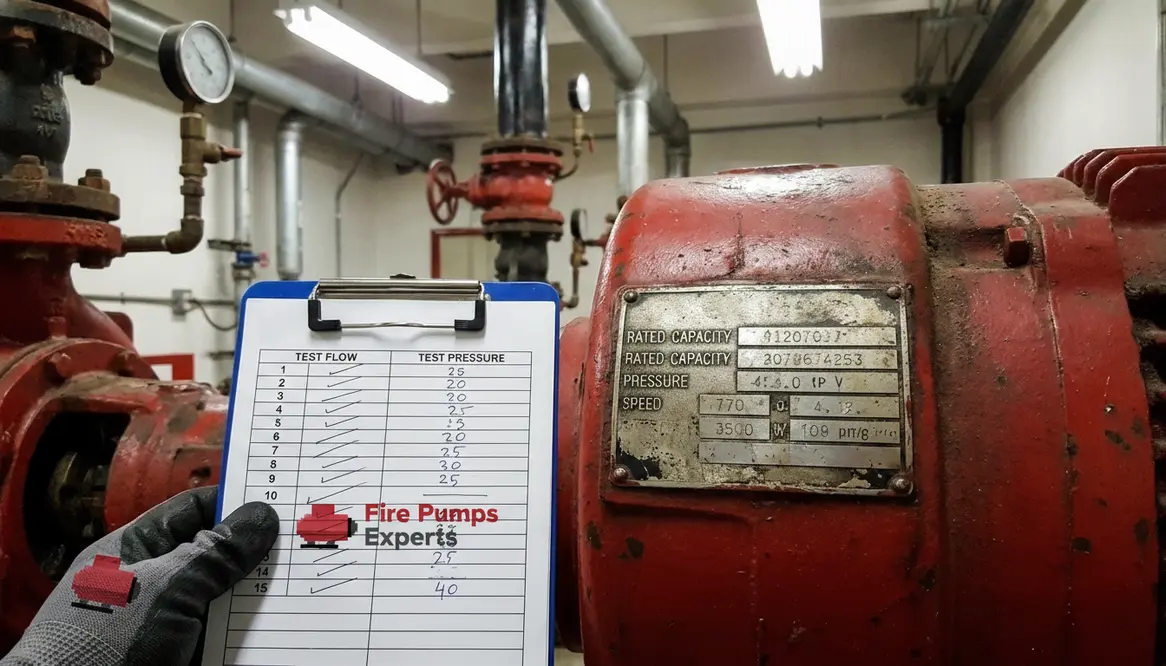
Fire Pump Nameplate vs Flow Test Results
When I compare fire pump nameplate to flow test results, I am not just checking numbers for the sake of paperwork. I am checking whether a commercial or industrial fire pump can do its job when the alarm hits and everybody starts moving fast. In a major property, that comparison tells me if the pump still matches its design duty, if the system has aged, or if something in the setup has drifted off course. And yes, it is a little like comparing the promise on a movie poster to the actual film. Sometimes the headline delivers. Sometimes it needs a hard look.
What the fire pump nameplate tells me
The nameplate gives me the pump’s identity. It lists the rated capacity, rated pressure, speed, impeller size, and often the manufacturer details I need to verify. In plain terms, it tells me what the pump was built to do. I use that plate as the baseline before I even look at the test data.
First, I check the rated flow and pressure. Then I confirm the driver speed and pump size. After that, I compare the installation against the approved design for the facility. This step matters because a pump can look fine on paper and still be the wrong fit for the building’s demand. That is how trouble sneaks in wearing a fake mustache.
compare fire pump nameplate to flow test results: the core match points
When I compare fire pump nameplate to flow test results, I focus on a few key items. These are the numbers that show whether the pump performs as expected under real demand.
- Rated flow versus tested flow to see if the pump reaches its designed capacity
- Rated pressure versus test pressure to check if the pump can hold the needed head
- Churn pressure to confirm the pump behaves correctly with no flow demand
- Impeller trim to see whether the tested output reflects the actual setup
- Driver speed to verify the pump ran at the right RPM during the test
Then I look at how the curve behaves across the test points. If the pump falls short at higher flow, I do not shrug and call it a day. Instead, I ask whether wear, obstruction, incorrect trim, or a system issue is pulling the performance down.
How I read flow test results without getting lost in the weeds
The flow test shows what the pump actually delivers under load. That is the moment of truth. I compare the test readings to the nameplate and to the pump curve, because one number alone can lie to you like a villain in a season finale.
Here is how I read the results in practice:
Nameplate
= what the pump should do
Test results
= what the pump did today
If the test pressure drops too fast, I check suction conditions, valve position, and possible blockages. If the flow is low but the pressure seems fine, I look deeper into whether the pump is being starved or whether the system demands more than the pump can safely provide. I also compare the recorded values against acceptance limits and the facility’s fire protection design intent.
Why small differences can matter on a major property
A small gap between the nameplate and test results may look harmless at first. However, in a commercial tower, warehouse, hospital, data center, or industrial plant, small gaps can grow teeth. A few lost PSI can change how sprinklers perform at the farthest point in the system. A lower flow can affect the water supply during a real fire event.
That is why I take every mismatch seriously. I do not only ask, “Did it pass?” I ask, “Did it pass in a way that still protects the building the way it should?” This is where long term reliability lives. It is also where maintenance teams save themselves from a very bad day later.
What I check next when the numbers do not line up
If the test results drift from the nameplate, I move through a clear check list. First, I verify the test setup itself. Then I inspect the driver, suction side, discharge side, and control conditions. After that, I compare the findings with past tests to spot a trend instead of chasing one noisy result.
I also review the fire pump service history. For commercial and industrial facilities, that record often explains more than the first test sheet ever will. If the pump has aged, if parts have changed, or if the system has been altered, the nameplate may still be honest while the real world has moved on. For related support on fire pump systems, I often point facility teams to los angeles fire pump services. And when a site needs broader electrical support alongside life safety systems, I also reference commercial electrical services as part of the same planning picture.
FAQ
Final thoughts and next step
If I compare fire pump nameplate to flow test results the right way, I can protect a commercial or industrial facility before a real emergency ever arrives. The nameplate sets the standard, and the test tells the truth. So if your building depends on a fire pump, do not wait for a problem to introduce itself like a bad sequel. Get the numbers reviewed, document the findings, and act early. A solid pump today can mean a safer property tomorrow, and that is a bet worth making.