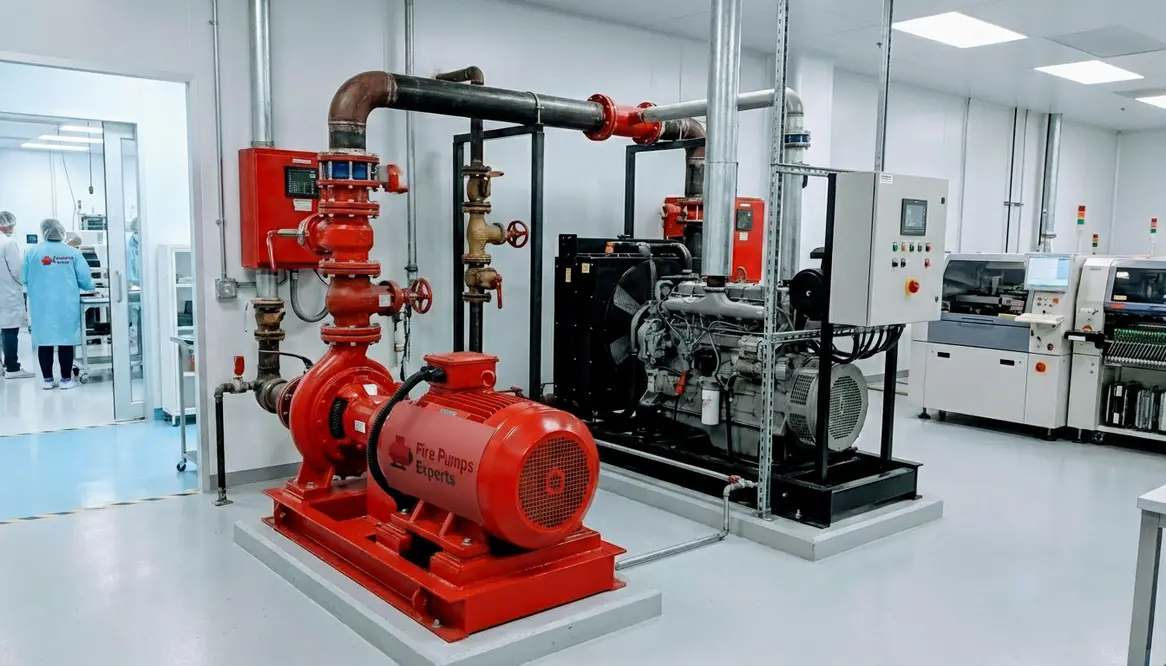
Fire Pump Requirements for Electronics Manufacturing
Reliable fire protection in electronics plants is not optional. It is the difference between controlled risk and catastrophic downtime. Here is how to design, power, and maintain fire pumps that match the precision of the production lines they protect.
I have spent years around industrial systems, and I can tell you this much right away. Protecting mission-critical production environments in electronics manufacturing is not just about keeping the lights on. It is about preserving precision, uptime, and frankly, sanity. One unexpected fire event can turn a multimillion dollar fabrication line into a very expensive paperweight. And unlike a bad sequel, there is no reboot that brings everything back overnight.
So today, I will walk you through fire pump requirements for electronics manufacturing. We will keep it grounded, practical, and yes, just engaging enough so you do not feel like you are reading a tax manual.
Understanding Fire Pump Requirements in Electronics Facilities
Electronics manufacturing plants are not your average buildings. They house sensitive equipment, cleanrooms, and materials that react poorly to heat and smoke. Therefore, fire pump systems must deliver reliable water flow at consistent pressure without hesitation.
In most cases, I rely on standards like NFPA 20 to guide system design. However, I do not stop at compliance. I consider how the facility operates day to day. For example, a semiconductor plant running nonstop cannot afford pressure drops during peak demand. So I size pumps with a buffer, not just a baseline.
Additionally, redundancy matters. I often recommend backup pumps because, let’s be honest, relying on a single system is like trusting one WiFi bar during a live stream. It works until it really does not.
How Do I Size a Fire Pump for Electronics Manufacturing?
Hazard classification and water demand
I start with hazard classification and water demand. Electronics manufacturing often involves a mix of light hazard office spaces and higher hazard production zones. Therefore, I calculate the required flow and pressure based on the most demanding area.
Real world losses and conditions
Then I factor in system losses. Pipe friction, elevation, and sprinkler design all play a role. As a result, the final pump selection reflects real world conditions, not just theoretical numbers.
Designing with future expansion in mind
Moreover, I always plan for future expansion. Facilities evolve, and production lines grow. Installing a slightly larger pump now can prevent costly upgrades later. Think of it as buying a jacket with room for winter layers instead of one that barely zips.
Power Supply Reliability and Backup Systems
Now let’s talk power. A fire pump without reliable power is like a superhero without powers. It looks impressive, but it cannot save the day.
Primary power and dedicated feeds
I typically specify electric fire pumps connected to dedicated power feeds. However, in high risk facilities, I strongly recommend diesel driven backup pumps. This ensures operation even during electrical failures.
Layered resilience and integration
Furthermore, automatic transfer switches and emergency generators add another layer of resilience. Electronics plants often have backup power already, so integrating fire pump systems into that infrastructure makes sense.
Testing so the system is ready on the worst day
And yes, regular testing is non negotiable. I have seen systems fail simply because no one bothered to run them under load. That is not a risk worth taking.
Protecting Mission Critical Production Environments with Smart System Design
When I design systems for protecting mission-critical production environments, I go beyond basic layouts. I focus on strategic zoning and isolation. This allows sections of the facility to remain operational even if one area is compromised.
Zoning, isolation, and stability
For instance, I use sectional control valves and pressure monitoring to maintain stability across different zones. Cleanrooms, in particular, demand careful coordination between fire suppression and contamination control.
Detection speed and damage limitation
Additionally, I pay attention to response time. Faster activation reduces damage. So I often integrate fire pumps with advanced detection systems that trigger quickly and accurately.
Water, clean agents, and sensitive electronics
And while water is essential, I also consider compatibility with other suppression methods like clean agents. Because sometimes, the best way to save delicate electronics is to avoid soaking them entirely. In many projects, this blended approach is central to protecting mission-critical production environments without sacrificing the hardware that keeps revenue flowing.
Key Components I Never Overlook
Here is where details make all the difference. I always ensure these elements are dialed in:
Left Column
- Properly sized pump and driver
- Listed and approved controllers
- Reliable suction supply
- Pressure relief valves
Right Column
- Flow meters for testing
- Alarm and monitoring systems
- Redundant configurations
- Accessible maintenance points
Each component plays a role in system reliability. Miss one, and the entire setup can underperform. It is like assembling a band and forgetting the drummer. Something will feel off, and not in a cool jazz way.
Maintenance and Testing That Actually Works
Even the best system needs regular care. I schedule weekly churn tests and annual performance testing as a baseline. However, I also encourage facilities to adopt predictive maintenance practices.
Predictive maintenance for uptime
By tracking vibration, temperature, and pressure trends, I can spot issues early. This reduces downtime and extends equipment life. In electronics manufacturing, where uptime equals revenue, this approach pays for itself quickly and directly supports protecting mission-critical production environments from preventable failures.
Training the people closest to the equipment
Furthermore, I train on site teams to recognize warning signs. Because sometimes, the first clue of a problem is a subtle change in sound. And no, your fire pump should not sound like it is auditioning for a heavy metal band.
FAQ: Fire Pump Requirements for Electronics Manufacturing
Conclusion
If you are serious about protecting mission-critical production environments, then your fire pump strategy cannot be an afterthought. It must be intentional, tested, and built for real world conditions. I help industrial facilities design systems that perform when it matters most. So if your operation depends on uptime and precision, let’s make sure your fire protection system is just as reliable. Reach out and take the next step toward true operational resilience, and if you want more technical context, you can explore additional resources at https://firepumps.org.