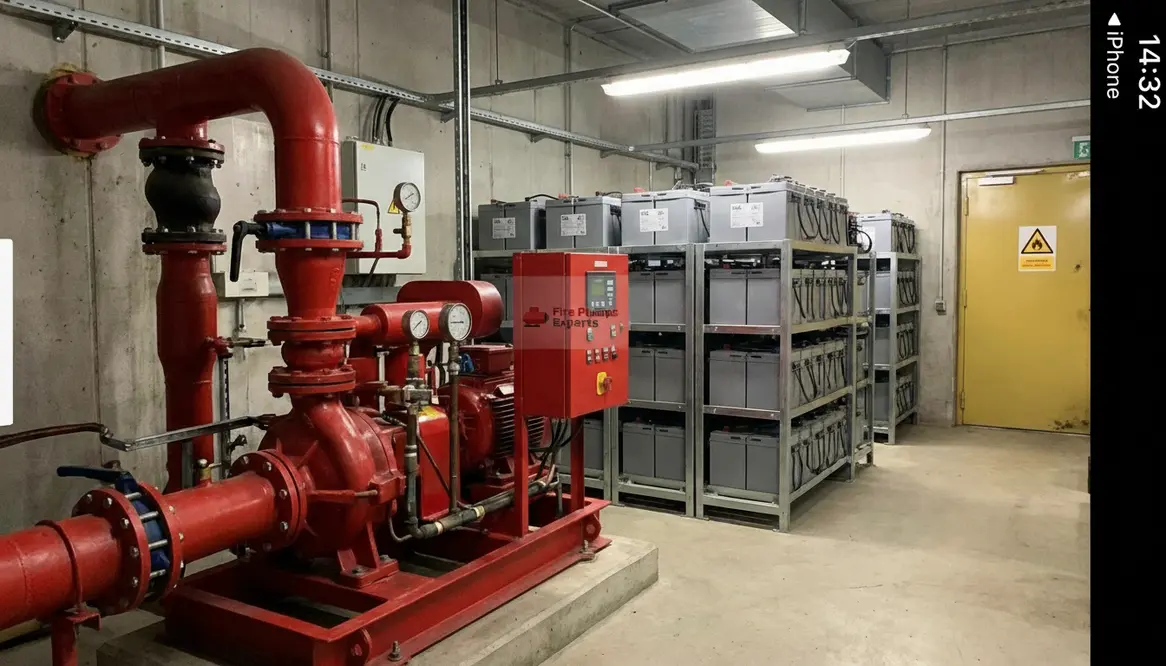
Fire Pump Requirements for Energy Storage Safety
High energy density, high stakes. Modern storage sites need more than generic fire protection. They need fire pump strategies built for thermal runaway, escalating heat, and the kind of risk you cannot afford to underestimate.
I have spent enough time around high powered facilities to know one truth. When energy is stored at scale, risk is never far behind. That is why Fire safety for battery and power-related occupancy is not just a code requirement. It is a responsibility. Energy storage systems, especially lithium ion installations, behave differently under fire conditions. They do not politely burn and fade. They escalate. So in this piece, I will walk you through what fire pump requirements really look like for these facilities, and why getting them right is the difference between control and chaos. Think of it as less Hollywood explosion and more disciplined engineering, though admittedly, the stakes are just as high.
What fire pump requirements apply to energy storage facilities
Let me answer this plainly. Fire pumps in energy storage sites must deliver reliable, high pressure water to support suppression systems designed for thermal runaway scenarios. Unlike traditional occupancies, these facilities often demand extended duration water supply and consistent pressure under extreme conditions.
Because of this, I always look at standards like NFPA 20 for fire pumps and NFPA 855 for energy storage systems. Together, they guide pump sizing, redundancy, and integration. However, codes only set the floor. In real world projects, I often push beyond minimums, because batteries do not care about minimum compliance.
Additionally, these systems require coordination with sprinkler or water based suppression systems that can handle deep seated fires. So the pump must sustain flow for longer durations, often exceeding what a typical commercial building might require.
Key standards shaping Fire safety for battery and power-related occupancy
- NFPA 20 for fire pump design, installation, and performance
- NFPA 855 for energy storage system layout, spacing, and protection
- Local amendments and insurer requirements that often drive higher protection levels
Why standard fire protection designs fall short
Now here is where things get interesting. Traditional fire protection assumes predictable fuel behavior. Energy storage systems laugh at that assumption. When thermal runaway begins, it can cascade from one unit to another like a row of dominoes in a dramatic movie scene. Except there is no background music, just rising heat and pressure.
Because of this, I do not treat these facilities like warehouses or office buildings. Fire pumps must account for:
- Higher water demand densities
- Longer operational duration
- Rapid pressure stabilization
- Redundant power or backup drivers
Furthermore, delayed response or pressure drops can allow fires to intensify. That is not a risk I am willing to take, and neither should any facility operator.
Where Fire safety for battery and power-related occupancy pushes the envelope
Instead of designing for average conditions, these facilities demand planning for the worst credible case: multiple units in thermal runaway, limited access for firefighters, and potential loss of primary power. Fire pumps become the backbone that keeps suppression systems effective while everything else tries to unravel.
Fire safety for battery and power-related occupancy design priorities
When I design around Fire safety for battery and power-related occupancy, I focus on reliability above all else. If a fire pump fails during a critical event, everything else becomes secondary.
So I prioritize:
- System redundancy because one pump is never enough in high risk environments.
- Diesel driven backups since electrical failures are not hypothetical in these facilities.
- Isolation and zoning to ensure localized incidents do not compromise the entire system.
- Monitoring integration so operators can respond before conditions escalate.
Moreover, I always consider how the system behaves under stress, not just how it looks on paper. A beautifully designed system that fails under pressure is about as useful as a superhero without powers.
From drawings to reality
The real test is not the hydraulic calculation sheet. It is whether the pump starts under loss of normal power, runs under peak load, and still maintains pressure after hours of operation while suppression systems work to keep a battery event contained.
How I approach pump sizing and water supply
Let us get practical. Pump sizing is not guesswork. I calculate based on hazard classification, suppression system demand, and duration requirements. Then I add a margin, because real life rarely follows perfect calculations.
Key Inputs I Use
- Flow demand from suppression systems
- Duration requirements based on battery type
- Facility layout and separation distances
- Local code and insurer expectations
What I Aim to Achieve
- Stable pressure across all zones
- Continuous operation under peak load
- No single point of failure
- Compatibility with future expansion
In many cases, municipal water alone is not enough. Therefore, I often incorporate on site storage tanks. This ensures that even if external supply is compromised, the system continues to function.
Water supply planning for Fire safety for battery and power-related occupancy
Tank sizing, refill strategies, and the relationship between fire pump flow and available water become central decisions. When energy storage capacity grows, water demand follows, and the system needs room to scale without a complete redesign.
Integration with detection and suppression systems
A fire pump does not operate in isolation. It is part of a larger ecosystem. Detection systems identify the problem, suppression systems act on it, and the pump ensures those systems have the power they need.
Because of this, I coordinate closely with system designers. Early detection technologies, such as gas monitoring or thermal sensors, allow faster activation. That, in turn, reduces the burden on the fire pump.
However, I never assume early detection will solve everything. So I design the pump system to handle worst case scenarios. Hope for the best, engineer for the worst. It is not flashy, but it works.
Making the ecosystem work together
- Detection zones aligned with suppression zones and valve control
- Pump start logic coordinated with alarms and supervisory signals
- Performance testing that confirms the full chain, from detection to water delivery
Common mistakes I see in commercial and industrial projects
I have seen enough projects to know where things go sideways. And yes, sometimes it feels like watching a slow motion disaster unfold.
- Undersized pumps that cannot sustain required flow
- Lack of redundancy leaving systems vulnerable
- Ignoring duration requirements which leads to early system failure
- Poor integration between pump and suppression systems
Additionally, some teams rely too heavily on minimum code compliance. That approach might pass inspection, but it does not always protect assets or lives. In high value energy facilities, that is a gamble I would not take.
Designing beyond the minimums
When Fire safety for battery and power-related occupancy is taken seriously, designs move past checklists. They account for blackouts, equipment faults, maintenance outages, and the uncomfortable reality that batteries can fail in spectacular ways at the worst possible time.
FAQ about fire pumps in energy storage facilities
Conclusion
When I look at energy storage facilities, I do not just see infrastructure. I see concentrated risk that demands thoughtful protection. Fire pumps play a central role in that defense, delivering the power needed to control complex fire events. If you are planning or upgrading a commercial or industrial site, now is the time to get it right. Work with specialists who understand these systems deeply, and build protection that performs when it matters most.
If you want to go further into fire pump design specifics and standards, resources like https://firepumps.org are a solid starting point for understanding how serious Fire safety for battery and power-related occupancy really is when energy is stored at scale.