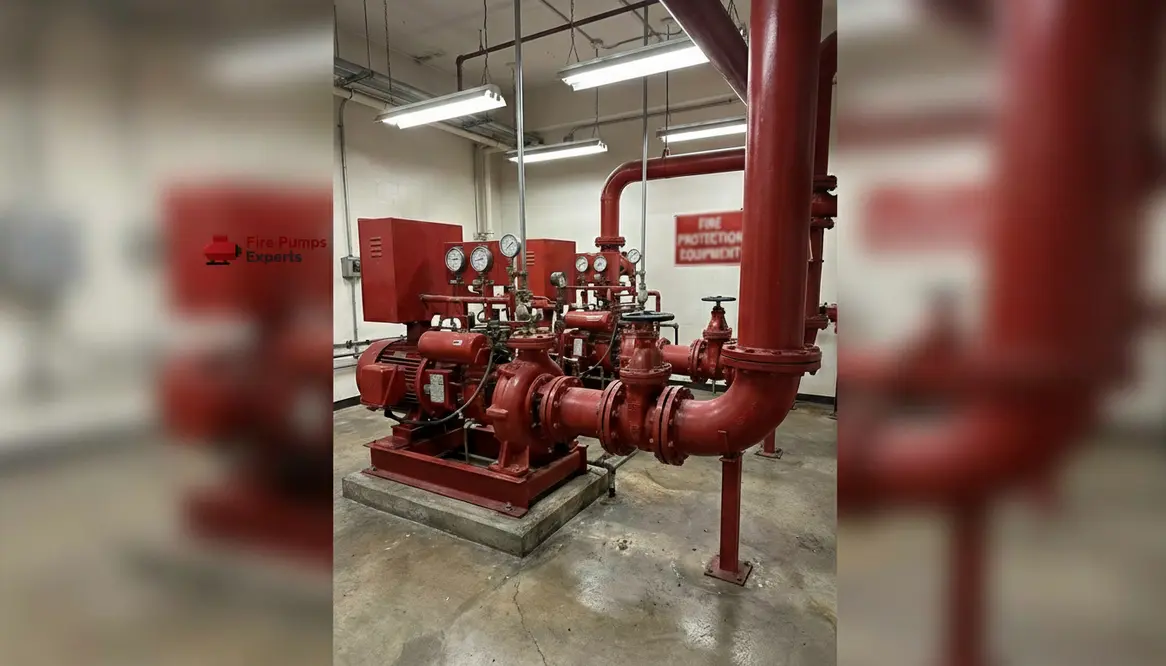
Fire Pump Requirements for Government Buildings
I have walked through more government buildings than I can count, and I can tell you this with a calm certainty. Fire safety is never just a box to check. It is a living system. Right at the heart of that system sit the Fire Pump Requirements for Government Office Buildings, quietly waiting to perform when everything else goes wrong. Within the first few minutes of a fire, these systems decide whether a situation stays manageable or becomes tomorrow’s headline. So today, I am going to walk you through what actually matters, without the dry lecture tone you might expect.
Why Fire Safety in Public Offices Demands More Than the Basics
Government buildings carry a unique burden. They are not just offices. They hold records, infrastructure controls, and sometimes the quiet machinery of an entire city. Because of that, fire protection must go beyond standard commercial setups.
First, occupancy is unpredictable. One day it is a routine workday. The next, it is packed with public visitors who have no idea where the exits are. Therefore, systems must be intuitive and automatic.
Second, response time matters. Fire departments are skilled, but seconds count. That is where properly designed pump systems step in, ensuring water pressure stays consistent even when demand spikes.
And yes, if you think of a fire pump as the building’s version of a superhero, you would not be wrong. It does not wear a cape, but it definitely saves the day.
Fire Pump Requirements for Government Office Buildings Explained Simply
Let me break this down in plain terms. The Fire Pump Requirements for Government Office Buildings are designed to guarantee one thing. Water moves where it needs to go, at the pressure needed, without hesitation.
These requirements typically include:
- Reliable power sources, often with backup systems
- Automatic activation tied to pressure drops
- Regular testing and maintenance schedules
- Integration with sprinkler and standpipe systems
However, the real story lies in consistency. A pump that works once is not enough. It must work every single time. That means routine inspections are not optional. They are essential.
Additionally, modern systems often include monitoring technology. This allows facility managers to catch issues before they become failures. Think of it as giving your building a sixth sense, minus the spooky movie soundtrack.
What Do Modern Fire Pump Systems Need in Government Facilities?
They need resilience. Plain and simple.
Modern government facilities demand systems that can handle both expected loads and sudden surges. Therefore, engineers design pumps with capacity margins. This ensures performance does not drop when multiple sprinklers activate at once.
Moreover, redundancy plays a key role. Backup pumps or secondary power supplies keep systems operational even during outages. Because let’s face it, a fire rarely arrives at a convenient time.
Another critical factor is compliance. Codes evolve, and older buildings must adapt. Upgrading systems is not just about meeting regulations. It is about aligning with current risk realities and staying ahead of modern Fire Pump Requirements for Government Office Buildings instead of scrambling to catch up after an inspection.
Core System Needs
- High pressure output stability
- Automated response triggers
- Durable components for long term use
- Clear maintenance access points
Operational Priorities
- Minimal downtime during testing
- Real time monitoring capability
- Compliance with updated safety codes
- Seamless integration with alarms
Designing Systems That Actually Work Under Pressure
Design is where theory meets reality. And in fire safety, reality tends to be unforgiving.
Engineers must consider building height, layout, and water supply limitations. For example, taller buildings require higher pressure levels to deliver water effectively to upper floors. Therefore, pump sizing becomes a precise calculation rather than a rough estimate.
Additionally, system placement matters. Pumps should be accessible for maintenance yet protected from environmental risks. Flooding, freezing, or even simple neglect can compromise performance.
Then there is testing. Weekly and monthly checks ensure readiness. I often say this with a slight grin. If your fire pump only works on paper, it belongs in a museum, not in a government building where Fire Pump Requirements for Government Office Buildings are supposed to live and breathe.
Maintenance and Inspections Keep Systems Alive
A fire pump system is not a set it and forget it investment. It is more like a classic car. Ignore it, and it will betray you at the worst possible moment.
Routine inspections should include:
- Flow testing to verify pressure output
- Checking electrical and mechanical components
- Inspecting valves and connections
- Reviewing system logs for irregularities
Furthermore, documentation plays a major role. Accurate records help identify trends and prevent recurring issues. This is especially important in large government facilities where multiple teams may handle maintenance.
And yes, while paperwork may not sound exciting, it is often the difference between smooth operation and unexpected failure.
Common Mistakes I See in Government Office Fire Safety
Let me be direct. Most problems are not caused by lack of technology. They come from oversight.
One common mistake is underestimating system demand. Buildings expand, occupancy grows, yet the fire protection system remains unchanged. That mismatch creates risk.
Another issue is delayed maintenance. Small problems grow quietly until they become major failures. It is the classic case of ignoring a strange noise until the engine gives up entirely.
Finally, poor integration between systems can cause delays. Fire alarms, sprinklers, and pumps must work together. If they do not, response time suffers.
Fortunately, these issues are preventable with proper planning and consistent attention. Reviewing Fire Pump Requirements for Government Office Buildings on a regular schedule is not busywork; it is how you make sure the system you paid for is the system that shows up on the worst day of the year.
FAQ
Bringing It All Together
Fire safety in government buildings is not about reacting. It is about preparing with intention. When you align design, maintenance, and compliance, you create a system that stands ready without hesitation. If you manage or oversee a large facility, now is the time to evaluate your setup. Work with specialists who understand complex properties and can meet modern demands. Because when it comes to safety, readiness is not optional. It is everything.